Tag Archives: research

As a journalism student working in marketing this past summer, I initially viewed them as two completely separate career paths. While they have individual goals and objectives for the most part, the core idea and approach have shocked me with how alike they really are. I believe the skills I developed studying journalism are actually the same ones required to become successful in marketing. Here’s a breakdown of the top five. 

1. Understanding Your Audience 

Understanding your audience is one of the first points they teach us as we begin writing journalistically. This means not only knowing who your audience is, but what they value and what matters to them. I found myself applying this same skill during my internship. As I learned more about customer insights, I began to better understand how knowing your audience made it easier to develop content that felt meaningful. Whether writing a news story or assisting in a campaign, knowing your audience is essential to effectively communicating your message. 

2. Storytelling 

Storytelling has proven to be the heart of both journalism and marketing. As journalists, we are taught to take information and facts and turn it into a story that captures an audience’s attention. In marketing, storytelling serves a similar purpose by allowing brands to connect with the audience on a more personal level. During my internship I learned that marketing isn’t just promoting a product or a service. It’s finding the story behind a brand and telling it in a way that their target audience can engage with. The ability to create a meaningful connection is a language spoken by both industries. 

3. Research and Accuracy 

Research and accuracy are essential to quality journalism and are just as important in marketing. Journalists are taught to research their topics and to verify information before it reaches their audience. Marketing also requires that attention to detail. During my internship I conducted competitive research, explored industry trends and gathered information to help in marketing strategies. While the research that goes into marketing might look different from a journalism story, they both require you to get every detail right. 

4. Writing With Purpose 

Every word you write matters, no matter the profession. I have, however, seen the importance of word choice and reason in marketing and journalism specifically. Whether the goal is to inform, explain, or bring attention to a current event or to write a blog post, email, or caption, every word should have meaning behind it. 

5. Curiosity 

The mindset of curiosity is what makes a good journalist. I have come to learn it makes a good marketer too. The more curious you are, the more you learn about your audience, ultimately leading to better communication with them- a desired outcome of both journalism and marketing. 

Both Journalism and Marketing Offer Valuable Skill Experiences

My experience this past summer has shown me the value of bringing skills to the table that you may not think initially apply to marketing. The ability to understand an audience, tell meaningful stories, write with intention and stay curious has helped me become a more thoughtful marketer. As I continue to grow in my career, I know these skills will continue to shape my work and the way I communicate with my audience — whoever that may be!


A popular phrase in the marketing world states, “always be one step ahead of your competition.” But, how do you accomplish that? Develop a competitive analysis.

Why are your competitors outranking you? What are their strengths and weaknesses? What are their marketing strategies? All of these questions are answered through a competitor analysis.

What is a competitive analysis?

A competitive analysis identifies and evaluates your competitors in comparison to your business. More specifically, your analysis should include the following:

  • Identifying your competitors and highlighting those that pose the biggest challenge
  • Researching information about your competitors
    • i.e. pricing, financials, marketing campaigns and social media, company history, their marketed demographic, and locations they cover
  • Evaluating their strategies
    • Determine their strengths and weaknesses to your brand’s

Why do competitive analysis?

Competitive research is crucial to your success as a business because it helps you create better marketing strategies. Moreover, it allows you to make educated decisions about your strategy and guarantees you can create competitive advantages. A competitive analysis gives you the ability to quickly identify industry trends and adapt to other marketing campaigns. As a result, all of these enable you to stay ahead of your competitors.

Conclusion

It cannot be a one-time thing. In short, frequently completing a competitor analysis gives your business the advantage to outsmart the competition. 


Dr. Stephen Covey taught us to, “Diagnose before you prescribe,” which is a simplified reason why you need internal research for your business. Also, the adage, “You don’t know what you don’t know.”

The internal research process in a branding or re-branding effort gives an honest evaluation via an outside, unbiased third party of your strengths and weaknesses so you can dig into your brand’s core.

After all, the worst thing you can do for your brand is to market a promise that can’t be delivered.

Is there another way for you to know that your brand strategy, promise, positioning and message are going to be on target?

Internal Research On Target

Internal research allows us the ability to monitor quantitative and qualitative results and provides a foundation for our decisions. It removes personal bias and places the focus on tangible data.

The internal research process also builds internal alignment and engagement. Folks take ownership of your brand’s progression. Your team becomes brand champions.

Here’s a glimpse into questions we ask during internal research:

  1. Tell me about yourself and your specific role within the company?
  2. How long have you been with INSERT BRAND?
  3. What do you believe current customers/clients think of INSERT BRAND?
  4. What does INSERT BRAND do for customers/clients that others do not?

Not rocket surgery or brain science? Now, why would we put that bit on our blog and share on social media?

We on the Porch know a thing or two about internal research. Our seasoned, experienced team has been in-house as corporate, regional and field marketing as well as been in leadership positions at global and local agencies.

Think of us as your marketing department. We can help with branding. Our team can develop marketing strategies and plans. Our experts also execute on an on-going or project basis – website updates, identity refreshes, collateral development, advertising campaigns, event and trade show management and execution, email marketing, social media and so on and so on.

“Cuz you know what they say:” Here in the South, we don’t hide crazy. We parade it around the front porch and give it a cocktail.


The power of Disney branding is amazing. Branding

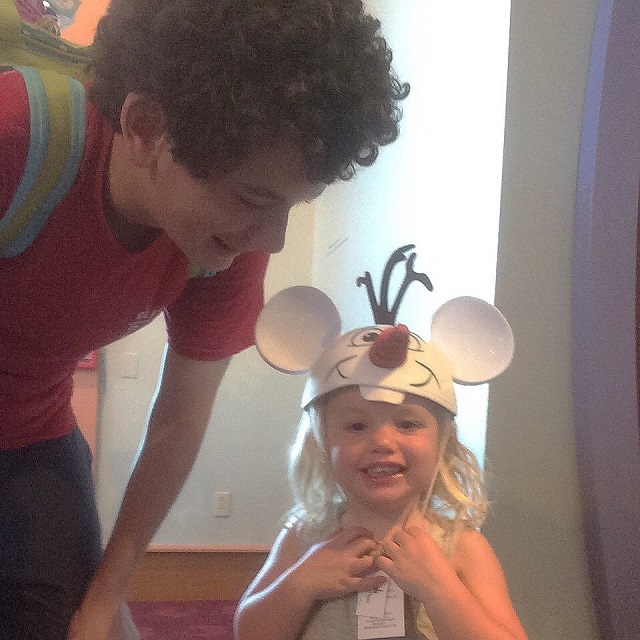
A mom sent me a message Sunday night during our three year old’s Frozen party, “Just caught myself driving with a crown on my head.”

There was a princess party and moms got to wear crowns. Just sayin’.

Let’s review. Successful brands have three key attributes: conviction, consistency and connection.

Disney does Disney branding so right.

The company forges a strong, emotional bond with its customers that ultimately creates customer preference and loyalty.

Four things to consider when building a strong brand that Disney does right:

  1. Customer connection – Upon entering the gate of a property, you hear, “Welcome home.” Toto, we aren’t in Kansas anymore. What are you doing today to engage your customers or clients?
  2. Employee engagement – I’m sorry, the “cast.” The company’s internal team is living and breathing the brand architecture. What are you doing today to feed your team so they deliver on your brand mission?
  3. Technology – From the app and “Magic Bands” to drink refills, the company is embracing technology and rockin’ it. How are you embracing technology to further your team’s and your customer engagement? Apps help.
  4. Research – Data, data and more data. Fill out the survey. It is about the experience. It is about the people. It is about asking if at every customer touch point you are experiencing the brand. Are you asking for customer/client feedback on a consistent basis?

Disney is being accountable for delivering on its brand promise.

Everything Disney is magical. Your brand can live that too if you believe in brand strategy and engage in brand and marketing strategies so your brand can deliver on its promise.