Join us in welcoming our second fall intern this year, Macy Vatter. We can’t wait to learn more about Macy! We asked her a few questions to get to know her better. She’s a student at Texas Christian University majoring in strategic communication and minoring in entrepreneurship. Macy is excited to gain hands-on marketing experience, contribute to impactful projects, and to learn from the other businesses Front Porch Marketing works with. Thanks for choosing us Macy!
What is the biggest misconception about marketing today?
That the general public is the target audience. Powerful marketing focuses on a specific target market because different people have different needs, wants, and motivations.
What advice would Macy give to her younger self?
It is okay to make mistakes along the way, but it’s how you learn and move on from those mistakes that matters.
What is one of the biggest lessons you’ve learned so far at school?
One of the biggest lessons I’ve learned is how quickly college pushes you into adulthood. The transition from high school to being independent happens much faster than you expect, and you learn a lot about yourself along the way.
What does good brand strategy look like?
A good brand strategy allows people to clearly recognize who a brand is and what it stands for without needing an explanation.
If you could be anywhere in the world right now where would it be?
Switzerland in the mountains.
If you could go to dinner with one person living or dead who would it be?
I would go to dinner with my friend John Paul who I met in Uganda when I was on a mission trip my senior year of high school.
If you could describe Macy Vatter in three words what would they be?
Three words to describe myself would be kind, personable, and empathetic.
Tell us about a major milestone in your life?
A major milestone in my life was moving away from home for college without knowing anyone. I grew up surrounded by a strong community of family and friends, so leaving that comfort and familiarity behind was a big adjustment. Although it was challenging at first, stepping into a completely new environment pushed me outside of my comfort zone and ultimately became one of the best experiences of my life.
From your perspective, how does Front Porch Marketing differentiate itself from other marketing companies?
Front Porch Marketing differentiates itself from other marketing companies through its personal and relationship-driven approach. Rather than treating every client the same, the team takes the time to truly understand each client. I think the genuine relationships they build with their clients allow them to create more unique marketing strategies that feel authentic and personalized.
What is a fun fact about you?
I was born and raised in Colorado, and aside from leaving for college, it will always be my home. I plan to move back eventually and make Colorado my forever home.
It’s fall again, and we are welcoming Natalia Meave, our newest intern rocker, to our marketing team. We’re so excited to learn more about Natalia, aren’t you? We asked her a few questions to get to know her better. She’s a student at The University of Texas at Austin majoring in advertising and minoring in business. Natalia loves creative strategy, storytelling and finding fresh ways to connect with audiences. We love that you chose us Natalia!
What is the biggest misconception about marketing today?
The biggest misconception about marketing today is that it’s just a tool to sell things to people. Marketing is way more than just transactional; it connects people across cultures and shapes the way we view the world!
What advice would Natalia give to her younger self?
Let go of self-doubt. True growth only happens when you aren’t confined to limiting beliefs!
What is one of the biggest lessons you’ve learned so far at school?
The art of “boiling” problems down to their essence in order to reach solutions more efficiently, as taught by my business law professor. Identifying a clear, main reason behind an action clears the way for creativity and strategy to blossom.
What does good brand strategy look like?
Good brand strategy starts with knowing your audience deeply. Genuine connection between brands and customers is crucial in building the loyalty that is foundational to long-term brand success.
If you could be anywhere in the world right now where would it be?
I would go to Mexico City right now. Cool sunny weather, gorgeous architecture, unbeatable vintage shopping, and endless options for the best food you’ll ever have in your life — you just can’t beat it!
If you could go to dinner with one person living or dead who would it be?
Probably someone like Morgan Freeman. I’d like to hear all of the Hollywood stories and secrets with objectively the best voice in the history of narration.
If you could describe Natalia Meave in three words what would they be?
Authentic, vibrant, and driven.
Tell us about a major milestone in your life?
One of my proudest milestones has been taking on leadership roles in the various organizations I’ve been involved in.
From your perspective, how does Front Porch Marketing differentiate itself from other marketing companies?
Front Porch does the hands on work that drives real results for our clients. We work closely and personally with every client, getting to know their business from the inside out to deliver unique results.
When comparing B2B (Business to Business) and B2C (Business to Consumer), it’s important to understand the key distinctions between them. Understanding the difference can help businesses tailor their public relations strategies and approaches to each customer type effectively.
B2C involves transactions between businesses and individual consumers, where companies sell goods or services directly to people. These transactions usually focus on attracting a wider customer base and often involve shorter sales cycles.
On the other hand, B2B refers to transactions between businesses, where one business sells products or services to another. This often involves larger purchases and longer sales cycles. Focusing on B2B requires a different strategy in PR for lasting success.
What to Include for a Successful B2B PR Strategy
Utilize media relations to connect with journalists and employ content marketing — such as email marketing and blogs — to deliver valuable insights to your audience. Position your brand as a thought leader through speaking engagements and pursue awards to highlight your company’s achievements.
Effectively reach discerning business buyers by prioritizing industry-specific trade publications over general consumer news outlets when pitching and producing stories and news. This strategic focus will allow for more impactful engagement and a stronger connection with your intended target audience.
Harness the Power of LinkedIn for B2B Clients
Inspire company leaders to actively share valuable insights on LinkedIn. Engaging with comments and notable company milestones positions B2B leaders to both strengthen their personal brand and also foster authentic professional networks that benefit everyone involved.
Track Your Progress
Evaluate B2B commercial success by tracking specific metrics such as media mentions, increases in organic web traffic, lead generation and overall return on investment.
Understand that timing is crucial — proactively plan around company milestones, industry events and media opportunities while staying flexible enough to capitalize on trending news. This approach will set your company up for B2B success in the PR arena.
Just a quick scroll through TikTok or Instagram reveals that marketing does not look the same as it did 5 years ago. Highly polished advertisements and endorsements from the biggest celebrities are being replaced by authentic voices and relatable videos as Gen Z steps into the role of marketing director and business owner. Rather than simply trying to sell products using traditional advertising, Gen Z is using marketing to build communities around brands.
5 Marketing Trends Gen Z Has Adapted and Why They Are Working
Authentic Marketing Content
One of the biggest shifts seen in marketing over the past few years has been the move away from scripted, perfectly curated advertisements and towards more relatable, behind-the-scenes content. Consumers enjoy seeing the people behind a brand instead of only the products being promoted
Rather than creating studio-quality commercials, businesses are posting “office vlogs,” day in the life videos, and other forms of authentic short form content. This casual approach builds trust and gives customers a glimpse into the real business. As a result, audiences are responding more positively to relatable content than to traditional advertising.
Prioritizing Social Media
Many Gen Z run businesses rely on short-form content such as Instagram Reels, YouTube Shorts, and TikToks to reach customers rather than investing heavily in expensive advertisements and commercials.
These platforms allow businesses to reach hundreds of thousands of viewers organically through engaging content. Successful brands also interact with their audiences by replying to comments, participating in trends, and engaging with creators in their niche. Rather than simply posting content, businesses are becoming active members of their online communities.
Founder Features as Marketing
Consumers don’t just want to know what a company sells, they want to know who’s behind it. For that reason, many founders have become the face of their own brands. Whether they are explaining the origins of their company, giving a warehouse tour, or filming everyday moments, founder-led content allows customers to build a personal connection with the business while making the founder appear more approachable.
This strategy is not entirely new. Dave Thomas became well known for appearing in Wendy’s commercials, helping customers associate a real person with the brand. Small businesses follow a similar approach by allowing founders to share their story, explain how the company began, and communicate why their mission matters. People naturally connect more with a friendly face than a logo alone.
Adapting to Marketing Trends
Successful Gen Z marketing teams understand that social media is quickly changing. Rather than sticking to the same content format, brands are participating in trending sounds, viral jokes, and popular conversations. Brands often comment on trending videos, reference pop culture moments, and create content that feels organic to each platform.
The goal is to naturally integrate their brand into consumers’ daily social media experience. When done well, brands become a part of the consumers’ feeds instead of interrupting them with traditional advertisements.
Fast and Casual Voice
Today’s consumers want brands to feel approachable. Instead of using formal, corporate messaging, many Gen Z businesses communicate with consumers the same way they would text a friend.
Emojis, internet slang, and playful captions help brands sound more human. While professionalism is still important, businesses have realized that consumers connect more with brands that have a friendly, conversational voice.
This conversational style makes customers more likely to engage, comment, and interact with content because it feels like a two-way conversation rather than a sales pitch.
Creating Genuine Connections With Marketing
Gen Z isn’t changing the marketing game simply by building relationships between businesses and their customers. Authentic content, founder-led storytelling, active social media engagement, trend participation, and conversational branding all share one common goal: creating genuine connections.
For businesses of any size, the lesson is clear. Consumers want to support the businesses themselves in addition to simply buying their products. As social media continues to evolve, the companies willing to embrace authenticity will likely continue to stand out from the competition.
This summer, we’re welcoming a second high school intern from Ursuline: Lucy Sanders. Lucy is a rising senior at Ursuline Academy in Dallas. She is interested in expanding her knowledge of advertising and marketing while collaborating on creative, impactful projects. We asked Lucy a few questions so our readers could get to know her a little better.
What makes you want to have a career in marketing?
I want to have a career in marketing because I have always been a creative person and enjoy coming up with new ideas. Marketing gives me the chance to use my creativity to help businesses connect with target audiences and share their messages.I think a common misconception about marketing is that a brand’s reputation relies mainly on a marketer’s direct efforts. Instead, positive brand perception is built through intentional relationships between the brand and its consumers.
What is one of the biggest lessons you have learned so far in your life?
Stop worrying about what others might think. Do what makes YOU happy because those who love and accept you won’t judge you for being yourself.
If you could describe Lucy Sanders in three words what would they be?
I would describe myself as creative, optimistic, and compassionate.
What are your goals for your time at Front Porch Marketing?
My goals during my time at Front Porch Marketing are to expand my knowledge of marketing and gain hands-on experience in a professional environment. I am excited to learn new skills and apply them while working on real projects.communicating that voice is for the marketer to see their brand through their consumers’ eyes.
What do you think a good brand strategy should look like?
A good brand strategy focuses on the core principles of the brand’s actions and decisions. From there, the brand can establish a visually appealing identity through the color palette, logo, and overall aesthetic that appeals to their target audience.
Tell us about a major milestone so far in your life!
Educational Outreach (CLEO), a program that helps senior citizens learn how to use technology. This experience taught me the importance of patience and service in my daily life.
What is a fun fact about you?
One fun fact about me is that I have ridden in a helicopter before!
We hope Lucy has learned a little more about a possible future profession in our industry at Front Porch Marketing. We’ve certainly enjoyed working with her this summer and wish her well in her senior year at Ursuline!
You’re Growing. You’re Busy. And You’re Wondering if It’s Time for Outside Marketing Help.
For business owners and leaders running manufacturing and professional service companies up to $25 million in revenue, the decision to bring in a marketing and advertising firm partnership is a pivotal one. It usually comes at a moment when growth is accelerating, internal bandwidth is stretched thin, and you know your brand could be doing more — but you’re not sure how to get there with the resources you have.
At Front Porch Marketing, we see the same patterns again and again. There are clear indicators that a business is ready for strategic marketing support, and equally clear keys that determine whether the partnership becomes a true growth engine.
Let’s break down both.
The Key Indicators You’re Ready to Engage a Marketing & Advertising Firm
1. Your Growth Has Outpaced Your Internal Marketing Capacity
You’re adding clients, expanding services or entering new markets — but your marketing team (or single marketing generalist) can’t keep up. Common signs:
Campaigns are inconsistent or reactive
Your brand feels fragmented across channels
You’re missing opportunities simply because no one has time to execute
This is the moment when outside expertise becomes a multiplier.
2. You Need a More Sophisticated Strategy Than “Just Get More Leads”
Businesses under $25M often hit a strategic ceiling. You know you need:
A clearer brand position
A differentiated message
A structured marketing plan
A more predictable pipeline
But you’re not sure how to build it internally. A firm brings frameworks, market insight, and strategic discipline.
3. You’re Spending Money on Marketing — But You’re Not Sure What’s Working
If you’re investing in:
Paid ads
Social media
Sponsorships
Events
Content
SEO
… but you can’t confidently tie spend to outcomes, it’s time for help. A firm brings measurement, attribution and optimization.
Marketing that looks and feels like the size of your business
Elevate your brand to match your ambition.
5. You Need Specialized Skills You Don’t Have In‑House
Most small and mid‑sized businesses don’t have:
A strategist
A content team
A designer
A digital ad specialist
A marketing technologist
Hiring all of these roles internally is expensive. A firm gives you fractional access to a full team.
6. You Want to Accelerate Growth Without Adding Headcount
A marketing firm is often the most cost‑efficient way to scale. You get:
Senior-level expertise
Execution power
Strategic guidance
A predictable monthly investment
No recruiting. Zero onboarding. And there’s no payroll burden.
The Top Keys to Making Partnership Successful
Engaging a marketing firm is a strategic investment — and like any partnership, success depends on how you work together. Here are the factors that consistently create strong outcomes.
1. Clarity on Your Business Goals
Marketing can’t operate in a vacuum. The strongest partnerships begin with clarity on:
Revenue targets
Ideal customer profiles
Market expansion plans
Product or service priorities
Competitive pressures
When the firm understands your business goals, they can build marketing that actually moves the needle.
2. A Willingness to Share Data and Insights
Marketing thrives on information. You’ll get the best results when you share:
Sales data
Customer feedback
Win/loss insights
Product roadmaps
Operational constraints
Transparency accelerates strategy.
3. Trust in the Process — Even When It’s Not Instant
Marketing is not a switch you flip. It’s a system you build. The most successful clients:
Trust the strategy
Give campaigns time to mature
Stay engaged without micromanaging
Understand that brand building and demand generation work together
Momentum compounds.
4. Consistent Communication
Weekly or bi‑weekly check-ins keep everything aligned. Strong communication ensures:
Faster decision-making
Better creative output
Clear expectations
Fewer surprises
Marketing moves quickly — communication keeps it on track.
5. A Commitment to Collaboration
The best partnerships feel like one integrated team. Success comes when:
Marketing firms can do incredible work — but only when the budget matches the ambition. A strong partnership includes:
Clear investment levels
Transparent expectations
Alignment on scope
A shared understanding of ROI
Budget clarity builds trust and performance.
Partnership: The Bottom Line
If your business is growing, your marketing is inconsistent, your internal team is stretched or you’re ready to elevate your brand — you’re likely at the inflection point where a partnership with a marketing and advertising firm becomes a strategic advantage.
And when you approach the partnership with clarity, trust, collaboration and communication, it becomes one of the most powerful growth levers available to companies under $25 million.
Front Porch Marketing is the right branding, marketing and advertising partner for you.
Quickly developing technology and an infinite number of daily distractions are making it considerably harder to capture consumer attention. The solution? Using composition methods like balance and visual guides to captivate viewers so the storytelling can begin.
Why Do We Need to Enhance Content?
Technology has a way of both engaging and disengaging society. As new entertainment and services become increasingly more accessible and convenient, people learn to expect immediate gratification and quickly lose interest in activities that require patience, sustained attention, or effort.
One of the most widely cited examples: scrolling on social media. Since the algorithms use strategically personalized content to trap users in dopamine-driven reward loops, other daily tasks can’t compare. AI, one of the newest inventions to society, poses similar issues. Why would someone dedicate hours to writing emails, brainstorming designs, or researching topics if it can be done in 5 minutes with minimal work required? The same is true for delivery services. With groceries, meals, clothes, and products at people’s fingertips, it’s hard to see the appeal of going places in person.
However, technology doesn’t only disengage people from society, it also disengages them from the technology itself. As novelty wears off, people come to expect optimized convenience and speed – minimum effort for maximum reward. Although social media may captivate someone’s attention for hours, the longer they scroll, typically the more bored they become. When AI doesn’t generate a satisfactory response, people who expect instant, high-quality results become easily frustrated. Delivery app customers grow impatient with wait times that previously seemed remarkably fast.
Enter marketing. It’s here, in all this noise, that marketing has to compete for consumer attention. What poses an even greater challenge is that one of marketing’s greatest strengths is storytelling. As people become even more particular with what they deem is worth their attention, how do you convince them that your story is worth it? My suggestion: using a combination of the composition techniques described below to enhance your content.
Balance Visual Weight
Arguably, balance is one of the most crucial composition techniques, because if your design seems messy, the viewer’s first instinct will be to look away. Instead, a designer’s goal is to make it easy for a viewer to interpret an image, while also keeping the elements interesting enough to hold their attention.
In total, there’s three types of balance: symmetrical, radial, and asymmetrical. Symmetrical balance typically acts as a crutch for most designers, because it is one of the easiest ways to assess if your design is balanced. Typically, as long as all your elements are center-aligned or mirrored on both sides, the result is an overall pleasing visual. Although it is less familiar to most, radial balance is also very comfortable because it involves arranging elements around a center point, so it naturally has many patterns.
With these two alternatives, many people may steer away from using asymmetrical balance, because it can be less straightforward and more time consuming. To make the process easier, I like to lean on the rule of thirds, which I learned while studying photography. The basic principle of the rule of thirds is to divide an image into a three-by-three grid and align the main elements on the intersection of your lines. Although using the rule of thirds does not guarantee asymmetrical balance, it is often an effective starting point for creating it.
Direct Attention with Visual Guides
After creating a balanced image, you want to draw attention to your main subject using visual guides. Again, there are many ways to direct attention, and this composition technique may be applied through a variety of ways.
Leading lines, framing, and depth of field are three popular visual guide techniques for photography. Leading lines involves using lines found naturally in your shooting location to draw attention toward the main subject. Lines can be horizontal, vertical, diagonal or even curved and include both natural and man-made objects. For example, roads, architecture, and mountains can all act as leading lines toward a main subject. Framing shares a similar concept to leading lines, but instead of creating movement through the image, it uses objects to surround and isolate a main subject. Try to lean into storytelling when using framing, by selecting objects that are relevant to your message.
For example, an ornate door or arch provides a sophisticated look, while elements like branches give a sense of calmness. If a shooting environment doesn’t naturally allow leading lines or framing, depth of field is another great method to use when directing attention. By using various camera settings to blur out the background, a photographer can highlight the main subject by keeping it in focus.
Outside of photography, there are many other ways to draw attention to a main subject. Often, designers will use contrast and scale to make certain elements stand out more than others. For example, a common method is using a pop of color in a black and white design to fixate attention on the object in color. Another method is making one element considerably larger than surrounding objects to emphasize an image or text.
Drive Brand Messaging through Storytelling
Although these composition methods help grab and direct attention, ultimately, it’s the message that turns clicks into customers. While creating aesthetically pleasing designs is an important part of storytelling, it is only one piece of the puzzle. To effectively communicate a brand’s message, marketers must showcase not only a product but also an outcome. When combined with strong content, composition techniques can transform a message from something viewers simply see into something they feel, experience, and remember.
No matter who you are or what you do — from a college intern to a CEO at a large company–we are all juggling multiple priorities. As summer winds down, many people find themselves prepping for the busy fall season. While you can’t magically eliminate everything on your to-do list, as amazing as that would be, you can make it feel more manageable. Here are five tips that have helped me stay organized when life gets busy.
1. Rank Your Priorities
Decide your priorities before every emergency decides them for you.
When deadlines pile up and your schedule feels overwhelming, it is often tempting to make everything your top priority. While this is an understandable reaction, trying to make everything equally important often leads to unnecessary stress and does not allow you to do your best work.
Instead, take a few minutes at the beginning of a new project, week, or season to identify where your priorities lie. This helps to shift your response from panicked to prepared when those priorities suddenly clash.
2. Take the Time to Get Ahead
If you know a busy day, week, or month is coming, prepare for it in advance.
Getting ahead doesn’t take away any of your responsibilities, but it can make them feel less overwhelming in the moment. For me that usually means making a detailed to-do list with reminders on my phone, adding every meeting and event to my calendar, and setting reminders for important deadlines.
It can feel counter-intuitive in the moment because your first instinct is to just jump into doing everything or using time off to simply rest. However, investing a few minutes into preparation can save hours of stress later by helping you stay organized and avoid last-minute surprises.
3. Assign Time Limits to Your Tasks
When your to-do list feels endless, estimate how long each task will take and assign it a time limit.
Choose one task, set a timer and give it your full attention. When the timer goes off, stop and reassess before moving on.
This approach helps keep you focused on making meaningful progress and prevents multitasking. It also helps you use small pockets of free time more effectively. Instead of spending five minutes switching between projects, you can complete a quick task that moves you forward in your list.
4. Have an Organized System
Organization is about more than just making lists. It is about creating habits you can rely on to help you through your day.
When life gets busy the small tasks can easily build up or slip through the cracks. Having a consistent system where you check back on tasks helps prevent that from happening.
Whether it’s reading and clearing your inbox at the end of the day, checking tomorrow’s calendar reminders, or checking a weekly task list each Monday morning, small routines can make a big difference. A dependable system gives you the confidence that important details won’t be forgotten.
5. Make a List
Sometimes the simplest tools are the most effective.
This can also be a part of ranking your priorities, or can be a daily or weekly part of your routine. Whether you prefer a paper planner, a whiteboard, a digital calendar, or reminders on your phone, find a system that works for you and use it consistently. Writing down your tasks clears your mental clutter, helps you stay focused, and makes it much easier to keep track of everything during a busy season.
Staying organized doesn’t mean you’ll never feel overwhelmed, but having a plan can make even your busiest seasons feel much more manageable. By identifying your priorities, creating reliable systems, and keeping an organized task list, you’ll be better equipped to handle whatever comes your way this fall.
Those that have been reading our blog for a bit know that what I want on vacation is easy, immersive, escapist readings that let my brain float. Sound of the waves, sand in my feet and mind in a good book. Perfect vacay for me.
This year’s reading list did not disappoint — and, as always, a few provided unexpected sparks of inspiration.
2026 Summer Reading List
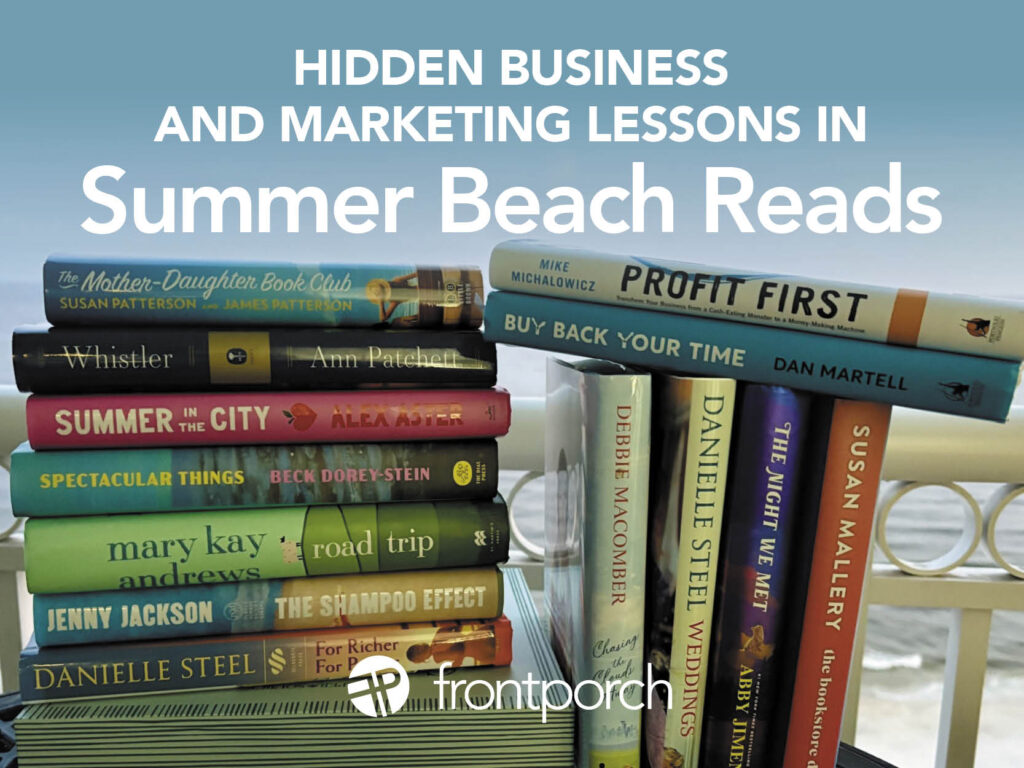
This year, I read a mix of fiction, family dynamics, romance, reinvention and two business books that hit harder than expected. My 2026 beach‑bag lineup included:
Spectacular Things — Beck Dorey‑Stein
Road Trip — Mary Kay Andrews
The Shampoo Effect — Jenny Jackson
For Richer For Poorer — Danielle Steel
Summer in the City — Alex Aster
Whistler — Ann Patchett
Mother‑Daughter Book Club — Susan & James Patterson
The Night We Met — Abby Jimenez
The Bookstore Diaries — Susan Mallery
Chase the Clouds Away — Debbie Macomber
Weddings — Danielle Steel
Buy Back Your Time — Dan Martell
Profit First — Mike Michalowicz
What You Can Get From Summer Reading
Beyond the obvious stress reduction, reading gives me:
Familiar settings, themes and characters that feel like home. This year’s list gave me everything from beach‑town nostalgia to complicated relationships to business strategy disguised as storytelling. Even when the plots were wildly different, there was always something that felt close to my own life.
Characters who make me say, “Yes, you go,” out loud. Every summer, at least one heroine earns a full‑volume cheer from my beach chair. This year, several did — whether they were navigating messy relationships, reinventing themselves, or simply choosing joy in the middle of chaos.
Storylines that blur into my work life and spark ideas I didn’t know I needed. Some books made me think about identity and reinvention (The Shampoo Effect, Summer in the City). Some reminded me how complicated leadership and decision‑making can be (Spectacular Things, Whistler). And a couple — Buy Back Your Time and Profit First — weren’t fiction at all but still delivered the kind of clarity that shows up in my work long after vacation ends.
Truth Be Told: Reading List Insights
All of these books are great. My favorite was Road Trip. The one I have read for the third time and need to read again is Buy Back Your Time.
Spectacular Things provided a ha moments that were not expected. It is better to ask questions than to give directions it reminded me. Also, it asked how do you want to leave the field after the game. Another thing hidden in the novel was: what adversity have you overcome or still grappling with on your quest to become a better player?
The reminders of a winner’s mentality were invaluable. Always be positive. Be poised under immense pressure. There is even more in there. Read the book, it’s so good.
Books as Blessings — Even the “Trashy” Ones
Reading expands vocabulary, reduces stress and boosts cognitive function. But it also does something else: it sparks ideas, reframes challenges and reminds us that inspiration can come from anywhere — even a beach read.
So cheers to the summer of 2026. It was one filled with sunshine, stories and unexpected personal and professional inspirations and learnings. Happy summer reading, y’all.
This summer, we’re once again welcoming high school interns from Ursuline: joining us first this summer is Sarah Muck. Sarah is a rising senior at Ursuline Academy in Dallas. She is interested in pursuing a business degree in college, potentially with a marketing focus. We love that! We also love paying it forward every summer by sharing the wonderful world of marketing with the next generation. As we usually do, we asked Sarah a few questions so our readers could get to know her a little better.
What do you think the biggest misconception about marketing is today?
I think a common misconception about marketing is that a brand’s reputation relies mainly on a marketer’s direct efforts. Instead, positive brand perception is built through intentional relationships between the brand and its consumers.
What is one of the biggest lessons you have learned so far in your life?
One of the biggest lessons I’ve learned is that it’s never too early to network. Building meaningful connections can be as simple as initiating a conversation in the hallway or inviting someone to sit with you at lunch.
If you could describe Sarah Muck in three words what would they be?
I would say balanced, goal-oriented and creative.
What do you think a good brand strategy should look like?
Good brand strategy starts with understanding your consumers. Every brand has their own unique voice and the key to effectively communicating that voice is for the marketer to see their brand through their consumers’ eyes.
Tell us about a major milestone so far in your life!
When I was a freshman at Ursuline, I got my first job at a local juice bar. Working a real-world job was one of the first “adult” experiences I had, and I’ve loved working there for the past three years.
What is a fun fact about you?
I have the best two older sisters!
We hope Sarah learns a little more about a possible future profession in our industry at Front Porch Marketing. We’re certainly enjoying working with her this summer!