Tag Archives: storytelling

Quickly developing technology and an infinite number of daily distractions are making it considerably harder to capture consumer attention. The solution? Using composition methods like balance and visual guides to captivate viewers so the storytelling can begin.

Why Do We Need to Enhance Content?

Technology has a way of both engaging and disengaging society. As new entertainment and services become increasingly more accessible and convenient, people learn to expect immediate gratification and quickly lose interest in activities that require patience, sustained attention, or effort.

One of the most widely cited examples: scrolling on social media. Since the algorithms use strategically personalized content to trap users in dopamine-driven reward loops, other daily tasks can’t compare. AI, one of the newest inventions to society, poses similar issues. Why would someone dedicate hours to writing emails, brainstorming designs, or researching topics if it can be done in 5 minutes with minimal work required? The same is true for delivery services. With groceries, meals, clothes, and products at people’s fingertips, it’s hard to see the appeal of going places in person.

However, technology doesn’t only disengage people from society, it also disengages them from the technology itself. As novelty wears off, people come to expect optimized convenience and speed – minimum effort for maximum reward. Although social media may captivate someone’s attention for hours, the longer they scroll, typically the more bored they become. When AI doesn’t generate a satisfactory response, people who expect instant, high-quality results become easily frustrated. Delivery app customers grow impatient with wait times that previously seemed remarkably fast.

Enter marketing. It’s here, in all this noise, that marketing has to compete for consumer attention. What poses an even greater challenge is that one of marketing’s greatest strengths is storytelling. As people become even more particular with what they deem is worth their attention, how do you convince them that your story is worth it?  My suggestion: using a combination of the composition techniques described below to enhance your content.

Balance Visual Weight

Arguably, balance is one of the most crucial composition techniques, because if your design seems messy, the viewer’s first instinct will be to look away. Instead, a designer’s goal is to make it easy for a viewer to interpret an image, while also keeping the elements interesting enough to hold their attention.

In total, there’s three types of balance: symmetrical, radial, and asymmetrical. Symmetrical balance typically acts as a crutch for most designers, because it is one of the easiest ways to assess if your design is balanced. Typically, as long as all your elements are center-aligned or mirrored on both sides, the result is an overall pleasing visual. Although it is less familiar to most, radial balance is also very comfortable because it involves arranging elements around a center point, so it naturally has many patterns.

With these two alternatives, many people may steer away from using asymmetrical balance, because it can be less straightforward and more time consuming. To make the process easier, I like to lean on the rule of thirds, which I learned while studying photography. The basic principle of the rule of thirds is to divide an image into a three-by-three grid and align the main elements on the intersection of your lines. Although using the rule of thirds does not guarantee asymmetrical balance, it is often an effective starting point for creating it.

Direct Attention with Visual Guides

After creating a balanced image, you want to draw attention to your main subject using visual guides. Again, there are many ways to direct attention, and this composition technique may be applied through a variety of ways.

Leading lines, framing, and depth of field are three popular visual guide techniques for photography. Leading lines involves using lines found naturally in your shooting location to draw attention toward the main subject. Lines can be horizontal, vertical, diagonal or even curved and include both natural and man-made objects. For example, roads, architecture, and mountains can all act as leading lines toward a main subject. Framing shares a similar concept to leading lines, but instead of creating movement through the image, it uses objects to surround and isolate a main subject. Try to lean into storytelling when using framing, by selecting objects that are relevant to your message.

For example, an ornate door or arch provides a sophisticated look, while elements like branches give a sense of calmness. If a shooting environment doesn’t naturally allow leading lines or framing, depth of field is another great method to use when directing attention. By using various camera settings to blur out the background, a photographer can highlight the main subject by keeping it in focus.

Outside of photography, there are many other ways to draw attention to a main subject. Often, designers will use contrast and scale to make certain elements stand out more than others. For example, a common method is using a pop of color in a black and white design to fixate attention on the object in color. Another method is making one element considerably larger than surrounding objects to emphasize an image or text.

Drive Brand Messaging through Storytelling

Although these composition methods help grab and direct attention, ultimately, it’s the message that turns clicks into customers. While creating aesthetically pleasing designs is an important part of storytelling, it is only one piece of the puzzle. To effectively communicate a brand’s message, marketers must showcase not only a product but also an outcome. When combined with strong content, composition techniques can transform a message from something viewers simply see into something they feel, experience, and remember.


What are the marketing trends to look for in 2026? Every new year brings fresh predictions, buzzwords, and strategies that can make marketing feel overwhelming. As algorithms continue to change, often we shift and adjust (or panic about Google’s new rule). However, the reality is that the strongest marketing trends are not about chasing what is new. Instead, trends focus on adapting what already works in smarter and more intentional ways. 

As we move into 2026, we see marketing becoming more human, more strategic, and more focused on genuine connections. Here are the key marketing trends to watch and lean into this year (if you are curious about 2025 trends, we wrote about those too). 

Authentic Content Over Perfection 

Overly polished visuals are losing their edge. Today’s audiences and clients want authentic content, not sales-driven or staged. In fact, authenticity isn’t just preferred; it is expected. 

This can look like:  

  • Behind-the-scenes moments 
  • Content that prioritizes connection over aesthetics 
  • Casual, conversational captions 

People are more likely to engage with content that feels genuine and relatable rather than overly produced.

Short-Form Video Will Remain a Marketing Trend in 2026 

Short-form videos aren’t going anywhere. That said the marketing trends to watch in 2026 depend less on what you post and more on why and where you’re posting it. 

Specifically, high-performing video content focuses on: 

  • Education, storytelling or quick insights 
  • Consistency rather than going viral 
  • Repurposing content across platforms 
  • Reaching audience where they already spend time 

Brands need to prioritize intentional video content that aligns with their values and speaks directly to their audience. directly to their audience. 

Personalized Marketing Over Generic Marketing

Generic messaging has become easier than ever to scroll past. In the marketing trend for 2026, clients expect content that feels tailored to their needs and interests. 

We create these opportunities by: 

  • Listening to our clients 
  • Creating marketing plans  
  • Prioritize personalization over generic marketing strategy  

When audiences feel seen and understood, trust naturally follows. Personalization not only builds stronger relationships but also drives stronger results. ships but also drives stronger results. e long run. Personalization not only builds stronger relationships but also drives stronger results. 

Overall, marketing trends in 2026 are less about doing more but about doing things better. Authenticity, personalization, strategy, and consistency are shaping how brands and clients connect with their audiences in meaningful ways. 

Although trends will continue to evolve, the foundation remains the same — we continue to focus on understanding our audience, providing value and showing up with purpose. When marketing is rooted in connection rather than pressure to chase what’s new and shiny, it becomes not only more meaningful but also far more successful. 


The narrative of your brand storytelling and messaging builds an emotional connection with customers and clients — and should not be overlooked. This is a powerful marketing tool you can use to differentiate your brand from your competition, and so much more. Once upon a time can grow a brand from a garage band to a full symphonic orchestra. From a video on a phone to a full-fledged blockbuster movie, and happily ever after.

Strengthening Brands Through Storytelling

Recently, two new clients reached out to us to strengthen and grow their brands. These two leaders — one a mid-sized manufacturer and the other a non-profit founder — realized their vision and mission weren’t being articulated strong enough. Their narratives were powerful, but were not being communicated in the most impactful way both internally and externally.

And these business leaders knew Front Porch Marketing would activate their superpowers to propel their brands to realize business results. These results included internal alignment, engagement, increased brand awareness and increased revenues.

Over the holidays, I was reminded of the power of storytelling by watching movies and listening to music.

Storytelling Connects Us Using Music and Movies

Courtesy of my daughter’s prompting, she and I enjoyed watching movies and listened to great music over the holidays, among other things. These experiences always remind me of the power of brand storytelling. And the success so many brands have had by doing it well.

Memorable Storytelling From Past to Present

“Let’s go to the movies, Annie,” to quote the great Daddy Warbucks. Growing up, my parents took me to musicals at The Muny and The Fabulous Fox in St. Louis, Missouri. One of the many shows I saw was Annie. My middle name before I got married was Ann. My mom thought it was cute to call me Annie any chance she could.

Wicked … the movie vs. the musical? From an early age, I was hooked on The Wizard of Oz. It could have been the ruby slippers. Who doesn’t love a good shoe? I cast myself in the garage version of The Wizard of Oz. I still can recall most of Dorothy Gale’s lines. But I had no idea what happened before Dorothy followed the yellow brick road. Whoa, there was a lot. And thanks to Wicked the musical I know the story behind the story. It was genius storytelling.

And, then came the movie this year. And it was only part one. Sign me up for part two right now. And kudos to all things Wicked the movie. The actors, the sets, the music. All of it.

Stories I’ll Remember From This Year

Red One, I thought it was brilliant. Who doesn’t want the Rock and that Captain America to save Christmas? An E.L.F. — Extremely Large and Formidable — operative joining with the world’s most accomplished tracker. As well as all the other special forces for the tooth fairy and other mystical creatures. To quote Jimmy Fallon, “Come on, bud.” So good.

And, the explanation of the North Pole? “Beam me up, Scotty.” The North Pole is a much cooler place than I ever imagined — such imaginative storytelling in this movie. The portals in the toy shop! I told Audrey I was going to start working at one. She didn’t think that was a good idea. And as far as Santa’s reindeer go, this is the only movie that I can recall that portrayed them so well. They are true forces of nature. That movie was a master class in storytelling!

Oh, and of course, Taylor Swift was a highlight of our holiday experience this year, again due to my daughter. She brought Taylor’s music back into my life. Also, thanks to my sweet girl, we have a forever memory of attending The Eras Tour in Miami, Florida. Um, excuse me for this but, “It was rare. I was there. I remember it.”

Telling The Right Story Endears Audiences

Taylor Swift is the GOAT of storytelling. She somehow connects with both an 11-year-old and a, cough, 50- something adult, in similar and different ways. Long live her words, music, talents, vision, inspiration and engagement. She is the epitome of bold, memorable storytelling.

If you are in doubt, listen to The Tortured Poets Department, which much to my daughter’s chagrin I sometimes call The Tortured Poets Society, because of my age (Dead Poets Society). I am sure the great Taylor Swift knows the magic of this movie, and realizes the impact that it had on a generation.

Waxing lyrical about brand storytelling and messaging through the lens of my holiday happenings seems like a great way to start the year on a positive note. I hope this idea of storytelling resonates with you too. If so, let us know. Or, share it with a business or nonprofit leader you know who wants to grow their businesses beyond a garage band.


I love telling a story.

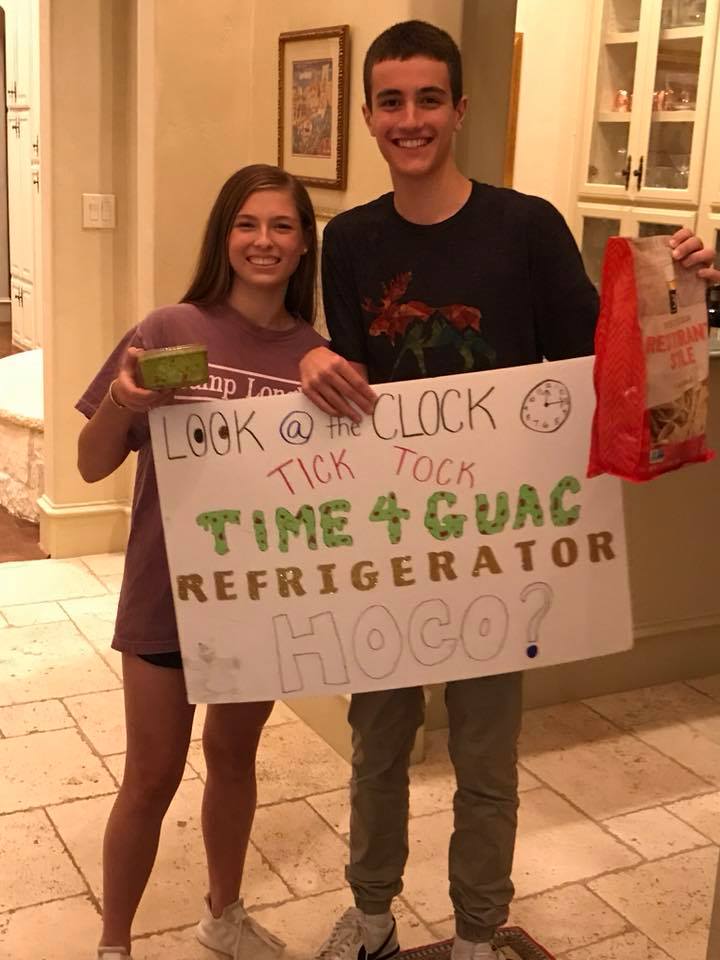
Last week, my son asked a girl to Homecoming. Naturally, I posted the obligatory photo on Facebook, but the way he asked needed explaining, because it involved a three year old conversation, a completely nonsensical batch of verbiage, and a pint of guacamole. So I told the story. It was heartwarming, it was funny, and it illustrated the completely unique bond between my oldest children.

The post received more likes and responses than usual. Why? Because I told a story, and that story resonated with people, who felt compelled to engage with me about it.

This is no surprise to us on the Porch. We have long known that effective, evocative storytelling is the cornerstone of marketing. Finding the right words and ways to tell our clients’ stories is what marketing them is all about. On social media. On their websites. In their email newsletters.

It’s no wonder, then, that the marketing world is proclaiming that storytelling is the Future of Content Marketing in 2018.

It’s no longer enough to give consumers some evocative imagery and slick typography. The visuals are important, of course. It’s what catches their eye and piques their interest. But you have to give them something to connect to emotionally, something that engages them and keeps them coming back for more.

“After nourishment, shelter and companionship, stories are the thing we need most in the world.” – writer Phillip Pullman

Your marketing should tell your story. It should tell the story of your business – what sets you apart and makes you unique. It should take information that is fairly practical – company capabilities, project descriptions, etc. – and give them life, context, and meaning.

It’s what I love most about my job. Meeting our clients. Listening to them and watching them and figuring out who they are and what makes them special. And then choosing the words that paint their picture. It’s the best.

Are you effectively painting your picture? Does your website show people exactly who you are? Do your social media accounts give people a glimpse into why you do what you do? If they don’t, then come see us. We can help you tell your story.


We on the Porch are passionate about Branding! We have talked about branding. We have talked about lifestyle branding. Now let’s talk about how photos define your brand.

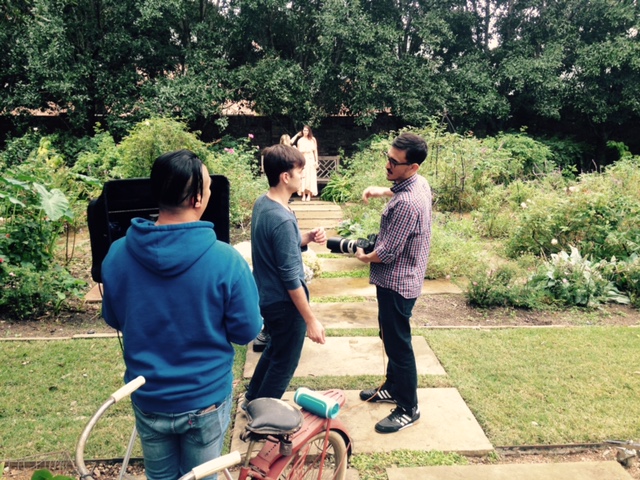
Simply put, pictures are as integral to your brand as grapes are to wine! They bring your brand to life. Beautiful photography can be used in so many ways! Photos can be used on your website, for sales materials, market/trade shows, third-party training materials and for social media.

Delivering your brand message via social media is imperative. Of the top five social media sites, two of them are 100% visual! You can’t gram or pin without a photo, so what should that visual be? Your visual storyboard is just as important as your branding message.

Considerations:
Studio Shoot or Location Shoot?
Obvious or Subtle?
To Demonstrate or Not to Demonstrate?
Features need highlighting?
Professional or smart phone?
How to Represent the Brand?

FullSizeRender (00000002)

Hold up a minute! How to represent the brand? Yes, remember all the branding work you’ve done around brand promise, brand characteristics … these need to be applied to your photography.  A simple three-question quiz to ask when choosing a photo to represent your brand:

  1. Does it match your brand personality, characteristics and definition?
  2. Does it evoke emotion?
  3. Does it illustrate your story?

Should you invest in professional photography? Heck, yes. There is a direct correlation to sales for almost all the brands we represent. Photography matters. It is worth the investment.

Need proof? Here’s our Client L’Amour Des Pied’s showroom floor before and after an investment in photography.

Before

After

Our world is served to us on screens and those screens can’t give us a 5 sense experience, we must rely on the photo to evoke necessary emotion. Remember, a picture is worth a thousand words.