To go along with our 8th Anniversary, which we are celebrating this month, here are eight marketing trends that are fast-becoming marketing must-haves. Are you taking every opportunity to build your audience?

1. Personalization
Personalization can take on many flavors. It can be as simple as including your customer’s first name in the salutation of an email. Or, a company can be very intentional about their website and lay out an easy-to-follow trail of digital breadcrumbs.
You don’t need to turn your supply chain inside out but do think about how you reach your customer at every touch point and ask, is this made for them?
2. AI
Speaking of personalization, Artificial Intelligence is going to make even more personalization options available. In fact, it already is – Amazon is a perfect example. When a customer logs into their Amazon account, the landing page is customized for them based on their past purchases and viewing history.

3. Live Streaming
Even in our hyper-connected world, people still long for connection. I think this partly explains the popularity of live streaming (also called live video). Conducting live streams with comments enabled can go a long way in building a relationship with your audience.
4. Visual Search
Human beings are visual by nature. So, it makes sense for people to want to search visually as well as with words. And the technology to do so is getting better and better.
Pinterest is a powerful example of this trend. For an interesting account of their pursuit of visual search technology (it all starts with an avocado, because of course it does), click here.
5. Voice Search
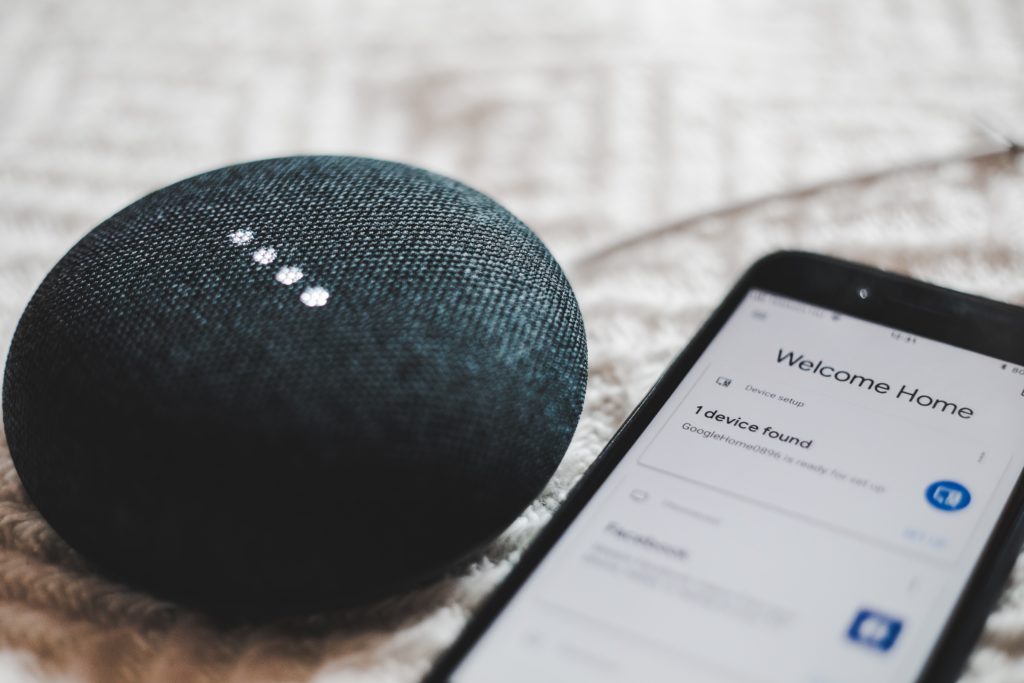
As we have talked about on this blog before, voice search is fast becoming a part of consumers’ everyday lives. Forty-one percent of adults use a voice- activated personal assistant at least once a day. Optimizing your website for voice search will become increasingly important.
6. Purpose & Emotion
The adage “people buy with their emotions and assign reasons to their actions later” is true. Nike, Tesla, Facebook. For better or worse, these companies have showed their purpose through their actions over the years. And customers have reacted.
What emotions do your customers associate with your company? What is your company’s purpose?

7. Experiential Commerce
Much has been made of the retail apocalypse. But, as TechCrunch argues, retail might not be experiencing The End so much as an inflection point.
Many wildly successful e-commerce businesses have opened physical stores in recent years – Amazon, Warby Parker, Casper, Glossier. It’s all about creating a seamless experience where a business can court a customer little by little. Retail stores are showrooms and experiences unto themselves, where customers can try before they buy.
8. Content marketing
Consider this: 47% of buyers viewed 3-5 pieces of content before engaging with a sales rep.
Content marketing isn’t going anywhere. The media market is fragmented, everyone is their own publisher. Now is the time for companies to build their own audience.

2019 will be all about a better customer experience with personalization, automation and AI-powered technology, so you need to be sure you are producing custom content to engage your targeted audience. Whether you’re considering incorporating these trends or you’ve already implemented and are evolving your use of them, we are here to help you incorporate them into your marketing plan.







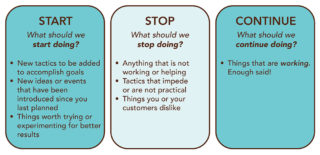 Did you start the year with an annual marketing plan? GOOD FOR YOU. Now is the time to dust it off and do an assessment. We like the start, stop, continue approach. Are your tactics accomplishing your goals? CONTINUE. Is the tactic not producing results? STOP. Need to start something new to achieve your goals? START. We are firm believers that all marketing plans are working documents. Make sure you are working your plan and your plan is working.
 Social media is such a major component of people’s personal lives. It should be a sure sign for small businesses that a social media presence is an absolute must to build and grow. It is a way for businesses to interact directly with current customers. It is also a way to reach potential customers.