Reflecting on the past year, we are so grateful for courageous, fearless business leaders. We continue to be inspired by those who bravely carried on in 2020. Grit and gumption.
Cheers to those leaders who showed up. Those who made the most out homeschool, while working or not, closures, pivots, business opportunities and personal and professional loss.
Earlier in the year, I watched no TV. I read only the daily work related briefs and blogs.
However, in the later part of the year, I read a good chunk of mindless trash. This is how I escape. Reading fiction, mostly murder mysteries and romance novels.
The two personal and professional development books I did read were life changing for me. Leaders must read. One was this. The other was Brene Brown’s Braving the Wilderness. I read it twice in the past two months.
Leaders will brave the new year.
How?
Do you. Brown talks about praying and cussing. Those who know me will not be surprised I love this. She talks about not being moved. Doing work in an honest way that is true to yourself. Leaders, time to truly support each other. I let others “do you.” And, I do me. Belong to yourself. ” … brave the wilderness of uncertainty, vulnerability and criticism.”
Speak truth to bullshit. Do not shut down. In other words, that is the easy road. Leaders do not avoid communication. Learn more about others. Even if we still disagree, at least we engaged in meaningful conversation. We have a deepened mutual understanding. However, at all costs, be civil.
Strong back. Soft front. The latter is most challenging for me. No more armored front. I will stay open. Leaders are comfortable with vulnerability. “A soft and open front is not being weak; it’s being brave, it’s being the wilderness.” Eeeek … here goes. I can do it.
Be fearless. I am a Goldman Sachs 10,000 Small Businesses program alum. The experience was life changing. My co-hort continues to inspire me. My growth group was named, “The Fearless Five.” Coincidence? “Fear is how we got here.” Fear and blame. Own your pain. Do not inflict pain on others. Be fucking fearless.
Read the book. It is worth your time.
And, in conclusion, I am driven to make this my best year, for me and my family, business, team, clients, community, country and world.
At the beginning of the pandemic, I was not worried about my mental health or how I would cope with lockdown. As an introvert, I genuinely thought this will not be a big deal for me. I am a young-ish person in reasonably good health, so I was not worried about getting sick. This will be my Olympics, my time to shine.
I was wrong.
Mental health is not always smooth sailing. But, you can get yourself out of a rut.
It’s one thing to stay inside all day because you want to, it’s quite another because you have to. Add to that doomscrolling and my tendency toward rumination, I found myself falling into what I call, a Covid Hole. Everyday started to feel like it had the same flavor. It was like each day was a sad, sad Groundhog Day.
I can’t really explain why exactly, but I started crawling my way out of this dark pit in September. Maybe it was the realization that I needed to cut myself some slack. Maybe it was the timing – I love fall. Whatever the reason, here are a few things I’ve done that have helped my mental health.
Get Out There
Get out where? Anywhere. The “where” doesn’t matter, just change your environment and ideally, see people and hang out with friends if you can. At some point, I decided to put my mask on and just go outside.
Meeting friends for coffee and was such a breath of fresh air to talk and enjoy their company. I became used to seeing masked faces and returned to my pre-Covid retail habits. I spent hours at Barnes & Noble and Target, my happy places. Even professional networking made me feel better. The chance to socialize lifted my did wonders for my mental health.
Human beings are social creatures, even the introverted ones. I realized I need more social interaction than I thought. Just call me a “talkative” introvert.
Accept the Transience of Life
I heard a tip once that helps my mental health: when you find yourself in a stressful situation, add “for now” to the end of that sentence. Work is so busy and stressful, for now. Fighting with my computer is driving me crazy, for now.
Everything comes and goes, the good and the bad. Wishing for bad things to stop happening is like trying to stop the ocean with your bare hands. The ocean, life, is going to do what it wants to do. Accept that waves come and go.
Ask for Help
I’m not saying I am great at delegating, but asking for help, is … well, helpful. You are not alone in this, so ask for help – from your family and your co-workers.
Look Forward to Something
Whether that something is big or small, it’s a joy to have something to look forward to. For me, I’ve been looking forward to coffee with friends and on a much bigger front, the impending birth of my brother’s first child. Her name is Elise but I like to call her Baby Gregorio. Thinking about my impending role as “Fun Aunt” lightens my mood and helps my mental health.
I hope these ideas, while not groundbreaking, were helpful for you. As someone whose everyday life always has a small hum of nervousness around it, I know it’s hard sometimes to pull yourself out of rut. But it can be done. You can find the joy and you can ask for help. The main thing is believing that you can feel better.
Go build yourself a sturdy raft and find some excellent first mates. It may feel awkward. It might even make you feel nervous – trying new things can do that sometimes. But that feeling will go away and I can almost guarantee you that you will feel better.
But, maybe, especially right now, we all should hold each othera little closer, a little tighter.
How can I write about September 11 – an event that I did not witness in person and yet simultaneously affected everyone?
Here on the Porch, I am known as an excellent writer. But, for this assignment, the words were not flowing like they usually do. I stared at a blank page for a while.
Everything I thought of writing sounded like empty
platitudes. So, when words fail me, sometime lyrics come to mind. Maybe because
songwriters are geniuses and that is what songs are supposed to do – stick in
your mind forever and describe a moment in time perfectly.
New York Minute
New York Minute is a song by Don Henley and came from the album (aptly enough) The End of Innocence. To me, the song’s chorus describes the events of September 11, as well as its aftermath. One minute, I was getting ready for work at my on-campus job. The next minute my mom was talking to me on the phone, through tears, half a world away, telling me to be careful.
On the morning of September 11, my oldest friend in the world – Bella – was going to meet her friends for breakfast at the World Trade Center. The next minute she was running for her life. We have been friends for 20 years now. If she did meet her friends that day, Bella would have been a cool girl I used to know.
Later that fall, in one of my history classes, we had to
talk as a group about a landmark event that touched everyone’s lives. For a
previous generation, that discussion could have been about the Kennedy assassination
or the Moon landing. For us, it was September 11.
A classmate shared an especially poignant story. His dad
was a pilot. He was supposed to fly one of the planes that hit the Twin Towers
that day. He switched flights with a colleague so he could attend his youngest
son’s soccer game that morning.
Left or Right
What is my point in sharing all these anecdotes? I’m not sure to be honest. I keep thinking about all these seemingly small moments in our everyday that when we look back on them, turn about to be a big fulcrum in the story of our lives. Points in time where the axis of our lives turns in a dramatic way. Running late, running early. Take the day off or go to work. Left, right.
I guess, my point is, we don’t know where these dramatic
turns will be. We think its going to be the next big promotion or a move to a
new city. And usually, its nothing like that. It is the small things that can
alter the trajectory of our lives.
Turning Points
A chance encounter with a co-worker in the break room who
could turn out to be the love of your life (my brother and his wife).
My dad getting juuuuuust a high enough score to pass the
Armed Service Vocational Aptitude Battery test and join the U.S. Navy. His was
one of only 150 spots reserved for Filipino citizens each year.
One night during my sophomore year, I took a call from a boy
I “sorta kinda” knew in high school. A mutual friend said we should talk to
each other. So we did. That one call turned into calls nearly everyday. He
turned into my boyfriend. And then my husband. That was almost 20 years ago.
Of course, not every chance encounter or small movement
is going to turn into something big. You simply don’t know. But, maybe,
especially right now, we all should hold each other a little closer, a little
tighter. Because everything can change.
Next up in the Rocker Spotlight series is Front Porch Rock Star Vanessa Hickman, where she shares her experience on the porch and things she has learned throughout her career.
Biggest Misconception about Marketing
The biggest misconception about marketing today is that there is one solution to advance brands in their marketing goals.
Advice You Would Give To Someone Struggling With Brand Identity
As a marketing maven and Front Porch Rock Star, one of the biggest lessons I’ve learned is “your work is going to fill a large part of your life, and the only way to be truly satisfied is to do what you believe is great work. And the only way to do great work is to love what you do”- Steve Jobs.
What is Good Marketing?
Above all, good marketing is intentional, consistent and precise.
Dinner With 1 Person Living Or Dead
If I could go to dinner with one person living or dead I would choose Jesus.
Describe Yourself in 3 Words
I describe myself as loyal, inclusive and loving.
Favorite Thing About FPM
My favorite thing about FPM is delivering results for a variety of clients. Above all, I would describe the culture at FPM as collaborative, caring and dedicated. Furthermore, FPM differentiates itself with its sound strategy, excellent execution and tenured team members.
Fun Fact
My fun fact is I graduated with a Bachelor of Science and Bachelor of Arts when I was 20 years old.
Teamwork is essential in so many aspects of our lives today. How many team hats are you wearing right now?
My kids’ closet shelves are scattered with different hats, jerseys and socks, for instance. I love all our different teams, whether its academic, spiritual, work, sport. We even call our family a team.
“Teamwork is the ability to work together toward a common vision. The ability to direct individual accomplishments toward organizational objectives. It is the fuel that allows common people to attain uncommon results.” – Andrew Carnegie
Big agency life perk is the opportunity to join brands and marketing teams spanning different sizes, categories and geography. Joining new teams to reach goals is one of our favorite things. We are energized and inspired regularly by the talented, dedicated teams we partner with to achieve defined objectives.
Did you know that our Chief Rocker blares Boys of Fall by Kenny Chesney every day in her car during football season? The lyrics resonate with her for many reasons and because of the quotes by some of the greats at the end. Above all, her favorite quote is from Joe Namath: Life is a team game. It is the big game.
Effective teamwork is simultaneously simple and challenging.
We’ve rounded up nine factors that we link to team success. The folks that live and nurture these factors seem to achieve their targets effectively and consistently.
My family invests a lot of time in sports, we are a football, basketball, soccer and baseball loving crew. Therefore, team sports organically have all these components – how convenient for parenting two preteen boys! Do your teams hit all the notes?
It is every business owner and leader’s goal to build a company that is both valuable and loved. It’s an easy goal to state; but not necessarily easy to realize.
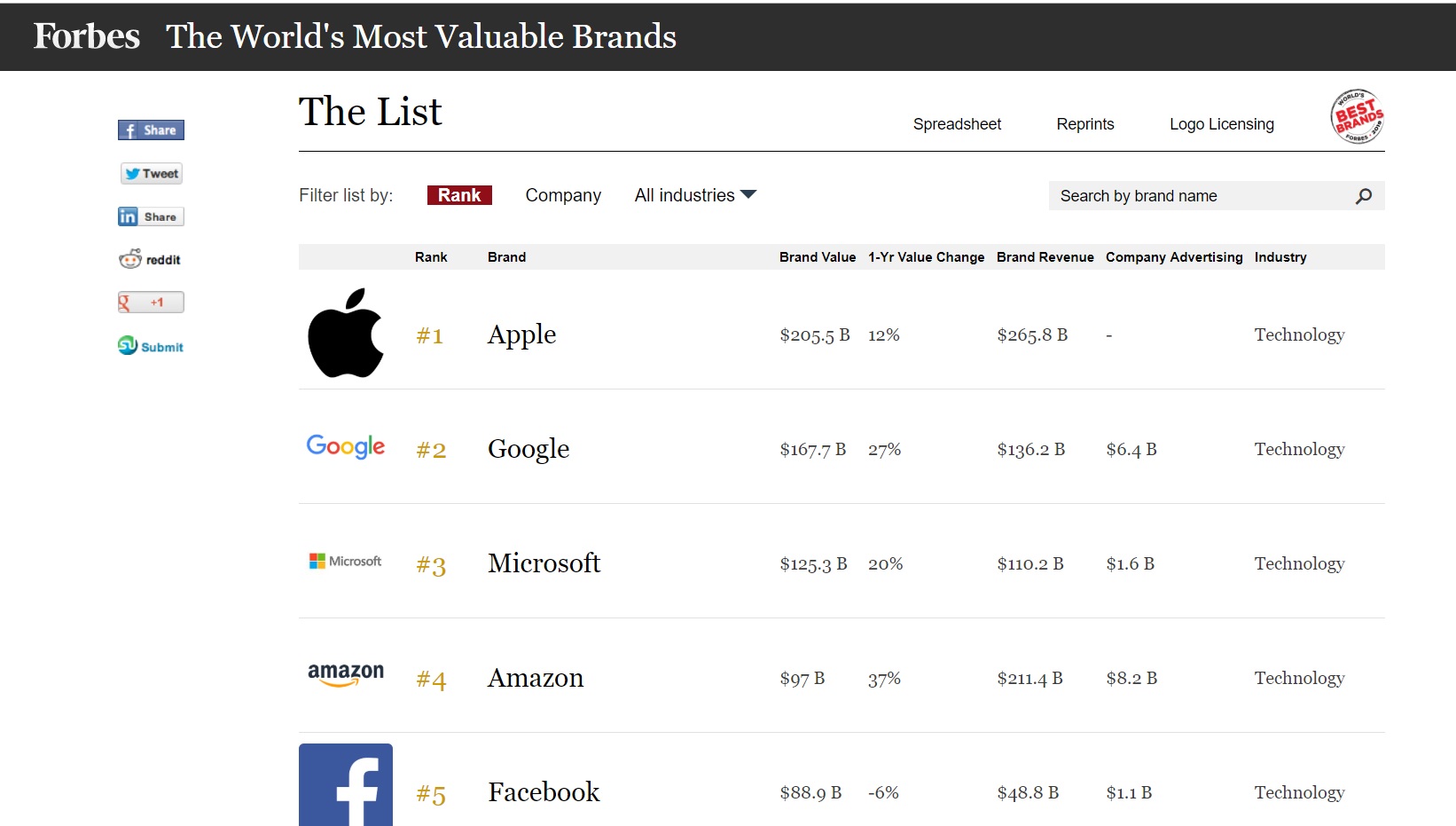
And now here are the 2019 top five most loved brands according to Morning Consult:
Amazon – 4th most valuable
Google – 2nd most valuable
Netflix – 38th most valuable
Facebook – 5th most valuable
The Home Depot – 32nd most valuable
Note the crossover with the most valuable brands and most loved? That is a result of branding. So how do you create a company that is both valuable and loved?
You create an authentic brand.
Branding can mean different things to different people, so let’s clarify this and the value it can bring to your brand. Simply put, your brand is your promise to your customer. It tells them what they can expect from your products and services, and it differentiates your offering from that of your competitors.
Your brand is derived from who you are, who you want to be and who people perceive you to be. How clearly and consistently it’s delivered at every point of contact is vital to how strong the brand can become.A strong brand creates brand equity, which is one of the factors that can increase the financial value of a company.
If your company invests in its brand, you can achieve and enjoy the following benefits, to name a few:
Higher price points and less pricing pressure
Greater market value
Reduced competition
Increased business opportunities (partnerships, licensing deals, acquisitions)
So how do you get there?
We say it all the time, strong brands don’t happen by accident. Investing in your brand requires taking a close look at who you are and what you stand for, and then committing to delivering on that promise at every touch point.
Your brand must be both differentiating and emotionally relevant. Ask yourself, what do you do? How do you do it? What makes you different? These answers are the seed for your brand story, which becomes the litmus test for everything you say and do as an organization.
If an experience has your company associated with it, then it offers a specific and meaningful promise. It’s what your target audience (both customers and prospects) should expect, and it’s the culmination of feelings they have after an experience with you.
If your brand consistently delivers on its promise, then your target audience will come to trust it, and trusted relationships develop into emotional bonds that are hard to break. This loyalty to your brand means greater business success and reduced competitive threat.
The process we use to draw out and solidify your brand and its story is an extremely valuable effort for stakeholders and employees alike. If your brand needs some direction, we can help!
I have been to plenty of conferences before, but I don’t think any a conference has resonated with me quite like this year’s Nonprofit Communicators Conference. Judging from the theme alone, “Communication for Social Good, Impact, Authenticity and Executive Presence”, the conference could have been six hours of well-worn clichés. Instead, I came away with a lot of great insights.
Authenticity Matters
When I hear words like “authenticity,” it sounds like one of those touch-ey feel-ey phrases that make me roll my eyes. Why should we care if a company is being authentic or not?
We live in interesting times. Globally, we are experiencing a lack of trust in institutions, including schools, media, government, and yes, nonprofits. With the share of Americans donating to nonprofits in decline, this lack of trust is disturbing news.
For-Profit companies cannot afford to ignore this reality either. Almost two-thirds of the consumers around the world based their purchasing decisions on their beliefs.
Authenticity is knowing your story and owning it. It is your history and your values. These values must be proven over and over again. A company’s history, story, and values are how they can inspire others.
Here are a few authentic brands. Is your brand an authentic reflection of your company?
Leadership Models are Changing
When I saw that there would be a workshop on executive presence and internal communication, I thought it would be someone telling us to “power pose” our way through work. The workshop turned out to be much more than that.
I used to think of a leader as a hard-charging person who was often the loudest or the most extroverted. Sort of like a bull in a china shop, but more charismatic. More of drill sergeant than a coach.
This “command and control” model of leadership is changing. People spend more than 90,000 hours of their lives at work. Our work and personal lives often blend into each other; with many workers who are expected to be “on” 24/7. I think these people deserve better than a drill sergeant for a boss.
Leaders listen, are constantly learning, they always ask for feedback and they are other-centered.
Leaders also have a “magic sauce” called Executive Presence.
Executive Presence is Crucial
What is executive presence? It’s the qualities of leadership that
Character – Qualities of a leader as a person that are fundamental to who they are and give us reason to trust them. These qualities include integrity, concern for others, and humility.
Substance – Cultivated qualities of mature leadership that inspire commitment, inform action and lead to above-and-beyond effort. These qualities include practical wisdom, composure and vision.
Style – Over, skill-based patterns of communicative leadership that build motivation and that shape and sustain performance. Behaviors like intentionality, inclusiveness and assertiveness fall into this category.
Executive presence is an inside>out process, it starts with inner work. The workshop presenter described executive presence with a flight analogy – executive presence is like “putting on your oxygen mask first.” You must know who you are – your story, your voice, your values – before you can expect to lead others.
You can’t bluff your way through executive presence. True leaders are difficult to come by for a reason. Anyone can bark orders at people. Few people can actually inspire others to act.
I know which type of leader I would like to follow and which type of leader I aspire to be.
The Power of Storytelling
Human beings are wired for stories. Stories are a universal language. They carry weight, often even more so than facts because stories can make us feel something – joy, sadness, anger, etc.
Both organizations and individuals must know their story to make an impact in this world. A few questions to think about when contemplating your own story:
What is the story you are telling the world? Do your organization’s values match your deeds?
Whose story are you telling?
How will you tell your story? Does your story lend itself to video? Social media? A podcast?
Stories matter – they inform our world view and they can inspire others to action. What’s your story?
Corporate Culture Communicates a Lot
Today’s workplace asks a lot of its employees, and employees are looking for more in return. In fact, as many other institutions are losing the public’s trust, people are increasingly placing their trust in their employers. Globally, 75 percent of people trust “my employer” to do what is right, significantly more than NGOs (57 percent), business (56 percent) and media (47 percent).
Culture is a kind of communication; it conveys what your company values. When your corporate culture is aligned with your values, when your company “walks the walk,” your employees are more engaged. An engaged workforce is a productive workforce.
And a word of caution from the conference: “Social media has raised the stakes of internal organizational culture.” You don’t want one of your employees becoming so disengaged from their work that they pull an … emergency slide.
The conference resonated with me for a few different reasons, but they basically boil down to this: I feel like I am at a point in my life where questions about authenticity and leadership are becoming more and more important. How we present ourselves to the world, whether it’s in a professional or personal setting, matters. The stories we tell are important. And whether we are being true to our authentic selves, is paramount.
Now, if you will excuse me, I’ve got some inner work to do.
Contemplating a communication strategy to enact in the event of a company crisis is a cringe-inducing exercise for any business leader. But it’s a necessary exercise.
Considering possible catalysts and consequences allows you to craft contingency plans that will help weather a storm … before the clouds appear on the horizon. The more you plan, the more likely damage control becomes if a crisis strikes. Rapid containment helps prevent catastrophic damage to a brand’s reputation and bottom line.
There are core components of any crisis control plan, regardless of industry, company size, or severity of crisis.
“Before anything else, preparation is the key to success.” ~ Alexander Graham Bell, inventor
Before a crisis strikes, create a comprehensive crisis communications plan.
What are elements of a crisis communications plan?
Identify a corps crisis team. Your CEO, COO, Communication Coordinator(s) and Legal Counsel will undoubtedly be part of this group. Consider who else may need to collaborate.
Identify and know your stakeholders. Anyone who could be impacted by what occurs with your brand should go on this list. This includes customers and shareholders.
Identify and train spokespeople. Anyone handling communications with the media and/or on social media should be trained on the dos and don’ts. Train these spokespeople to remember you are never “off the record.” Ingrain in them these three C’s of crisis communications:
Be Clear. Concisely communicate the information and the plan as they are established.
Be Credible. Communicate only facts and don’t make promises you can’t keep. Authenticity and empathy build credibility. Acknowledge and respond to questions and mistakes quickly.
Be Cohesive. Stay on message throughout all communication methods and channels. Confusion breeds conflict.
Establish notification and monitoring systems. Consistent social media monitoring will allow you to watch for the early warning signs of a brewing crisis. Having established notification systems will allow you to quickly coordinate a response to avoid catastrophic damage.
Be proactive with your public relations. This includes having a a solid social media presence. Consistent connection with your audience builds a strong brand. The stronger brand you build before a crisis, the more credibility you will have when weathering one.
When a threat or crisis is identified, immediately implement your plan.
Coordinate Central Command. Establish frequent communications with the crisis team.
Control the Narrative. Crucial to conquering any crisis is controlling the narrative surrounding it. Compose a message establishing what you currently know and what you are doing to counteract the damage. Identify the communication channels you will use to provide future updates.
Communicate.Pause scheduled posts on social media but continue monitoring and responding in real time. Remember the Three C’s when engaging with the media and/or on social media. Every touch point is critical.
Collect Information. Most of the time that means going offline, but it is critical that you continue to monitor and respond.
“The time to repair the roof is when the sun is shining.” ~ President John F. Kennedy
After the dust settles, comb through what worked and what didn’t. Change the plan accordingly, and continue to update it on an ongoing basis.
In 2019, social media marketing is an essential tool for developing a connection with your audience. In some ways, social media marketing is similar to online dating. You are courting your audience with social media, and a connection won’t develop by being overly promotional with your posts.
Successful social media marketing requires an investment of significant time (and resources). Your investment can pay dividends, but it requires planning. Developing strategies with clearly-identified goals and target audiences is key. But avoiding common faux pas is equally as important.
Seven of the (many!) dos and don’ts for social media marketing
Be social. You have to put yourself out there, so don’t be nonexistent on social media. You can’t influence anyone if you have no profile.
Be interesting. Know Your Audience. You want to pique and maintain viewers’ interest, so post varied content they will find interesting and valuable. Don’t make it all about you by only posting promotional content.
Be genuine. If your brand is all about fun, your audience expects a certain playfulness to your social media. Don’t send mixed messages by being inconsistent in your marketing.
Be available. Social media marketing is a 24/7 customer service opportunity, so engage often and consistently. Don’t ignore posted questions or concerns.
Be a good listener. Always pay attention -and respond gratefully- to consumer feedback. Don’t ignore the negative feedback, because you can’t develop relationships by ignoring (or deleting) criticisms.
Be Aware. Use hashtags and handles to attract interest, but don’t appear desperate by using too many. Keep it effective and efficient.
Be smart. Check your content for spelling, grammar and phrasing, and correct mistakes as soon as they’re caught. Don’t be insensitive in your phrasing or messaging.
We cannot say it enough – strategy is critical.
Content is key. Consistency is key.
Social media management is customer service and poor customer service will hurt your brand’s reputation.
Unlike in dating, it is a good idea to outsource social media duties. Those of us with the experience and knowledge can create and implement social media marketing strategies that follow all the rules.
Give us a call to help influence your audience to swipe right on your brand’s social media marketing!
Current brand identity – This includes your logo, tagline, key messages, style guidebook, features/benefits, and color palette.
Digital/social presence – Is your website easy to navigate? If your company has an ecommerce component, is it easy to purchase items from your site? Is your site optimized for SEO and is it mobile responsive?
Electronic marketing – This includes your company blog, email marketing, and e-newsletters. (Email marketing gets a bad reputation these days but remains one of the most effective ways to reach your customer and increase your business.)
And the list goes on. Everything is a touchpoint: your collateral, your website, the way the receptionist answers the phone.
Ask yourself, “Does this resonate with our current customer? Does it resonate with new customers we want to pursue? Are these efforts in alignment with one another?”
A few years ago, Front Porch did a brand audit for The Remac Group, the parent company of four shoe and women’s apparel brands: J. Renee, Kay Unger, Phoebe and L’Amour Des Pieds. We looked at all four labels from top-to-bottom, looking for cohesion, consistency and alignment with business goals.
Want to know the results? Give us a call and we love to share more.
Even if you know you need to overhaul your brand, it would still benefit your company to conduct an audit. After all, if you don’t know where you’ve been, how do you know where you’re going?