Author Archives: Julie Porter

Your company has gone through the branding exercise and has a clearly defined brand! Cheers to you! branding

And by that I mean a simple, relevant customer promise that competitively gives you an edge. Check that off the list, right?

Absolutely! But before you move on to other things, have you thought about what you must do internally to execute the brand? To make it come alive? To become more than just a piece of paper? To ensure that your customers understand the brand as you intended?

Before you talk about your brand to the masses, you need to first look within to be sure you’re delivering on that brand throughout the organization. You don’t want to set an expectation that disappoints later. What are your customer touch points?

Think about ALL of them, like where your store is located to how well the product performs or even how clean the front desk is when you walk in the door. They’re all important.

Here’s an example. My parents, who are in their late seventies, recently had an eye doctor appointment which had been scheduled some months prior. When they showed up at the office, the staff told them the ophthalmologist wasn’t in – he was stuck in another city due to weather. What? Hello? Could the staff not call patients to reschedule before the trek to the office? Even though the doctor is an excellent ophthalmologist, his brand was tarnished that day by his people. If this happens enough, patients will leave.

Ergo, all companies need to identify and proactively manage their brand at all points of customer contact. Make a list of your contact points. Especially the less obvious ones like:

  • the way your phone is answered
  • how seamless your billing processes are for customers
  • what your employees say to others about their job
  • the attire of your salespeople
  • the quality of your packaging
  • the functionality and ease of navigating your website
  • your response time for customer questions

Basically, everything you say and do as an organization reflects on your brand. If you’re experiencing problems at a touch point, they need to be addressed – you don’t want a seemingly minor issue to be the string that unravels all the work you put into building your brand. Assess each item on your list, and then prioritize those you need to change.

The goal is to eliminate negative experiences and keep or build on areas in which you’re strong. Strong as in communicating the brand promise.

Often, I’ll ask a client, “If you do everything right, what’s the one thing you want your target to remember about you? If we conducted research now, would they give that answer?”

This is the fun part, folks! Marketing rocks! Every company has struggles, but strategic marketing built on a strong brand is the impetus for success!



10458037_10153143659324684_1162887784269470914_nAnyone who knows me knows that I’m a little tennis-obsessed. I love to play it, watch it, discuss it … it’s my thing. It keeps me sane and makes me happy.

So about three months ago, I got a phone call from someone who I knew only by name (a captain of a rival tennis team). She was forming a “dream team” of players that she felt had the potential to advance and win a city championship, then a sectional championship, and ultimately a national championship.

Naturally, I jumped on board, excited about the possibilities.

After easily winning our regular season flight, last weekend we played for the city championships. Unfortunately, in the month prior I’d been sidelined with illness and injury and wasn’t in fighting shape. My heart was in it and I played, but I didn’t play well, and I wasn’t able to get the win to help my team. Fortunately for me and for everyone, other members of our team won their matches and the team as a whole won the city championship and advanced us to sectionals.

Of course this experience clearly illuminates the importance of TEAM. Finding the right people at the right time to help with the right things – a perfectly constructed gathering of people fully able to collectively move the ball forward and achieve goals. Yin and yang. Strength and weakness. It’s applicable in tennis and even more applicable in business.

I am so thankful to our captain, Lynn, for doing the work necessary to put us all together.

Here’s what we all can learn from her about assembling a TEAM, I will call them ~ “Lessons From Lynn:”

1.  Every team needs a leader who knows what’s what. A good leader has been in the trenches and knows whereof they speak. They should have the knowledge and experience to know what lies ahead and what will be required.

2.  Experience will tell you what you need. Trust your experience to guide you in identifying the needs of your TEAM. Do you need a strategist? An analytical type? Someone wildly creative? A worker bee? What combination of strengths and personalities is going to get you where you need to go?

3.  Find your people. Find the best people you can to fill your roles. Don’t settle for “almost good enough. “Enlist help from recruiters (we are partial to Mom Corps Dallas, one of our superstar clients) and/or behavioral benchmarking software (we are partial to Shadowmatch USA, who we have worked with in the past) to aid you in your search.

4.  Don’t be afraid to remove people who aren’t a good fit. If someone’s work is not aligned with the efforts of the TEAM, don’t try to fit a round peg into a square hole.

5.  Delegation is key. Lynn didn’t even play during city championship weekend. Her role was to make the decisions, delegate, organize and support. The leader doesn’t have to be the star.

6.  Let people do what they’re good at. Diversity in skills and experience brings broader perspectives and different approaches to the TEAM and allows for efficient assignment of people to roles. If you have assembled your team well, who does what should be an easy decision.

I feel lucky to be a part of a fantastic tennis team, and an equally fantastic rocking work team at Front Porch Marketing.

Take a page from our leaders and assemble your own DREAM TEAM to get you where you want to go!


First of all, if you don’t know what a typewriter is, this blog probably isn’t for you. pegblogimage

It’s for us old geezers who distinctly remember the clickety-click of “secretaries” creating paper office correspondence.

In fact, typewriters were once indispensable tools for practically all businesses.

So what happened? Why aren’t they around anymore? The answer is easy, right?

Technology. We’ve now entered the digital world. Fast forward to laptops, tablets and smart phones that empower paperless communications anytime from virtually anywhere. Duh, you say. What does that have to do with me?

Let’s take a lesson from our typewriting past, and apply it to our future. What seems absolutely critical in today’s business environment that’s going to be obsolete tomorrow? You know the answer – you just don’t want to say it out loud:

Paper.

It’s happening, friends, more quickly than you might imagine. Offices across all industries are conducting more business and storing more documents online.

Real life example: I had a root canal (joy) done more than a year ago. The endodontist’s office was digital – I sat in the waiting room at a laptop station for new patients and “filled out my paperwork” digitally. Crazy, huh? Well, not really.

Back to my point.

Where are you in your paperless journey? Is it even on your radar? Are you ahead of the game, or will you be pulling up the rear, kicking and screaming? If you’re not convinced you need to take action now, then let me hit you with a few impressive facts:

Environmental Impact

  • According to reduce.org, the average office worker uses 10,000 sheets of paper a year.
  • Conservatree.com has calculated it takes one tree to create 8,333.3 pages of paper.
  • Thus, even a small office of 10 people would cost the environment about 12 trees per year.

Now let’s multiply that by the millions of workers in the U.S. I think a whole forest just disappeared. And that doesn’t even account for the negative impact of energy and greenhouse gasses used in paper production or its transportation to retailers and businesses.

Office Efficiency

Well-filed digital documents are easier to find than paper documents, thus saving time, reducing frustration and improving productivity. According to papersave.com:

  • The average document is copied 19 times in its life.
  • The average time it takes to fax a document is eight minutes.
  • Professionals spend 20-30% of their day filing, searching and retrieving information but only 5-15% of their time reading the document.
  • It costs companies $20 in labor to file a document, $120 to find a misfiled document and $220 to reproduce a lost document.

Greater efficiency equates to a more streamlined business, which not only enhances profitability, but makes it easier to better satisfy customers.

Economics

  • The costs of using paper in the office can run 13 to 31 times the cost of purchasing the paper, per reduce.org. That’s because for each sheet of paper used, a company also incurs costs for storage, copying, printing, distribution, postage, disposal and recycling.
  • A survey reported by dentalproductsreport.com indicated that a fully digital dental office saves nearly $9,000 per year.
  • On a bigger scale, Citigroup, determined that if each employee used double-sided copying to conserve just one sheet of paper each week, the firm would save $700,000 each year. KA-CHING!

Don’t let mounds of paperwork today get in the way of going paperless tomorrow. It can seem like a daunting task, but to move forward, to be competitive, to be a leader, you have to bite the bullet. It’s good for business, and it’s good for the environment. Just remember the ol’ Underwood typewriter, boxed up in the attic gathering dust …

Enough of my soapbox! Let’s talk about HOW you’re making the transition. Hit me up with your best ideas and let’s make this happen!


social media iconsEveryone recognizes the importance of social media marketing in this day and age. There are obvious benefits of using social media – it’s low cost high return, it’s easy to use and every consumer is active on one or more social media networks.

But as important as it is to have a social media presence, the biggest part of effectively using social media is having a strong social following that will help you build your brand and your social network week after week.

Here are some suggestions for building your social following:

  1. Share frequently and be consistent. Let your followers hear your voice. The worst thing you can do is let too much time pass between shares.
  2. Provide content that is informative, engaging and valuable. People want to feel like it’s worth their while to follow you. If you provide information that is useful rather than product-focused, you are more likely to attract more followers. You will also become recognized as an authority or expert and that’s a great way to increase your shares. The goal should be quality over quantity.
  3. Make sure it’s not only all about business. Sharing inspirational quotes or photos or even throwing in a little humor will make your shares feel less commercial and add personality to your brand. It will also most likely get you more shares, RTs, etc.
  4. Be responsive and interact with fans and followers. Monitor your accounts and respond to questions or complaints immediately. You should also engage your fans and followers by asking questions or participating in discussions. Polls are another way to get followers to interact.
  5. Don’t spread yourself thin on too many social media sites. There are many social media outlets, but it’s crucial to focus on the sites that work best for your business. Not every business needs to be active on every social platform. If you are in more of a visual industry, an image-based site like Instagram or Pinterest may be the best fit. A business-to-business situation requires a presence on LinkedIn.
  6. Talk about your social media presence everywhere. Include your presence on your website, your email signature, on your blog, on your business cards and other collateral materials, print advertising, signage, etc. Everywhere you talk about your business you should talk about your social media! You should also add share buttons to as much of your content as possible.
  7. Offer incentives to new fans and followers. Whether it’s a giveaway or the first look at something, people love to feel like an “insider” and love to get a deal of some sort. Consider offering exclusive promotions and offers available only to your social media followers.
  8. Connect with people in your industry. Those people will value your brand. Follow them and engage in conversations. Retweet their content. Follow back anyone who follows you. Look to see who your followers are following and follow some of them.
  9. Make sure your profiles are complete with a clear description of your business and a link to your website. Make it easy for your current and prospective audience to find you.

Building your social media following will take time, but if you stay committed, consistent and make an effort to optimize your social media presence you will see the results!


Never underestimate the power of simplicity in business. Simplicity in design. Simplicity in communication. Simplicity in life. Less will always be more.Simplicity in business

In the art and design world it is known as Minimalism, referring to anything that is stripped to its essentials. In the fashion world simplicity is dubbed the Ultimate Sophistication. Heck, there is an entire magazine with monthly tips for achieving Real Simple. It is full of tips and ideas to help the common gal, “simplify, streamline, and beautifully edit her life, armed with calm, confidence – and the power of the right lipstick.”

Apple is a shining example of simplicity. Steve Jobs’ love of simplicity is the foundation of Apple’s success in design, marketing and customer retention. Jobs developed a product that resonated with consumers because of its intuitive and simple interface.

Nowhere is simplicity more important than communication. Unfortunately, in our never-ending quest to make things bigger, better, stronger and faster, we occasionally overthink and complicate our message, which leaves your customer confused and disengaged. In order to really have your message heard, keep it simple.

A few tips for simple and effective communication:

  • Keep your message clear and concise. Avoid the need for interpretation.
  • Use short sentences.
  • Have a strategy for delivery. Make sure your target audience is engaged.
  • Offer a call to action. Inspiration breeds action. Make it easy.
  • Communicate in a timely manner.

Communication is critical to building relationships. To capture your audience’s attention and build a relationship, craft a clear message and and then deliver via the correct outlet.

Keep it simple!


On January 1, 2015, the Carryout Bag Ordinance went into effect in Dallas ~ hello baby step on the road to sustainability in our great city. The ordinance mandates that retailers charge consumers five cents for every single-use plastic bag they are given. This legislation may have dealt Dallas shoppers a jolt, but it’s nothing new.

Some Canadian cities have been adhering to Triple Bottom LInethese regulations since 2007, and Dallas is joining an ever-growing list of American cities who have been on board including San Francisco, Chicago, Portland, Austin and all the islands in Hawaii.

The reason for doing this is simple: WE HAVE TO.

Consider this:

  • More than trillion plastic bags are used every year worldwide.
  • Only somewhere between .5% to 3% of all bags is recycled.
  • A single plastic bag can take up to 1,000 years to degrade.
  • Plastic bags remain toxic even after they break down. When plastics break down, they don’t biodegrade; they photodegrade. This means the materials break down to smaller fragments which readily soak up toxins. They then contaminate soil, waterways and animals upon digestion.
  • Ten percent of the plastic produced every year worldwide winds up in the ocean, 70% of which finds its way to the ocean floor, where it will likely never degrade.

As consumers, the decision is easy. Plastic bags are superfluous and avoidable, so take reusable bags shopping with you. Throw them in your car and use them. End of story.

But as a business-owner, there is a bigger issue at play – sustainability.

The most widely agreed upon definition of sustainability requires we meet the needs of today without negatively impacting future generations. All companies have the opportunity to formulate and then execute a strategy that will take into account all aspects of sustainability but that is useful enough to be implemented today.

True sustainability has four coequal components:

  1. Social (act as if other people matter)
  2. Economic (operate profitably)
  3. Environmental (protect and restore the ecosystem)
  4. Cultural (protect and value cultural diversity)

Now, more than ever before, consumers, employees and investors share a common purpose and a passion for companies that do well by doing good. So any strategy without sustainability at its core is just plain irresponsible – bad for business, bad for shareholders, bad for the environment.

Side note: It was our fine city’s birthday yesterday! Happy 159th Dallas! We built this city on rock and roll baby!


collage-720x415While the Super Bowl game is fun to watch for many reasons – the match-up between two great teams, the excited fans, the half-time entertainment – we all know that what everybody really wants to see are the Super Bowl commercials.

Every day this week my morning news show has unveiled a different commercial and I have yet to be disappointed. I can’t wait to watch the game and see them all run live. I also love the after-the-game-successful-commercial debate.

Since airing a 30-second Super Bowl spot reportedly costs a staggering $4.5 million, to many, Super Bowl commercials seem frivolous. But as we all know, brands who get their Super Bowl ad campaign right are big marketing winners.  If there were not a reward, leading brands wouldn’t spend the dollars year after year on Super Bowl ads.  It is interesting to watch these same brands make the most of their spots by pairing them with digital and social campaigns.

In the end, not only is there a winning football team, there is a winning advertising campaign.  What it takes to win a Super Bowl campaign is the same as it is for any really good marketing plan:

  1. Have a strategy.
  2. Be relevant.
  3. Provide meaningful content.
  4. Strike an emotional chord and deliver a compelling message that will have people talking for days.

I definitely have my favorite spots already, but I will wait to choose a winner until I see all the ads in all their glory on Sunday evening!  Happy watching!


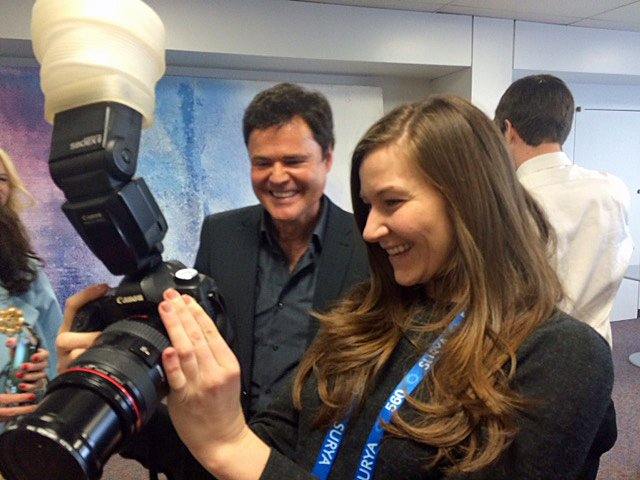
Donny3

Donny Osmond and Sara Karens

A sweet perk of this job is the opportunity to witness first hand marketing and branding strategies executed across different business and distribution channels as well as networking and learning from other folks on what has or has not worked.

As no man is an island, these conversations are incredibly useful.

Enter Dallas Market Center’s Sneak Peek. The day was an exclusive behind-the-scenes look at home and gift products and trends while networking with fellow bloggers during January Market.

Katherine McCarthy and Donny Osmond

It was a full day of trend discussion and design direction, beginning with breakfast with Donny Osmond. He and his wife, Debbie, are a perfect example of synergy across a brand. The tagline for his new line of home products, Donny Osmond Home, is “Making Home and Family Number One.” It’s hard to imagine a better brand ambassador for home and family. As personable as he is in the media, he is equally humble and engaging live. He and Debbie spent the better part of an hour joking around and telling stories to our little band of insiders.

Jeff Lewis of Bravo’s Flipping Out was the second keynote presentation for the day. His was followed with a Q & A session moderated by Shay Geyer of IBB. He is another terrific example of an authentic brand voice. His design philosophy is to find the true integrity of the house during renovation and breathe life back into the space in a way that will appeal to buyers.

It was a full day of touring showrooms, lunching with Dwell with Dignity and organic juices from The GEM (compliments of Peacock Alley). At the end of the day, we all went away understanding that authentic style is always in style, modern, clean lines will never be out of style and Pantone’s color of the year, Marsala, was really nobody’s favorite. 

Donny group

Debbie and Donny Osmond and the bloggers of Sneak Peek


It was my intention to write a prophetic post this week about the Texas bag law and the impact on Texans, small business and the progress on our slow road to being a sustainable nation. Small Business Owners Daily Survival Guide

And, then, duh dun dah … Mr. Flu A happened in the middle of the night and Ms. Worst Diaper Rash in the history of ever (ITHOE) caused baby to scream, “Mommmmiieeeeee,” every time she is changed during the day which is every 20 minutes due to the severity of her raw booty’s condition.

Folks, mama needed to work ~ lots of deadlines and things to be done.

Small business owners can’t just go a hundred miles an hour the day after a sleepless night. They can’t drop everything to take their child to an early morning, unscheduled pediatrician’s appointment. They can’t run and cuddle their wailing baby at the drop of a hat in the middle of a work day … Or can they??

Friends, they can.

There are four must haves for every small business owner in case life takes an unexpected turn on an action-packed work day:

  1. Highly, functioning virtual work space – Have the bunker ready at all times. High speed Internet, phone charger and all necessary supplies you use on a daily basis at the office. Thankfully I have a high quality color laser printer wired and ready in the home office and a pack of the 32 pound paper on hand at all times. We were able to complete the brand book we are presenting to a client today.   
  2. The village – I mention it frequently. It takes a spouse that can stay home from work for a few hours with the sleeping baby while mama goes to the early morning doctor’s appointment with the other baby. It is extremely helpful if the spouse’s employer believes in their employees putting their families first in times of need. It also takes a doting daytime care giver to be there when mom can’t to console the aching baby.
  3. Attitude of gratitude – It is easy to go down a dark hole and focus on all the things negative happening in your world. Instead, focus on the positive. Be grateful for all that is right. There are a million and one books, articles and studies showing that professionals with a positive attitude are more productive and successful. Put on your rose-colored rock star glasses and leave the tissue with lotion for the sickees.
  4. And, last but not least, a dependable and adaptable team When the work needs to be done – the client’s blog sm’ed by 8:30 a.m., the enewsletter draft to the client by noon, the conference call rescheduled, etc. – the work needs to be done. Make sure your team is as adaptable and reliable as you are and willing to step in and step up in a pinch.

Check, check, check and check! The kiddos are on the mend, deadlines were met, work got done and there is a new episode of American Idol on the DVR calling my name. Ciao for now!


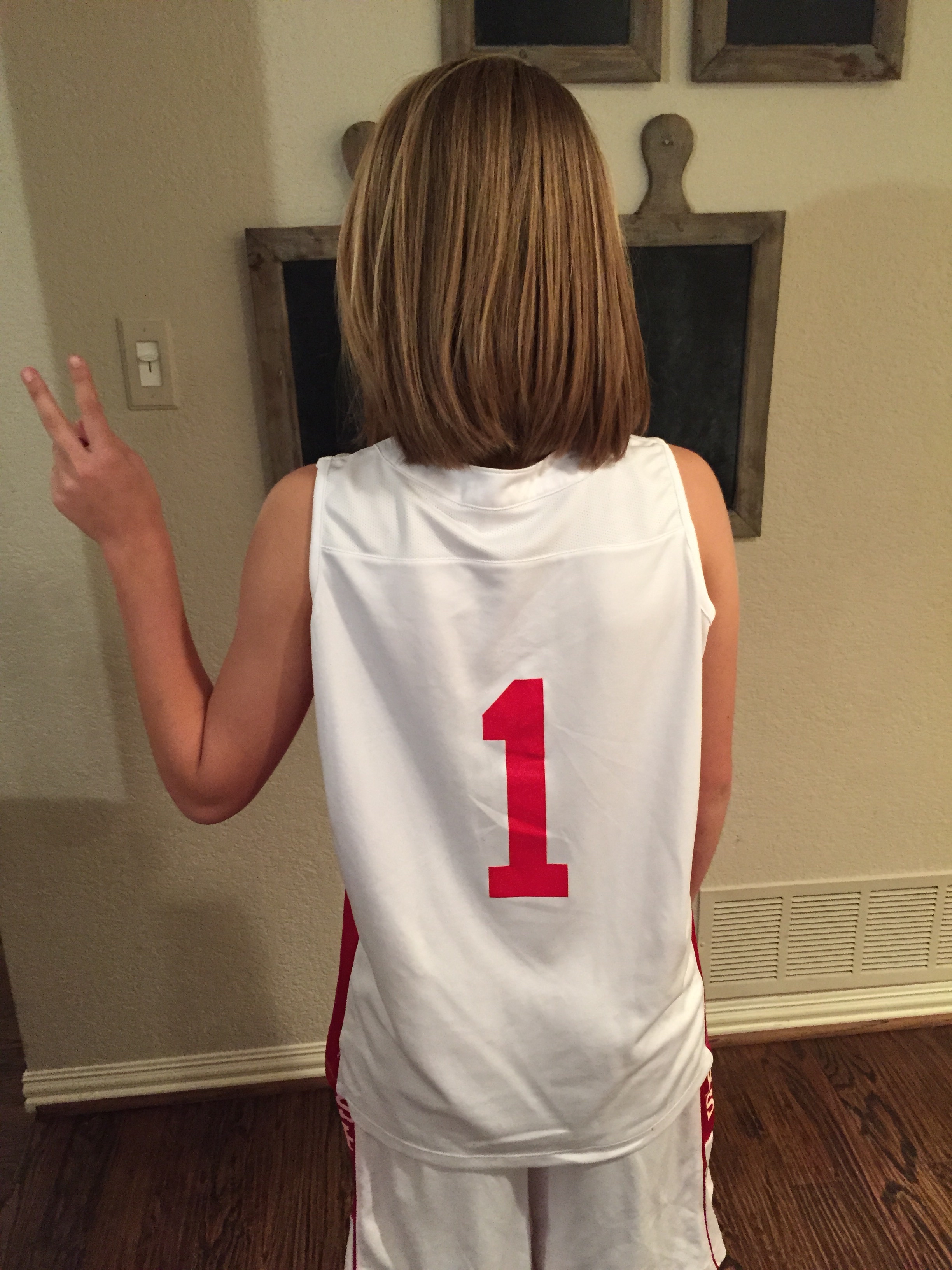
My 13-year-old daughter is my hero.

IMG_2536At a time in her life when conformance equals survival and fitting in is everything (yes, we are talking about the angst of middle school), she has steadfastly, unapologetically and intentionally made choices that are true to her character, her spirit and her style.

In a sea full of long-haired girls, she chopped hers off and donated it to Locks of Love. When the group texts become more mean-spirited than meaningful, she turns her phone off and sits at the piano to play and sing. And although “being cool” is the going currency, she hangs onto her goofy, silly side. She tells me all the time, “I’m just doing me, Mom.”

She is her authentic self.

I admire this about her tremendously, and the truth is that it has inspired me to be more authentic myself. To:

  • Make choices that make sense for me and my family.
  • Spend my time doing what I want and not what I “should.”
  • Care less what others’ perceptions are.
  • Say no.
  • Remember myself in the equation.

It’s freeing. I highly recommend it.

This way of being also translates to the business world, which has been a resounding theme in my short time working with the goddesses at Front Porch Marketing. I have realized just how important authenticity is for your business, particularly a small business. Can you answer the following:

  1. Who are you?
  2. What are you doing that makes you unique?
  3. What is your brand?
  4. How are you representing yourself?
  5. Are you engaging in authentic online engagement?

It is imperative that you can answer these questions with clarity and that your brand is clear in everything you say and do. We on the Porch are passionate about helping you express your authentic self. It’s our mission!

Indeed, we want you to “just do you.”