Tag Archives: reputation management

Over the last few weeks of my internship this past summer, I learned that one of a marketer’s main objectives is to build a positive brand reputation. Not only does a good brand reputation ensure a high client retention rate, but it is also essential to attracting new clients. Arguably, the most instrumental factor in brand reputation is the element of trust.  Enter word-of-mouth marketing through in-person conversations.

Which source are you more likely to trust with your money: a random billboard off the highway or your close friend? Most people would answer a close friend, and it doesn’t take rocket science to figure out why — friends have our trust. In a society where it’s becoming increasingly more common to stumble on random billboards, whether it’s a literal billboard or online brand presence, how do companies distinguish themselves as the trusted friend? One simple answer is to build trust through in-person conversations.  

Why In-person Conversations?

Many people may disregard the role of word-of-mouth marketing in building positive brand strategy for several reasons. One of the most legitimate concerns is that it wastes time. For many business owners, time is their most valuable resource. Especially if their company already has a loyal network of clients, these owners may think taking the time for a conversation is not enough value added for the time they would dedicate to it – instead, they would rather focus on implementing client feedback or researching a competitive brand.

Don’t get me wrong, listening to clients and seeing where your company stands in the larger market are both excellent uses of your time. However, so are in-person conversations. If done correctly, in-person meetings and conversations not only expose the listener to your brand and pique their interest, but they also have an edge through face-to-face connection. When humans see the real person behind the message, they are much more likely to care because they see how much you care. The question is: how exactly do you get there?

How to Present Yourself

The first step is knowing how to present yourself. Before you even introduce yourself, many people will infer various facts about you based on your appearance, so making sure your appearance aligns with your message is crucial to in-person conversations. Two main components of presentation to focus on are attire and body language.

Attire

While many people focus on selecting appropriate business outfits, accessories are also key in attire. For instance, while heels are suited for nicer occasions, flats are more practical in casual or quieter environments. Bags are another noticeable factor. If there are papers sticking out of your bag or you have to search around for your business card, you could come off as disorganized. Giving your bag a quick clean before entering an important conversation can help you be more polished and find materials more quickly. Jewelry also reflects parts of your personal life – like relationship status, religion, or causes you endorse – which can either help or harm an initial impression. While many people probably don’t give a second thought to slipping on that wedding ring or cross necklace – it could be beneficial to give them a second glance before walking into a room.

Body Language

While body language is one of the greatest advantages of in-person communication – because it can establish credibility and trust – nonverbal cues like your posture, facial expressions, and fidgeting habits can easily undermine your message. While it is obvious to many people that standing up straight is better than slouching, a smile is better than a scowl, and keeping your hands still sends a good signal, there is a happy medium to be reached. If it’s perfect posture and picturesque smiles all the time, the listener may believe the conversation is more superficial than genuine. By being conscience of your body language, but also making sure there is authenticity behind your communication, your listener will leave the conversation with a greater sense of trust in the person behind the message.

How to Talk About Yourself

After the appearance is down, the next aspect to focus on is what you say. Even the most confident, polished business leaders will lose trust if they don’t handle the conversation in a professional yet engaging way.

A main aspect to focus on is clarity. While passion is positive to display, there are other ways to show it besides rambling for too long about too many aspects of your business. To drive home your brand, your message should center around a few main points so your listener can remember the majority of the conversation after they leave. You also want to make sure you present your message in a way that’s easy to understand for your listener. While there are a time and place for highly intellectual conversations, meeting someone for the first time is probably not one of them. Steer away from using terms that aren’t natural in daily conversation and limit phrases that may not be familiar to someone outside your profession. It is good to show your expertise in the field but make sure your listener can follow what you say.

After clarity is out of the way, have confidence in your brand. Show your listener why you care about the company, why does your listener need your service or product in their life, how will it add value, and what credibility do you have in your field? Hitting on all these points will leave a listener with a more vivid depiction of your service or product and why they should invest in it.

How To NOT Talk About Yourself

At the end of the day, the purpose of an in-person conversation is not about the business owner but about their consumer. One big mistake that a speaker can make is giving an elevator pitch, handing someone their card, and walking away. Even if you have a “wow” pitch, there is an opportunity for trust missing in the interaction. A listener may walk away passionate about your idea, but they don’t have the relationship factor that will lead them to choose your idea over another promising product or service. That is why it is crucial to engage with the listener by asking questions and giving them a chance to talk.

The main reason why we trust our friends is because friendship isn’t one-sided. Having a true friend means both parties have interest in each other’s life and want to help without expecting something in return. By building a personal relationship with your listeners, a business owner can highlight not only the care they have for their company, but also their consumers. By preparing your physical presentation, content of your speech, and questions to engage the consumer, business owners can more successfully establish trust in their listener and help their company stand out.  


“Dwelling on the negative simply contributes to its power.” – Shirley MacLaine

Most of us know that negativity impacts our emotions and mental health, but it has been medically proven that it also negatively affects your physical health. By causing stress, fatigue, decreased immunity and more, repeatedly focusing on the negative could end up affecting everything in your life.

Personally, I believe that everything happens for a reason, and every day I do my best to find the positive in situations and be grateful for all that I have. One of my favorite quotes is, “If you want to feel rich, count all of the blessings you have that money can’t buy.”

positivityIt’s certainly easier to stay positive on some days than others, and I am no expert on finding personal positivity. I am, however, well versed on the importance of staying positive when dealing with the media, especially when the reason the reporters are there is not ideal. The impact of negativity on your image and/or your company’s image is severe, and it can be incredibly difficult to rebound from negative publicity once the damage is done. It takes time, money and effort.

So, what can you do when the media come knocking on your door? Here are a few tips:

* Treat the reporter with respect – Something bad has just happened, and the last thing you want to do is be nice to the person shoving a camera in your face or asking you questions. But, remember, they have a job to do and a boss to answer to. If you treat them with respect, they are more likely to do the same for you.

* Stay positive (when appropriate) – Express passion and confidence and smile. This is especially important when being filmed on camera.

* Treat competitors, clients, contractors and vendors with respect – There should be no need to speak about or on behalf of any other parties involved, but if a specific question arises, stay respectful and move on quickly.

* Be responsive – Don’t fight or pick the wrong battles.

* Avoid negative phrases – Make what you say count and do not repeat a negative. A 5- to10-minute interview will be edited down to one or two quotes or a five-second soundbite. Don’t let that quote be negative.

Remember – “Being positive does not mean ignoring the negative. Being positive means overcoming the negative.”


9J8AH1CDYI

You’ve cultivated your own personal brand. You’ve pulled together an impressive resume, collected letters of recommendation, completed service hours, cleansed and monitored social media profiles. You are a model citizen waiting to hear the results of your application. Only, this isn’t a job application, or even a college application. This is the high school entrance process for magnet and private schools in Dallas. You heard me – high school.

These are 13 and 14-year-old students … and this is a typical experience for parents of middle schoolers this time of year.

I know I’m dating myself, but in my day, attending school was a relatively simple matter: application plus test and voila, you’re either in or you’re not. No big deal. In today’s uber competitive world, however, our young teens begin a grueling process that starts the year before. There are test prep classes, interview skills seminars, tutoring appointments, essay drafts, service hours and school tours. They begin building a resume that we never even dreamed of dealing with until college.

It is the crafting of what will become their personal brand.

In many ways it’s become a little too much. The transition from middle school to high school is fraught with plenty of landmines without this element of pressure added. But modeling the appropriate behaviors goes a long way in getting them through it. By reinforcing the process, not the outcome, it can become a learning experience. Along the way these children will learn resilience. Let’s face it, these are the years when teens face some of their first real rejection. It’s not easy.

Let me be clear, I am NO expert. We have one child and are muddling through with lots of good company in a wonderful environment filled with friends and other parents who are willing to share their experiences and offer tips. It’s an amazing village.

The good news is that there are plenty of options. With good counselors and faculty shepherding families through the process, the students will realize that the universe is watching out for them and whatever school they attend as freshman will be a good stepping stone for the next chapter of their academic experience. And the process teaches them that personal branding is an important part of their lives.


You’ve gotta have a plan. And when starting a new business, everyone knows that you need a strong business plan. But for some reason, many times business owners forget about a marketing plan, which is just as critical to the success of a business.

A marketing plan focuses on how you are going to get the customers you need to survive. It’s your plan of action – what you are going to be selling, who is going to buy it and how you are going to reach those potential customers and convert them to sales.

Here’s how to create a marketing plan that works:

Who are you? Define your company, the products or services you offer, and what sets you apart from the competition. Positioning your product requires a complete understanding of the market segment you are entering. You must know what your competitors are offering and what makes your product or service unique or a better value.

Include an overview of your company’s strengths, weaknesses, opportunities and threats. Strengths and weaknesses will be factors within the company while opportunities and threats are external factors.

MarketingPlan

Who is your target audience? Describe your prospective customer – this can be done in terms of demographics or by lifestyle. If you’re marketing B2B you may define your target audience by the type of business, size of the business, job title or any other factors that make them potential customers. It is important to know exactly who your target customer is in order to plan your marketing strategy.

What do you want to achieve? Write down a list of measurable goals.

Develop strategies and tactics. These are the guts of your plan! Focus on reaching prospective customers at all stages of your sales cycle, whether they are cold or warm prospects. Outline your primary marketing strategies, then include a variety of tactics you’ll use to reach prospects at any point in your sales cycle. This should be a combination of several tactics that can include social media, traditional print advertising, online advertising, blogs, customer events, loyalty programs and email marketing. It’s important to know which media your customers and potential customers will go to for information on the type of product or service you sell.

Remember, a great marketing strategy needs to be realistic and implemented consistently over time. Building brand awareness takes time and patience. If you need a guiding hand, we on the Porch can steer you in the right direction!


ball-563962_1280

I’m obsessed with customer service. Have been for some time. Retail brands can be wiped from my consumer consumption in a swipe if things go sideways.True for you too, right? If you don’t feel valued or respected, why should you spend your money there?!?

Customer service has never been easier or harder. Gone are the days:

  • Where the employee servicing the customer are the only touch point.
  • As an owner, major stakeholder, CEO you never hear about bad experiences.
  • 9-5 customer service. A social world means 24-7 visibility. Customers want quick resolution at anytime of the day.

One negative experience can end the relationship.
I had a favorite clothing store, a national brand and I loved them. They were the best. They kept a book on me. I could call ahead. They would have a room waiting with items in my size and preferences.

Until one day … the manager texted me that my loyalty reward was going to expire on Monday. I went to redeem and OOPS it expired on Sunday. The manager wasn’t there, the employees could do nothing for me (even though I shared the text). I decided I would return when someone followed up. It has been 14 months.

Excellent service creates loyalty.
This year, I ordered my Christmas cards. I waited patiently, for them to arrive but after an appropriate length of time and still no cards I called to inquire. They shipped to a previous property and had been delivered and signed for. I FORGOT to change the shipping address in my profile. How did they respond? “We will express print and ship tomorrow overnight.” I asked how much this wonderful solution would be?? It was FREE because they appreciated my business. Just. Wow.

Three benefits of having a customer service strategy. Customer service:

  • Differentiates. Blue Ocean Strategy by Chan Kim & Renee Maubogne tells us we need to differentiate to set us apart from a sea of sameness. Recommended read!
  • Creates loyal customers.
  • Creates happy employees.

Can you service your way to sales? Absolutely.

Can you service your way out of sales? Absolutely.

Do you have a customer service strategy? If not get on it. Your team, customers and P&L will thank you.


Sharing thoughts and information
This 4th of July, my family was on the lake. For the first time, we went out to the middle of the lake in a boat to watch the fireworks. It was exciting to be on the water and have a 360 view of the sky lighting up in celebration of our country. My two young boys snuggled up with me looking up at the sky and eventually fell asleep in my arms (that hasn’t happened since they were babies). For me, it was a perfection. For them, not so much …

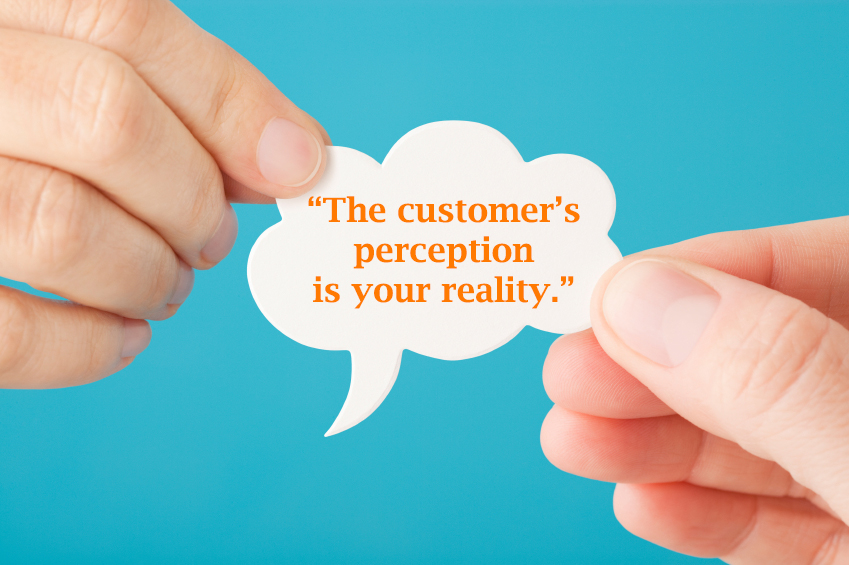
Is your brand, product or service perfect? Of course! No one ever says, “My baby has imperfections.” If customers view your brand as less-than perfect, there is a perception challenge. Your customer’s perception is your business’s reality.

The Dove’s “Real Beauty Sketches” Ad Campaign of 2013 is one of my all-time favorites! A woman describes herself to a forensic artist and strangers who have met the woman that day do the same. The result is two images that are very different. The tagline is, “You are more beautiful than you think.”

How interesting would it be if brands could do this? If executives and employees could describe their products and services and customers do the same. How would the pictures differ?

In 2009, Domino’s Pizza had a perceptions issue. What did they do? They listened, responded and communicated how they were changing, resulting is amazing business results. Watch this Domino’s Pizza Turnaround.

Perception is reality.

Three ways to do a brand perception reality check:

  1. Outside Business Consultants
  2. Customer Intercepts, Focus Groups & Surveys
  3. Social Media

Outside Business Consultants come in many forms; research firms, advertising, marketing and PR agencies, executive coaches, assessments, mystery shoppers to name a few. The value an outside partner can bring to your business is an objective view of your customer’s perception

Customer intercepts, focus groups or surveys are feelings and attitudes of your product or service. When asked, people will give you insights on areas to improve or let you know to stay the course. A very simple first step is a suggestion box in retail locations. You can get some really great ideas!

Social Media has opened the customer conversations wide open! Leverage this opportunity to listen, watch, collect and engage with your audience. People have immediate access to your brand to share in a public forum their likes, dislikes and desires for your product and services. Are you listening? Are you taking action? Social media allows you to respond immediately to customer feedback.

Listening to your customers and being open to feedback is an important business strategy to ensure your products and services are aligned with your customers’ perceptions.

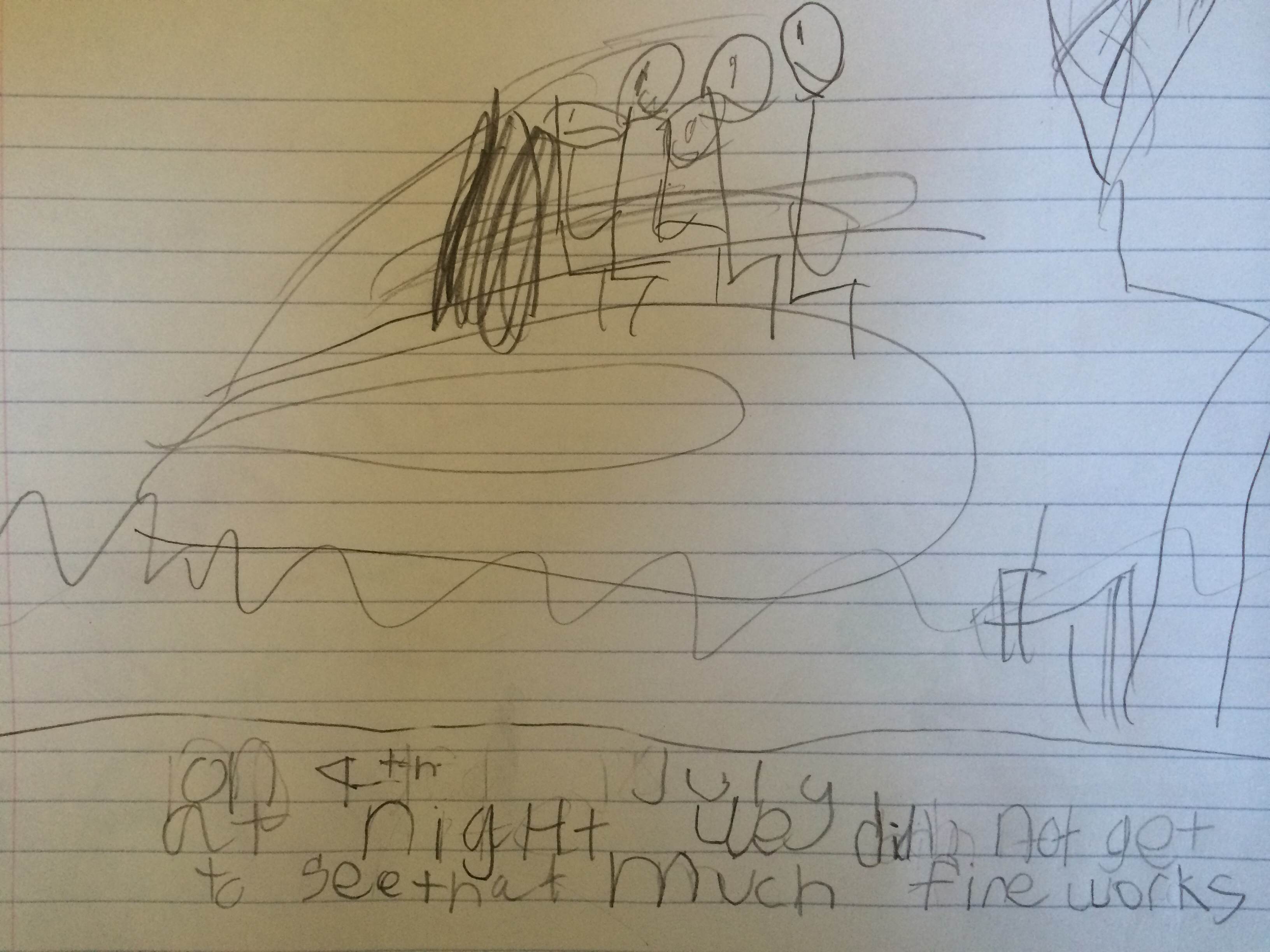
My oldest son’s journal entry on my perfect 4th of July night: “On 4th July at night we did not get to see that much fireworks.” It was not his best 4th of July, our perceptions of the evening differed greatly, but perception is reality.
IMG_4024


imagesThe other day, I saw a quote a friend had posted from Jeff Bezos, founder and CEO of Amazon, “Your brand is what people say about you when you’re not in the room.” This is so true and I live this with our clients every day!

A brand is more than just advertising or a logo or social media or a tag line – it’s how your customers perceive your business. And everything a company does, whether intentional or not, shapes the perception of their brand.

Creating a strong brand identity is critical in this day and age when a world of information is at our fingertips and we are given many different options for purchasing the same product. Some of the most successful brands are those that give you a reason to like them and not just the product. Brand is more than just your product – it’s also your reputation.

In order to build a strong brand, the following objectives must be achieved:

  • Have a vision – know where your brand is going. At the end of the day, what do you want your brand to be when it grows up? What’s its highest calling?
  • Have a personality – what are the four adjectives that describe your brand
  • Find your unique position in the marketplace – define your target audience, the frame of reference and your competitive set
  • Define the club that your customers want to be aligned with and know why they want to be affiliated with your brand

Once you have defined these critical things, make sure you have internal buy in. Is your team convicted about them? Is everything you are doing internally and externally communicating your brand strategies? Are your customers or clients connected to your brand strategies?

Once you have asked yourselves these questions and are living it inside and outside your company, here’s what to do next:

  • Have a branding and marketing strategy – recognize market trends and respond to consumer demands to get ahead.
  • Deliver a consistent and unique message. Make sure your message aligns with your brand’s values and personality.
  • Be creative! You want to stand out from the competition and creativity and innovation will get you noticed.
  • Know your competition.
  • Manage your reputation – It’s hard work to build up your reputation but even harder work to maintain it. Make sure you are listening to what people are saying about your brand. People are most likely to do business with companies they like and trust.
  • Make sure you are everywhere your customers are looking.

A strong brand is invaluable to win the battle for customers. It’s important to spend time investing in building your brand. After all, your brand is what your customers come to expect from you. It’s the foundation of your marketing strategy and something you don’t want to be without!