

Tag Archives: AI-Driven advertising

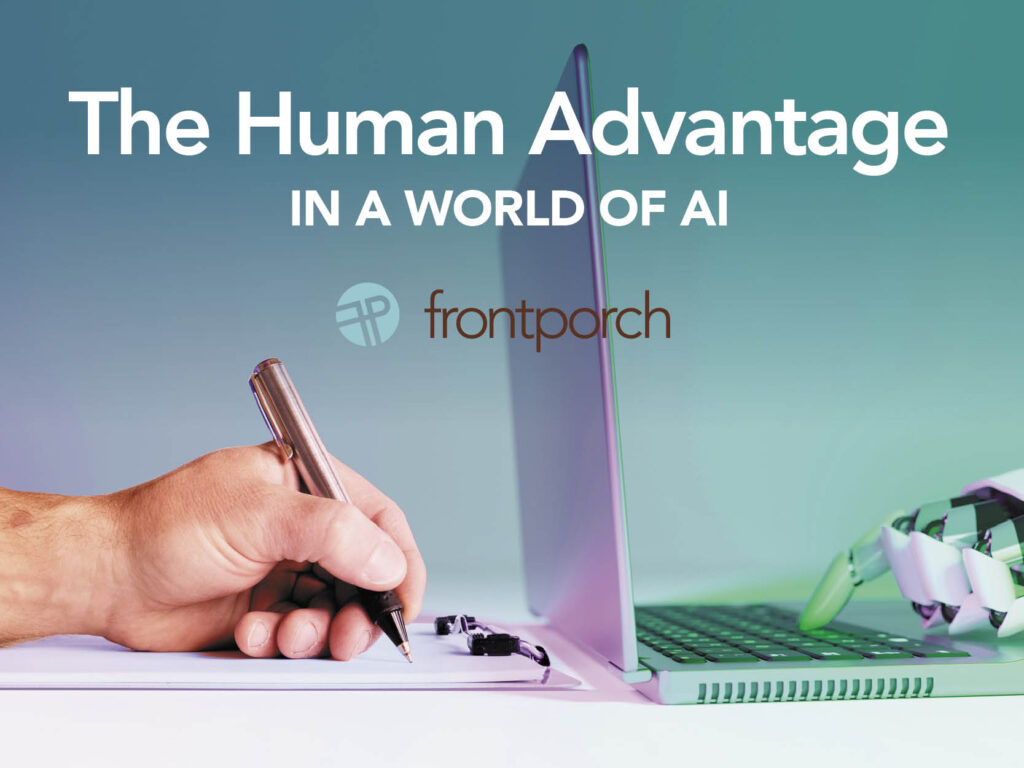
Artificial intelligence isn’t just transforming marketing, it’s reshaping what it means to be human in a digital world. Over the past several months, I’ve explored AI through the lenses of philosophy, business strategy, and customer experience. What I discovered is simple but powerful: AI doesn’t replace the human role; it sharpens it.

As automation accelerates, the uniquely human skills, empathy, intuition, creativity, and judgment, become even more essential. The marketers who thrive in the next decade won’t be the ones who resist AI, but the ones who learn to orchestrate it.

AI and the Question of What Makes Us Human

One of the most surprising parts of studying AI is how quickly the conversation shifts from technology to identity. When systems become predictive enough to anticipate our needs, preferences, and behaviors, people instinctively push back, a psychological response known as reactance.

As Andy Murray, of Saatchi & Saatchi, emphasizes, AI can scale intelligence, but it cannot scale empathy, nuance, or meaning. It can generate content, but it cannot understand context. It can optimize, but it cannot care.

That distinction matters. Because the future isn’t about competing with AI, it’s about orchestrating it. Humans define the mission, the boundaries, and the values. Artificial Intelligence executes. The real risk isn’t that AI replaces us; it’s that we forget what only humans can do.

AI’s Impact on Modern Marketing

Marketing is undergoing a seismic shift. What used to be manual, content creation, targeting, optimization, is now increasingly automated. As Josh Bruns, of Genesis, shared, brands are already using AI to generate endless creative variations, tailor messaging to micro‑audiences, and build agentic shopping experiences where this tool makes decisions on behalf of consumers.

This doesn’t eliminate the marketer. It elevates the marketer.

AI handles production. Humans handle judgment.

The competitive edge becomes the ability to guide AI, to bring taste, strategy, and emotional intelligence to a world where content is infinite but meaning is scarce.

The Human Advantage

Here’s the truth that kept resurfacing throughout my research:

Artificial Intelligence accelerates the work, but humans elevate the meaning behind it.

As automation takes over research, production, and pattern recognition, the human role becomes more, not less, important. The future belongs to people who can pair machine speed with human understanding to build deeper relationships, make smarter decisions, and create more impactful work.

AI is the engine powering execution. Humans remain the driver, setting direction, values, and purpose.

2023 was full of digital marketing trends. So as the digital landscape continues to rapidly change, staying ahead of the curve is crucial for marketers. Trends come and go, and this year features trends that are tech-based and evolving. Overall, 2024 will bring new innovations and strategies for digital marketing. Here are some of the top emerging digital marketing trends for 2024. These trends will redefine the way brands interact with their audiences. 

AI-Driven Personalized Advertising 

First, one of the biggest trends shaping the future of digital marketing is artificial intelligence. It will deliver hyper-personalized experiences. Personalization is key to growing an audience. AI algorithms are becoming increasingly adept at analyzing consumer data to identify potential consumers. This enables marketers to create highly targeted ad campaigns that resonate with these individual consumers and bring them into the brand. 

Voice Search Optimization 

Next, with the growing popularity of smart speakers and voice assistants, optimizing for voice search is no longer an option. It is a must-have. Thus in 2024, expect to see more brands adapting their SEO strategies to include voice. Brands can include keywords and phrases, making their content more accessible via voice search. In other words, this represents yet another unique way to get consumers to the brand.

Virtual Reality is changing from a novelty to a practical marketing tool. Brands are beginning to use VR to create experiences for their customers. These experiences will engage consumers in a more memorable way this year. From virtual store tours to interactive product demonstrations, VR is opening up new possibilities for engagement. 

Influencer Marketing 

Influencer marketing continues to evolve, with a shift towards micro and nano influencers. These individuals often have smaller, more loyal followers. Brands can create a stronger connection with their audiences. For example, brands might work with several different influencers for different products. In 2024, expect to see brands working with influencers for more authentic and effective partnerships. 

Green Marketing 

Sustainability is becoming a priority for consumers. Consumers are looking to brands to be more responsible toward their people and the planet. So brands are responding with green marketing initiatives. For instance, look for eco-friendly packaging and more sustainable business practices. So green marketing is not just good for the planet, it’s good for business. 

To begin with, augmented reality usage in marketing offers unique ways to interest customers. Augmented reality creates a new way of showcasing at a product or service. Also look for uses like virtual try-ons or AR-enabled ads. As this technology becomes more accessible, we anticipate a rise in AR campaigns in 2024. 

Data Privacy and Ethical Marketing 

Lastly, with increasing concerns about data privacy, ethical marketing practices are an important part of brand trust. In 2024, transparent data practices and respect for consumer privacy will be more than just legal requirements. They’ll be essential for building customer loyalty. Consumers want to trust the brands they do business with.

The landscape of digital marketing trends is dynamic and ever-changing. Overall in 2024, successful marketers will adapt to these emerging trends while staying true to their brand’s core values. Again, brands can embrace these innovations and succeed. Finally, they’ll be able to create more engaging, personalized and meaningful experiences for their consumers. Using these digital marketing trends they’ll build business in new ways.