Tag Archives: AI

Artificial intelligence isn’t just transforming marketing, it’s reshaping what it means to be human in a digital world. Over the past several months, I’ve explored AI through the lenses of philosophy, business strategy, and customer experience. What I discovered is simple but powerful: AI doesn’t replace the human role; it sharpens it.

As automation accelerates, the uniquely human skills, empathy, intuition, creativity, and judgment, become even more essential. The marketers who thrive in the next decade won’t be the ones who resist AI, but the ones who learn to orchestrate it.

AI and the Question of What Makes Us Human

One of the most surprising parts of studying AI is how quickly the conversation shifts from technology to identity. When systems become predictive enough to anticipate our needs, preferences, and behaviors, people instinctively push back, a psychological response known as reactance.

As Andy Murray, of Saatchi & Saatchi, emphasizes, AI can scale intelligence, but it cannot scale empathy, nuance, or meaning. It can generate content, but it cannot understand context. It can optimize, but it cannot care.

That distinction matters. Because the future isn’t about competing with AI, it’s about orchestrating it. Humans define the mission, the boundaries, and the values. Artificial Intelligence executes. The real risk isn’t that AI replaces us; it’s that we forget what only humans can do.

AI’s Impact on Modern Marketing

Marketing is undergoing a seismic shift. What used to be manual, content creation, targeting, optimization, is now increasingly automated. As Josh Bruns, of Genesis, shared, brands are already using AI to generate endless creative variations, tailor messaging to micro‑audiences, and build agentic shopping experiences where this tool makes decisions on behalf of consumers.

This doesn’t eliminate the marketer. It elevates the marketer.

AI handles production. Humans handle judgment.

The competitive edge becomes the ability to guide AI, to bring taste, strategy, and emotional intelligence to a world where content is infinite but meaning is scarce.

The Human Advantage

Here’s the truth that kept resurfacing throughout my research:

Artificial Intelligence accelerates the work, but humans elevate the meaning behind it.

As automation takes over research, production, and pattern recognition, the human role becomes more, not less, important. The future belongs to people who can pair machine speed with human understanding to build deeper relationships, make smarter decisions, and create more impactful work.

AI is the engine powering execution. Humans remain the driver, setting direction, values, and purpose.

AI in PR is here to stay, and its role will continue to expand. Looking ahead, AI can enhance personalization, enabling PR professionals to tailor their messages to individuals. Additionally, predictive analytics can help anticipate industry trends.

Here are some tips on how using AI in PR can assist professionals with media outreach.

AI in PR Helps Align Pitches to Journalists’ Interests

Harness the power of AI in public relations to shape your story in a manner that captivates journalists and aligns with what they consider compelling and important.

Media Lists That Go Beyond Name and Titles

When creating media lists, it is important to include more than just names and industries. Utilize AI to analyze a journalist’s recent work in depth. You can ask it to examine the journalist’s writing tone, common themes, story angles, and preferred sources. A good chatbot can review up to 50 articles at once, quickly identifying patterns that PR professionals might overlook.

AI can analyze Google Trends, Reddit, trade newsletters, and niche blogs to identify emerging themes. Rather than simply reacting to the news, use this tool to shape the conversation for your brand.

Coverage in Real Time Using AI in PR

Artificial Intelligence can continuously monitor media coverage in real time, enabling it to identify and bring to light stories that may need further scrutiny. This includes ensuring accurate quote attribution and making necessary factual corrections, thereby enhancing the reliability and integrity of the information presented.

Final Thoughts on AI in PR

Using AI will not supplant the innate media relations instincts that PR professionals possess; instead, it will serve as a powerful tool to amplify and refine these skills. By leveraging AI technologies, PR experts can expect not only enhanced media coverage but also more strategic, impactful communication plans. This symbiosis between human intuition and advanced technology promises to drive better outcomes and foster stronger relationships with the media.


Quick Background / Why Do I Care?

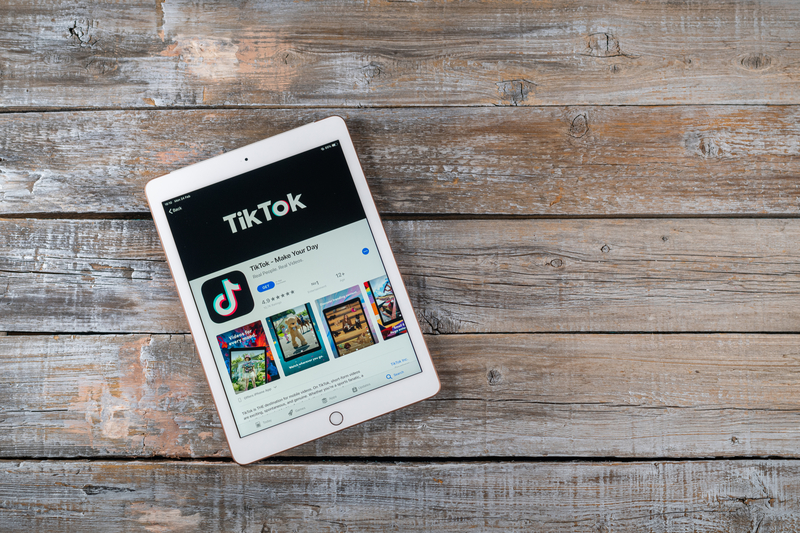
TikTok: based in China, in 2017 this $75 billion company made its way to the U.S. TikTok uses in-depth AI capabilities that track user data from the source (i.e. each user) via clicks, likes, and watches. What sets it apart? Its ability to use this data to predict what you will enjoy watching and then show you!

Snapchat: Popularized in 2011, Snapchat is a more informal way for users to communicate with their audience by posting “stories” that disappear after 24 hours.

You care because there is great potential for businesses to capitalize on these apps! The average user spends 45 minutes a day on TikTok, and it is the 3rd most downloaded app as of January 2020. Snapchat is also a gold mine, since the app has more than 100 million users who spend more than half an hour on the app daily.

How can I utilize them?

TikTok

TikTok is appropriate for both large and small firms because it is used for its “you gotta see this” content. Maybe you have a jokester at your firm, or someone who is good at making people laugh. Posting funny videos of office happenings allows consumers to connect and get to know you. TikTok is often utilized for meme-level comedy and relatable content, so companies big or small have an opportunity to show a different side of themselves on this app.

While the audience for Snapchat is geared more towards millennials, at least 14% of its audience is over 35. The app tends to be casual rather than focused on aesthetics (i.e, the opposite of Instagram). If your company travels or is robust in its day-to-day activities, you might want to consider adding Snapchat to your repertoire and share your story with a younger audience. Even if it is something as simple as your firm hosting an event or someone bringing their dog to work, these small things add value because they give people an inside look at your company.

What about older platforms?

This is not to say companies should abandon older platforms such as Facebook, but instead add to them. If your audience is older, you may want to hold off on TikTok and Snapchat as the users are younger than Facebook and Instagram.

Digital and creative agencies especially have to be on the cutting edge of new technologies, but who is to say any company can’t try something new? Whether you are promoting car insurance or the latest Apple watch, these fresh apps could potentially replace the hard sell with a lighter, more personalized approach to marketing.


marketing mistakes to avoidMarketing mistakes happen. Heck, mistakes period happen. Seems the older I get the more I make them. I blame it on my kids age.

Many of the business owners and marketing leaders we have talked with so far this year have said Q1 2017 projections are even more positive than anticipated. Fan – freakin’ – tastic!!

Avoid these three marketing mistakes this quarter:

  1. Chasing the new, shiny object(s). Wait. What was I blogging about … With all the artificial intelligence news, virtual reality hype, etc., don’t forget the foundation – the 2017 marketing plan with strategies, goals and tactics. Don’t get me wrong, keeping your eye on the latest and greatest is a must, but don’t let what brought you here and all that you planned to do fall by the wayside.
  2. Lack of communication with your team. We get it. You are being pulled in a million directions, and it sometimes can be a challenge to make sure your team knows what is going on in all parts of your business. Your team can help and want to do so. If you can’t keep up with your regular team meetings, calls or emails, ask someone to step up in your stead. Your team and marketing partners will thank you and your business will also reap the benefits of continued internal communication.
  3. Give everyone a say in marketing decisions. When it comes to marketing and branding, opinions are like … sorry, started to quote my friends Salt-N-Pepa. You don’t need to pass marketing ideas around to each and every business partner, team member, family member (spouses included) and friend. Trust your team. You know, the people you pay to own and create your marketing plan, initiatives and assets.

I will leave you with those thoughts. May your Q1 2017 continue to rock. Oh, and happy freakin’ birthday week to me (shameless birthday brat plug).

Chief Rocker Julie Porter can be followed on Twitter and Instagram and so can her company. Follow Front Porch Marketing on Twitter by clicking here, like us on Facebook by clicking here and follow our LInkedIn company page and Instagram fun.