Tag Archives: customers

Stepping onto the “Front Porch” for the first time, I knew I was entering a space dedicated to storytelling and strategy. But as I look back on my internship, I realize that the most impactful lessons didn’t come from a textbook; they came from watching how brands live and breathe in the real world. As well as personal branding and connection.

Marketing isn’t just about the “what” it’s about the “who” and the “why.” Reflecting on my time here, three things stand out as the foundation of everything I’ve learned: the intentionality of branding, the depth of brand loyalty, and the necessity of knowing your audience. 

Branding: More Than Just a Logo 

During my time at Front Porch, I’ve seen firsthand that a brand is a promise. It’s the consistent thread that runs through every social media post, every email, and every client interaction. A brand isn’t a static image; it is a living reputation. 

I’ve learned that successful branding requires: 

  • Vulnerability: Being honest about a brand’s journey. 
  • Consistency: Delivering the same message across every touchpoint. 
  • Clarity: Knowing exactly what strengths and weaknesses you solve for your client. 

When a brand is built with intention, it stops being a service and starts being a solution.

The Weight of Branding and Loyalty 

We often talk about “getting” customers, but my internship taught me the importance of “keeping” them. Brand loyalty is the difference between a one-time transaction and a lifelong advocate. I’ve observed that the most successful clients we work with are those who don’t take their community for granted. 

Loyalty is earned in the quiet moments: when a brand responds to a difficult situation with grace, or when they choose quality over a quick fix. During my time here at Front Porch, I’ve realized that people don’t just stay loyal to a product; they stay loyal to how a brand makes them feel. When you stay true to your brand promise, your audience rewards you with the most valuable currency in marketing: trust. 

The Art of Connection to your Audience 

If branding is the “voice,” then the audience is the “listener.” One of my biggest takeaways from Front Porch is that you cannot speak effectively if you haven’t first listened. 

True audience connection involves: 

  • Data with Soul: Looking beyond the numbers to see the people behind the clicks. 
  • Empathy: Understanding the daily challenges and joys of the consumer. 
  • Evolution: Recognizing that as your audience grows and changes, your strategy must as well. 

Marketing is a two-way conversation. My internship here at Front Porch has shown me that the “lucky” brands are just the ones that have done the hard work of truly understanding the person on the other side of the screen. Personal branding needs the priority of connection and loyalty.

Final Reflections on Branding and Connection 

As I wrap up this chapter, I’m leaving with a new perspective on how businesses connect with the world. Authentic marketing doesn’t shout at the crowd; it speaks to the individual. 

The “Front Porch” philosophy isn’t just about business; it’s about building a space where communication is genuine with branding and connection to your audience. These are the lessons that will guide me long after I’ve left the porch. 


13164270_10209075748628135_2410536343709901357_n

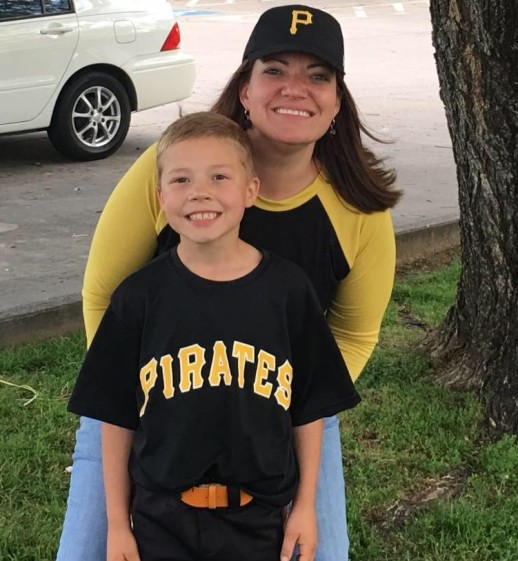
Our oldest son plays baseball in the North Arlington Little League. Last year, his team, the Pirates, had an undefeated season and won the championship game. Of course, we celebrated the win.

Players moved up and on, but we returned for another season. It started out smoothly enough – the games were competitive, but the team was winning. Then we had a tied game. Then we lost.

No big deal, right?

Wrong.

We celebrated the wins, we worked for the wins, we appreciated the wins. However, we neglected to prepare for the possibility of a loss. For two years, the team was coached and played to win. We should have also been coached and prepared to lose.

There is value in the lessons we learn from losing and sports give us a good arena to teach these lessons to our children.

These are valuable lessons that can be applied in parenting, business and life:

  • Respect.
    For every winner, there is a loser. You have to respect both. Period. Respect your team, respect the other team. Act accordingly.
  • Resiliency.
    It’s ok to be disappointed or upset after a loss. But the quicker you put a loss behind you, the closer you are to the next win. Fast recovery serves anyone at any age well. Vince Lombardi said, “It’s not whether you get knocked down, it’s whether you get up.” Recover and move forward.
  • Review.
    If you review the why in your losses and strengthen your weaknesses, new opportunities will arise. In sports no game has ever been lost the same way.
  • Humility.
    Losing challenges us and keeps us humble. It teaches us there are others who are better. The emphasis should be motivated to be better.

Preparing for winning and losing is critical. It is far better to lose and learn than to always win and not learn how to lose. If winning and losing were not important, we would not keep score.

If you are a business owner, an employee, a student or a teammate, what do you have to lose?

An account, a promotion, an employee, a score, a game? The answer is yes, all of these and more. But the bigger question is – what are you learning and how are you improving?

So what about the 2016 Pirates? Well, they are heading to the championship game. They earned their spot with three consecutive wins in a double elimination playoff. Regardless of the outcome, valuable lessons will be learned. Go Pirates!


10-More-Simple-Questions_web-680x255

Everybody remembers the “make a wish” tale – you must choose wisely, as you only get three wishes, and the wishes must all be considered wisely. From this tale, we learn that we must be careful what we ask for.

I like to ask questions. Maybe too many, but questions always provide answers..unless you ask the wrong question. Have you ever asked the wrong question? Yes. You. Have. I have too!

Get it right! Ask the right question.

Good question asking is a skill and can be applied to all relationships – spouse, children, employee, employer, friends, customers, etc. The applications are endless. Every question can deepen our understanding of a topic or person. There is no such thing as a stupid question, but there are ways to ask a question that are better than others.

Here are some examples:

  • Q: How was your day? A: good, bad, great, awesome, etc. This closed-ended question doesn’t really give you much, so follow up with what made your day _______? Now we are getting somewhere! Tip: Dig deeper with follow-up questions. Follow general questions with specific ones. 
  • Q: How are sales? A: Great they have doubled! This general question can elicit an answer that can be misleading – sales doubled from what? Better question: How are your sales compared to this same timeframe last year? Tip: Make sure to ask for context and reference to give the answer meaning.
  • Have you ever been asked if you want “anything else?” I hate this question. The answer is, of course I do, I have a long list of else, but you don’t sell them here. Another egregious offender: Did you find everything ok? Tip: Specific questions will garner more insight. Try to avoid yes or no questions unless they are truly satisfying a simple purpose.
  • Recently my husband called me and informed me that he grounded the kids. I asked, “What does grounding mean in our house?” We figured out our definition of grounding because of an open-ended question. Tip: Have a purpose for asking and a desire to know the answer. Every question you ask should help you gather either facts or elicit an opinion. Know which kind of information you need and frame your questions accordingly.
  • What if someone asked you if it was it sunny on the day you were born? I don’t know if it was sunny when I was born – does it matter? I can’t think of one thing someone would do with this information. Tip: Ask questions only if the information elicited is necessary. If you don’t really need the answer, don’t ask the question. Be respectful of people’s time and attention. Answer this – what will you do with the answer?

We ask questions because that is the way we improve, learn, connect and tell stories. Ask away, friends!

“Successful people ask better questions, and as a result, they get better answers.” ~ Tony Robbins