Tag Archives: asking questions

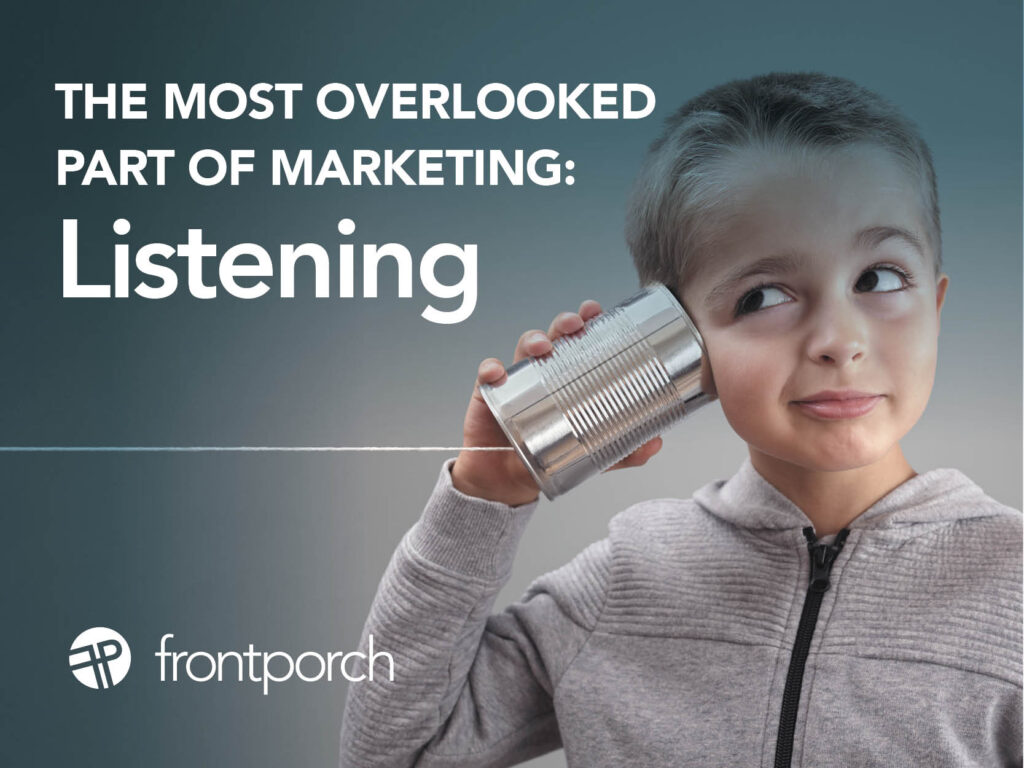
When most people think about marketing, they probably think of campaigns, advertisements, slogans or analytics. And while I’ve learned those are all very important to the marketing world, they all revolve around proficiency in one key skill — simply just listening.

As an intern, I’ve quickly learned that effective marketing starts long before content is created. It begins the moment you start to listen, in the very early stages of work. Listening to the client and their goals for their business, to team members who often have years and years of experience, to your feedback — both the good and the bad. The strongest strategies are not created by ideas or assumptions, rather understanding people, and listening to their needs.

Why Listening Matters

Listening is so easy to overlook in a world that’s always focusing on more. More posts. More emails. More ideas. But if we don’t pay attention to what real people are saying they need, these campaigns absolutely miss the mark leaving the client and consumer both unsatisfied. Listening requires slowing down, asking the important questions and being willing to pivot, adapt and change when necessary.

Lessons From My Internship

Through this internship so far, I’ve noticed that great marketers spend SO MUCH time listening and asking questions. They seek feedback. And they are always listening to the language of their clients. Learning the client’s language not only creates strong marketing, it creates a relationship built on trust.

Moving forward, this is an aspect of marketing that I think everyone can benefit from in their day-to-day life. Spend less time focusing on an answer or a desired result, and more time opening our ears to hear what people have to say.

Perhaps the most overlooked part of marketing isn’t having all the answers, it’s the willingness to listen for them.

I think everyone may have something we can learn — not just the intern.


10-More-Simple-Questions_web-680x255

Everybody remembers the “make a wish” tale – you must choose wisely, as you only get three wishes, and the wishes must all be considered wisely. From this tale, we learn that we must be careful what we ask for.

I like to ask questions. Maybe too many, but questions always provide answers..unless you ask the wrong question. Have you ever asked the wrong question? Yes. You. Have. I have too!

Get it right! Ask the right question.

Good question asking is a skill and can be applied to all relationships – spouse, children, employee, employer, friends, customers, etc. The applications are endless. Every question can deepen our understanding of a topic or person. There is no such thing as a stupid question, but there are ways to ask a question that are better than others.

Here are some examples:

  • Q: How was your day? A: good, bad, great, awesome, etc. This closed-ended question doesn’t really give you much, so follow up with what made your day _______? Now we are getting somewhere! Tip: Dig deeper with follow-up questions. Follow general questions with specific ones. 
  • Q: How are sales? A: Great they have doubled! This general question can elicit an answer that can be misleading – sales doubled from what? Better question: How are your sales compared to this same timeframe last year? Tip: Make sure to ask for context and reference to give the answer meaning.
  • Have you ever been asked if you want “anything else?” I hate this question. The answer is, of course I do, I have a long list of else, but you don’t sell them here. Another egregious offender: Did you find everything ok? Tip: Specific questions will garner more insight. Try to avoid yes or no questions unless they are truly satisfying a simple purpose.
  • Recently my husband called me and informed me that he grounded the kids. I asked, “What does grounding mean in our house?” We figured out our definition of grounding because of an open-ended question. Tip: Have a purpose for asking and a desire to know the answer. Every question you ask should help you gather either facts or elicit an opinion. Know which kind of information you need and frame your questions accordingly.
  • What if someone asked you if it was it sunny on the day you were born? I don’t know if it was sunny when I was born – does it matter? I can’t think of one thing someone would do with this information. Tip: Ask questions only if the information elicited is necessary. If you don’t really need the answer, don’t ask the question. Be respectful of people’s time and attention. Answer this – what will you do with the answer?

We ask questions because that is the way we improve, learn, connect and tell stories. Ask away, friends!

“Successful people ask better questions, and as a result, they get better answers.” ~ Tony Robbins