Category Archives: Marketing

Tips for remaining zen during the holidaysWe look forward to the holidays all year long. They are a wonderful time for festive gatherings, re-visiting family memories and traditions, and creating new ones. Whether you celebrate Christmas, Chanukkah or Kwanzaa, the virtues of each of these holidays are celebrated for weeks and months in advance.

However, preparations for these celebrations can really zap our time. On any given day, the challenges presented by Father Time during the holidays can be intense. A Hollywood producer might love to document the chaos of a holiday reality show — imagine Gordon Ramsay trying to handle the heat in the kitchen while simultaneously shopping, decorating, wrapping, delivering and entertaining!

And beware! Just when you think you’ve wrangled things into manageable chaos, factor in a last minute curveball, because Someone. Will. Get. Sick.

It’s tempting to throw in the towel and let yourself get voted off the island and retreat. But with a little patience, pluck and determination, you can survive the holiday jungle and actually enjoy your holidays!

Here are a few of our tips on how to get through the season in one piece and beat Father Time at his own game:

  • Drink calming tea – it’s vital for survival.
  • Pay attention to behaviors. Delegate the right tasks to the right people. And, by all means, bring in “special teams” when necessary.
  • These days are long, people! Avoid the jitters and get an extra boost of sustainable energy with a Radiant Red Glow (with jalapeno) from The GEM.
  • Survivors will be welcomed back into civilization and rewarded with the rejuvenation gleaned from a good night’s sleep. On The Porch, we love the comfort and feel of crisp percale Egyptian cotton sheets. Lyric by Peacock Alley are our faves.

So enjoy the chaos and the glamour of the holidays, but remember, when it all comes down to it – there is a reason for the season. Take a deep breath, grab a mug and position your children under each arm, because “It’s a Wonderful Life” is truly what we have.


Digital Summit Dallas

Digital Summit Dallas

This week, our team had the opportunity to attend the Dallas Digital Summit, the region’s largest digital gathering, to re-enforce our digital insight strong hold.

Attendees were from a diverse range of organizations including national brands, agencies, technology, media, B2B providers, associations, nonprofits and start-ups. 

The conference was two days of jammed pack information all things digital insight ~ from SEO, email, mobile, social, analytics to cross-channel campaigns, trends and overall digital strategies.

Here’s the top 10 take-ways the team will be rockin’ on the porch in 2015:
1)   It is Search Everything Optimization not Search Engine Optimization
2)   Local SEO is absolutely vital for any business with a physical location
3)   Everyone wants their emails to be meaningful! Change your email strategy and get it opened
4)   Social media is not elective any more
5)   Employees can be the biggest brand ambassadors
6)   Create a behavioral statement to compliment your mission and vision
7)   Watch your inauthentic dislikers ~ it’s ok to ask why they don’t love you anymore
8)   2015 trend watch: more video, more spend on social
9)   Make it pervasive, participatory, personalized and prescriptive
10) Wheel and Spoke – Cross Channel is essential

Need to get started on your 2015 digital plan? Let’s get together on the porch and rock it out.


rabbithole2Multitasking ~ The concept is fantastic. The temptation to work on multiple things at once is great. We all have many demands on our very finite productive time which battle with the seemingly endless list of things to do both at work and at home.

However, it turns out that multitasking is not the most efficient way to work. In fact, many tasks done simultaneously are not as well done, take longer and are more likely to have errors. According to Travis Bradberry in a recent article in Forbes, multitasking can not only be ineffective, but can cause damage to your career and ultimately your brain. Research done at Stanford University found that, “those who multitask a lot and actually feel it boosts their performance, were worse at multitasking than those who like to do a single thing at a time.”

Apparently our brains prefer a single focus.

But … there is a time and place for everything. There is one area where multitasking is not only desirable, but essential. Marketing. It’s critical to have each initiative working as hard as it can simultaneously to intrigue and motivate the consumer to engage. Creative advertising campaigns, artfully crafted messages and carefully chosen images should be designed to make the most of every platform they reach by optimizing key search words. When done well, the consumer will willingly follow, much like Alice trailing the White Rabbit down the rabbit hole and an enticing new world. Your world.

Lead consumers to your world with an effective marketing program. Once they have landed at the bottom of the rabbit hole and are again faced with the realities of looming deadlines and gnawing to do lists, they will agree that the distraction was worth the trip.


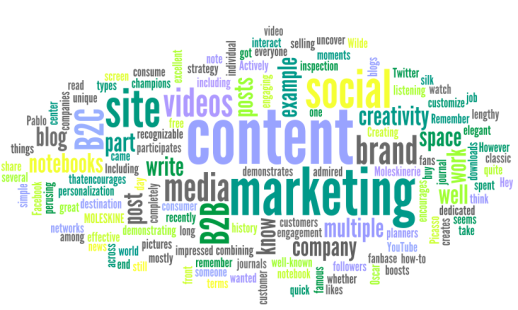
contentmarketing-1Chances are your business is using content marketing as part of your overall marketing plan. The objective of content marketing is to deliver valuable information that will engage your audience. Consumers are tuning out the more intrusive marketing tactics. What they really want is great, customer-focused information that helps them make a decision or solve a problem. That’s what content marketing delivers.

I actually like The Content Marketing Institute’s definition of content marketing the best: “Content marketing is a marketing technique of creating and distributing valuable, relevant and consistent content to attract and acquire a clearly defined audience – with the objective of driving profitable customer action.”

So when it comes to content marketing, as a marketing professional, your job is to create and share valuable, free content to attract and convert prospective buyers into customers and engage existing customers so they are repeat buyers. The content you create and share should be closely related to what you sell without selling.

The purpose is to build relationships, awareness, branding and overall establish your company as an expert in your industry. You want to educate people and gain their trust so they do business with you.

There are many types of content that form a content marketing strategy including:

  • Blogging
  • Guest blog posts
  • Social media posts and sharing
  • Email marketing
  • Infographics
  • PowerPoint presentations
  • Podcasts
  • Standard videos
  • Micro-videos (i.e. Vine)
  • Public Speaking
  • Webinars
  • Articles

It’s up to you to know what is the best way for your brand to reach those potential and current customers. Just remember the power of great content marketing can make a person stop, read, think and behave differently. The return on investment for content marketing can be huge if executed correctly. And, it really doesn’t take a significant investment!


wtgnpy

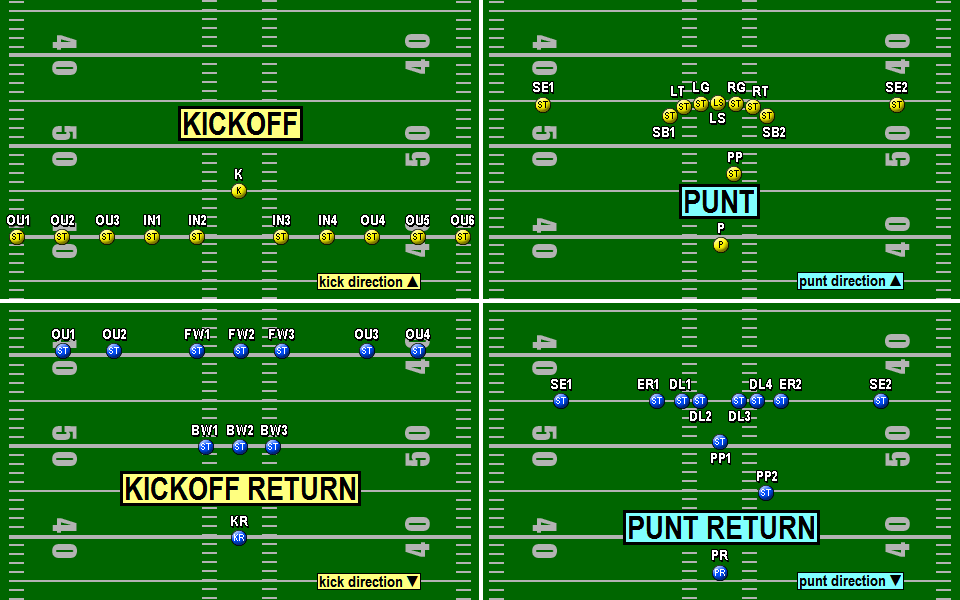
Last week’s game in which the St. Louis Rams special teams faked the punt against the Seattle Seahawks to help win the game, highlights the strategic importance of specialization, and believe it or not this type of strategy can be applied to teams in the workplace.

Special teams are some of the most overlooked in football. They can however, make the difference in controlling the game. Their moving the advantage up and down the field can lead to the big win. They are specialized and trained in their purpose. Whether punting the ball deep, keeping the opponent in a poor field position or making those final, last second field goals – they do something that the rest of the team cannot.

What makes special teams special? Practice, training, more practice, more training.

In this age of Do it Yourself (DYI), technology provides instruction on pretty much anything. Google has become the “go to” for immediate answers on how to accomplish an unknown task. No longer do we have to slog through piles of research. We can learn anything from how to reupholster a chair, how to tweet or learn how to sharpen our Excel skills. It’s great to be able to have access to this wealth of knowledge. But it does not guarantee the level of proficiency that only time, focus and mentoring can provide.

In order to create a winning strategy, become a leader and grow your small business, remember you can’t be all things to all people. It is critical to know when to call in the special teams.

You may only call on your experts for such specialized projects such as branding and marketing strategy and execution or human resources. As your business grows and time becomes more precious, you may use those special teams on a more permanent outsourcing basis to keep your eye on growth and innovation.

Whatever the case, when you need a game changer, call in special teams.


Circuit City Out of BusinessOn September 20, little did I know I would have a lesson on my latest opportunity to adapt to a new obstacle. I attended Camp Gladiator’s annual CG games, a fitness competition that pushes athletes to their limits.

We were there to do a fun run of the obstacle course. I was amazed, inspired by the competitors and already planning my training to be there as a competitor in 2015. I knew I could do this and wanted to do it!

Two hours later after a fall on the monkey bars, my adaptability was tested. My ACL was toast and needed reconstruction. Out with the goal to compete in CG games in 2015, new plan to be 100% recovered in a year.

Life happens, your professional life happens, business happens. To be successful in all areas in the current world that changes in a nanosecond, how can you ensure success?

To set your business up to prosper, it has to be flexible in any conditions. Here are three ways to ensure your business is adaptable:

  1. Stay on top of market trends. Including customer insights, competitors, economy, employment, technology and laws and regulations.
  2. Talk to your customers. Get feedback and respond.
  3. Create and foster an innovative culture. Be open to new ideas from all levels within the organization.

Companies must constantly evolve to changing dynamics in society or an industry to be successful.

A couple adaptability examples:

  • In the technology sector, you can easily see the winners and losers. As we switched from fax machines and snail mail to email and text, from bulky desktop computers to handheld devices, from Mapsco to built-in navigation systems, many organizations had to adapt. Apple was once considered dead. Look at them now. They innovated and adapted and are winning.
  • In August 2001, the opening of The Shops of Willow Bend, an upscale shopping center with mostly high end tenants, opened shortly before the September 11, 2001, attacks. Retail sales nationwide entered a slump. When it first opened, the mall’s tenants included Escada, Bruno Magli, Burberry, Armani Collezioni, Montblanc, Nicole Miller, Diesel, D&G and Loro Piana among others. The economy and environment dictated the need for change. Today, they are focusing on opening national retail chains versus luxury stores. This year, the center was sold to Starwood Capital Group for more than $1.4 billion.
  • In February 3, 2013, lights go out at SuperBowl XLVII. One hundred million viewers turn to social media to find Dunking in the Dark. That’s all. Oreo, you are genius and a perfect example of adaptability on the fly! Rock on!

Customer’s basic needs don’t change, but how they satisfy them do. Successful brands stay on-top of this.

Wish me luck on my surgery next week? Maybe I will blog about it …


We were excited to meet with a prospective client partner and learn more about their branding and marketing needs. The company is in the B2B space.Email Marketing

Well into the conversation, my pulse began to race, my leg started to shake and my voice rose an octave.

You see, they have been meeting with several potential marketing partners and being very thorough about their due diligence in selecting the right one. One agency told them that they could … wait for it … manage and execute all their email marketing for the entire year for an annual fee if they handed over all the email content in one meeting.

Whoa! Really?!?!

It sounded good to the prospective client. This was:

  • Very cost effective
  • Low effort on their part
  • Efficient with their time
  • Worry-free. They wouldn’t have to think about their email marketing for an entire year.

Yes, friends, but this is wrong in so. many. ways. Hence, me physically reacting to this idea.

Effective email marketing campaigns are, among other things:

  • Useful. If you are sending content to your audience that is several months old, you are missing the boat. “We try to include something useful in every email,” says Ben Chestnut of MailChimp. “If the announcement was totally useless, let’s at least give the recipient a case study, or something educational (even if it points to some other resource).”
  • Fresh. Our world is changing daily. What is relevant or newsworthy today is not going to be tonight or tomorrow, never mind months from now.
  • Personal and relevant. Your current and potential customers’ needs and businesses are constantly evolving. What they want and is the crisis du jour changes hourly. You may learn something in a meeting or on a call with them that you have never thought of before that could be a new product or service offering for your company or a nugget of wisdom for your next company email. Sorry, too late, you can only submit your content once a year … Ugh …

The reality is email marketing takes experience, work and expertise. The good news is we’re here to make it easy, effective and right for your brand.


tumblr_n2c9t3cWqG1ttz7sho1_1280 (3)

One of the things that makes marketing rock is the combination of science, art and a whole lot of planning. Clients that come to Front Porch Marketing typically have marketing goals they are trying to achieve. Sometimes they are WOG’s (wildly outrageous goals), sometimes they are motivational or aspirational.

Regardless of the size or type of goal, without a brand strategy and marketing plan, it is just a dream.

You are planning a trip from Dallas, Texas to Taos, New Mexico. You have plugged it into your GPS and you have selected the route with the shortest drive time. You know how long it is going to take to get there and what it is going to cost.

The STRATEGY: (your why) Family of four wants to have a safe trip to Taos, New Mexico, and enjoy time together.

The TACTICS: (your how) Travel by car in 16 hours, spending $200 on gas. You have your plan!

Not so fast.

What tools do you need to be successful? A driver’s license, a car, food, water, lodging and gas. There are a lot of vehicle models just as there are endless marketing tools (branding, social media, radio, TV, direct mail, print, e-mail marketing, e-commerce, in-store POP, affiliations, cross-promotions, customer loyalty, on and on).

The vehicle selection for a road trip is important, as is the selection of your marketing tools. Having a budget upfront can be helpful in determining tool selection. Who doesn’t want to drive a Bugatti Veyron to Taos, but is that the best tool for the goal?

Always tie your tactics and tools back to your goal and strategy. The performance and constant analysis of your tools is the science of marketing. There are tangible metrics and formulas for each tool ranging from frequency, reach, engagement and ROI.

When and how you use your tools is the art.

Ask the tough questions. What else do you need to know to be successful? For the Taos trip you might ask: Are there other destinations you want to visit along the way? What is the weather forecast? What are the traffic patterns? What is the longest stretch of highway between gas stations? Even the most expensive and sophisticated vehicle without fuel is just a heavy piece of metal.

Ask every question that will help or prevent you from achieving your goal. Then ask 10 more and PLAN accordingly.


imagesAT9YA6WPI recently came across an article on CNN’s website titled, “Facebook launched my startup” talking about entrepreneurs who relied exclusively on Facebook, Twitter and Instagram to start their small businesses. The story featured five small businesses and, as I flipped through each of them, up popped a picture of a friend and her business partner and their Dallas-based, three-and-a-half-year-old business Smocked Auctions. Their success in a short period of time is a true testament of how social media alone can have a profound effect on businesses.

After they used their initial investment to buy inventory to sell, Smocked Auctions had no extra money for marketing and advertising so they turned to Facebook and began weekly auctions to sell their goods. Almost instantly they attracted 20,000 followers and the rest is history. They now have more than 450,000 followers on Facebook, 10 full-time employees and are on track to do $5 million in sales this year. And although they have added an e-commerce site, Facebook still generates 65% to 70% of their sales.

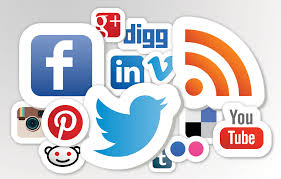
Now, it’s hard to think of life before social media even though many sites aren’t even ten years old! But it has become pretty clear that social media is a must for all businesses. There are many benefits of social media marketing including increased exposure, competitive advantage, increased traffic, new leads, increased sales and improved search ranking. But I think the biggest benefit of social media compared to traditional marketing is the ability to communicate with customers and a target audience on a daily basis.

With so many social media platforms available it’s important to be educated about each of them and know which is best for your business as far as reaching your business goals. Here is a list of the most popular networks:

As powerful as social media is, it really is crucial to succeed in today’s business environment. Make sure you take a strategic approach to your social media plan and make sure it works with your other marketing initiatives.


Sharing thoughts and information
This 4th of July, my family was on the lake. For the first time, we went out to the middle of the lake in a boat to watch the fireworks. It was exciting to be on the water and have a 360 view of the sky lighting up in celebration of our country. My two young boys snuggled up with me looking up at the sky and eventually fell asleep in my arms (that hasn’t happened since they were babies). For me, it was a perfection. For them, not so much …

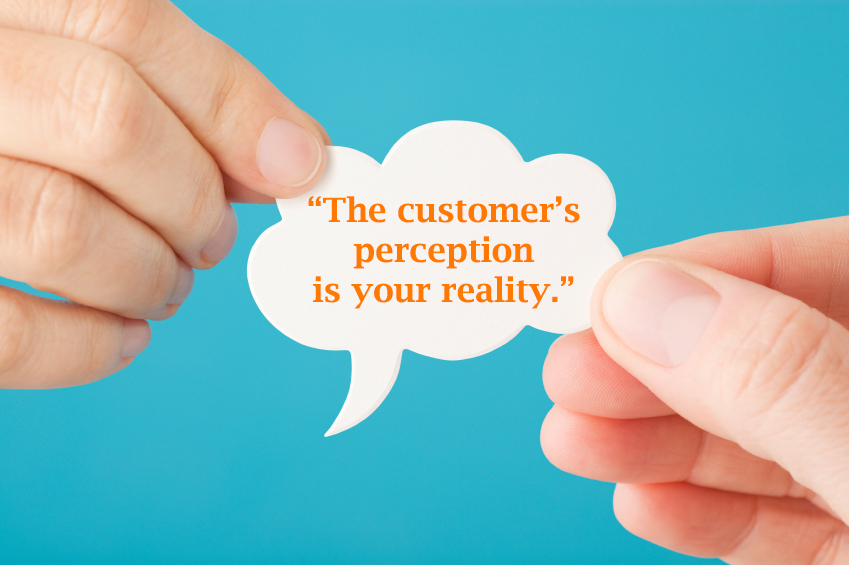
Is your brand, product or service perfect? Of course! No one ever says, “My baby has imperfections.” If customers view your brand as less-than perfect, there is a perception challenge. Your customer’s perception is your business’s reality.

The Dove’s “Real Beauty Sketches” Ad Campaign of 2013 is one of my all-time favorites! A woman describes herself to a forensic artist and strangers who have met the woman that day do the same. The result is two images that are very different. The tagline is, “You are more beautiful than you think.”

How interesting would it be if brands could do this? If executives and employees could describe their products and services and customers do the same. How would the pictures differ?

In 2009, Domino’s Pizza had a perceptions issue. What did they do? They listened, responded and communicated how they were changing, resulting is amazing business results. Watch this Domino’s Pizza Turnaround.

Perception is reality.

Three ways to do a brand perception reality check:

  1. Outside Business Consultants
  2. Customer Intercepts, Focus Groups & Surveys
  3. Social Media

Outside Business Consultants come in many forms; research firms, advertising, marketing and PR agencies, executive coaches, assessments, mystery shoppers to name a few. The value an outside partner can bring to your business is an objective view of your customer’s perception

Customer intercepts, focus groups or surveys are feelings and attitudes of your product or service. When asked, people will give you insights on areas to improve or let you know to stay the course. A very simple first step is a suggestion box in retail locations. You can get some really great ideas!

Social Media has opened the customer conversations wide open! Leverage this opportunity to listen, watch, collect and engage with your audience. People have immediate access to your brand to share in a public forum their likes, dislikes and desires for your product and services. Are you listening? Are you taking action? Social media allows you to respond immediately to customer feedback.

Listening to your customers and being open to feedback is an important business strategy to ensure your products and services are aligned with your customers’ perceptions.

My oldest son’s journal entry on my perfect 4th of July night: “On 4th July at night we did not get to see that much fireworks.” It was not his best 4th of July, our perceptions of the evening differed greatly, but perception is reality.
IMG_4024