Category Archives: creativity

Q&A from a small business owner

Small businesses are the heart of America, but what would it look like to start a small business in the post-pandemic world of today? Life in corporate America has changed drastically since the start COVID-19 pandemic. Turnover rates have skyrocketed and a growing sense of burnout has people looking for flexible, fulfilling enterprises. So, when the 9-5 isn’t cutting it anymore, why not become your own boss?

Turn a passion into a money making machine that pays the bills and gets you out of the office. My personal friend, MJ, did just that. She created Ambrosia and Honey, an online art shop specializing in fantasy novel merchandise. I got the inside scoop on how MJ turned her drawings into a successful, growing company, as well as the hardships and victories she encountered along the way. 

1. What made you want to start your small business?

I started to read again after graduating college. I loved reading as a kid but school took up too much of my time and that passion got put on the back burner. A few months after graduation I got a job as a concept artist and was living with my parents. I had tons of free time after work and was burning through several books every week.

After 6 months working I realized that I really don’t like working for a company. No matter how cool the assignment was, I found that I could never bring as much passion to my job as I did to my personal work. I got into a bit of a bad place where I wasn’t sure what I truly wanted anymore. My goal was always to become a concept artist so why wasn’t I happy?

That was when I discovered the bookish community on TikTok and Instagram. I found so many other people that loved to read as much as I did, as well as other artists who created amazing bookish shops. I thought to myself “well I could do that.” And so I did!

2. How have your priorities changed from when you first started?

I don’t think my priorities have changed as much as my goals have. Originally I started the shop with the goal to share my art and maybe make a few extra bucks on the side to pay for gas, seeing as I drove 45 minutes to and from work every day. I was already creating fanart for myself, I figured other people might like to see it too.

Well as it turns out a lot of people like to see it and the shop is now my full time job! My current goals are more in the realm of expanding the company so I can keep up with the demand and creating even better products. My small business priority has always been quality over quantity. 

3. Knowing what you know now, is there anything you would have done differently when you were first starting out in your small business?

I would have done preorders from the start. I didn’t realize that social media engagement didn’t equal actual sales so I ordered way more product than I actually needed.

4. What has been the hardest thing about starting your own business? 

The hardest thing has probably been the accounting and business side of things. The art comes easy but the legal things you have to take care of are incredibly frustrating and time-consuming.

5. What is unique about your small business?

I think the fact I make art based on books is pretty unique. Most fan artists make work based on tv shows, films, or anime but the bookish community is relatively niche. My work itself is another thing that separates me from other bookish shops. The majority sell apparel, candles, or jewelry while I sell decor.

I combine digital painting with 3D elements to create something that’s never been done before. Of course this isn’t to say those shops are bad — on the contrary! My fellow bookish shop owners have become some of my dearest friends. I just mean to say mine is slightly different from the rest.

6. What do you look into when making a new product for your business? 

I have an entire notebook full of ideas I can’t wait to show everyone! Often times they come to me while I’m driving or when I’m about to fall asleep. That’s the easy part; scheduling is the main problem.

Due to how time-consuming each launch is, I’m only able to do one every few months so I have to be very strategic when they’re placed throughout the year. Seasons, holidays, book release dates, etc. all play in to what I choose to design and when. I definitely get inspired by my fellow bookish shops but my work is different enough from them that I generally just to my own thing.

7. How do you market your business? What is the most useful/successful?

Social media is essential to my small business! I personally use both TikTok and Instagram. Understanding how the algorithm works is the best skill you can learn in terms of marketing. Good lighting, engaging captions, and posting at the right times will take you far. If you don’t know where to start, look at other accounts to get inspiration. 

8. Any advice to someone starting a small business?

My biggest piece of advice is to be approachable! Let your followers get to know you and create a community. Post relatable content with insights into your personal life. Pull back the curtain and show what’s behind the scenes. People want to follow people, not brands.

Are you ready to start your own small business?

Starting a small business is no easy task, but it might be just what you need if you’re feeling bogged down by the corporate machine. They say if you’re good at something you should never do it for free, and if you’ve got passion and determination it can take you where you need to go. We’ve even got more tips for marketing your small business to help you get started.

Hopefully these tips can help you or someone you know who is looking to start their own small business! Huge thanks to my friend MJ. Remember to check out her shop Ambrosia and Honey online, and don’t forget to shop small!


Focus on your impression as a graphic designer

As a graphic designer, you are always focused on making brands for someone else. Listening to clients describe the vision and personality of their company, you then make a cohesive new brand that fits what the client described. It’s the same routine every graphic designer has experienced day in and day out.

But why do people say it is important to create a personal brand? Even though you are focused on creating and designing brands for someone else, you have to step back and focus on who is selling that work: you are. Your personal brand can demonstrate your strategic thinking and creativity to potential new clients. So what is your personal brand currently saying about you? Maybe its time to take it to the next level.

Break the process for yourself down into simple steps

Here are 5 ways to help you brand yourself better as a graphic designer, and benefit by standing out from the crowd this year. 

1. Define who you are 

One of the hardest things about creating your personal brand is defining who you are. But if you ask yourself some questions it could help you define it and put it into words. 

Out of all of your work, which is your favorite design that you have done?

As a graphic designer, what motivates you? 

Where do you excel? 

What do you want your clients to feel when they first discover you as a graphic designer? 

How do you present yourself every day? 

2. Establish your audience 

Who do you want your future clients to be? Try to build a personal brand that reflects the audience you want to work with. Look up fellow designers and see how they handle this themselves and market to their target audience (clients, agencies, etc). 

3. Study brands you like 

Just like you would research a company for a new project, take a look at other designers and creative agencies that you like. See what they are doing regarding their brand and take notes on how to enhance your own brand.

4. Image is everything 

Start creating social media updates that reflect your enhanced brand. Make a website where you can showcase all of your past designs in a personal branded format using such platforms as Behance and Dribble. Be judicious when you choose work to show off. You’ll want to highlight work that most reflects the work you want to do in the future.

5. Interaction on social media

Posting regularly about clients’ work or your personal work will give you a presence on social media. This way you can keep up with the audience’s reaction and trends in the design world. Keeping up to date with coworkers or potential clients gets your name out there. Building those connections can help you get future work opportunities.

Your new better brand will get you further

Once you brand yourself more effectively, you will have created a strong impression and help future clients know who you are. It can persuade their decision to work with you. Branding yourself as effectively as you brand your clients is a way to help plus-up your career and focus not only on the work you do now, but the work you want to do in the future.


Marketing items to high schoolers is very different than other age groups. High school means freedom. This includes the ability to get a job, drive, and buy things without asking parents.

Social Media

As the first generation born into technology, Gen Z has grown up with the internet. For high school students in particular, social media surrounds our daily lives, making it easy to access new products and reviews faster. When targeting a high school audience, the first thing you will want to do is create a social media presence, especially on Instagram and Tik Tok.

For products such as clothing or make up, it is important to follow trends. Stay up to date on the latest styles and aesthetics. In typical high school manner, everyone wants to fit in, this means providing products similar to the current high school style. In regard to social media, creating content that follows popular trends will increase the chances of your product being seen. For Tik Tok, use popular sounds with a unique idea, making the Tik Tok more likely to get on the for you page.

Accessibility and Inclusivity

High schoolers are cheap! Most income comes from a minimum wage job or allowance from parents. The price of a product can immediately deter consumers, especially if is not a well-known name brand. Make sure the price is reasonable for the product. It is also important to make products inclusive to all ethnicities, body types, and genders. Exclusion can create bad reviews and overall dislike for a company.

Visuals

Once the consumer has clicked on the website, visual organization is a key part of reliability and user attention span. As someone who frequently purchases products from Instagram or Tik Tok, the first thing I notice is the website’s aesthetic. If a website looks low quality, chances are the product is also low quality. By using attention grabbing visuals and colors, while also maintaining the clean look, users will trust the product more.  Secondly, in a world of 15 second Tik Toks, the average attention span is much shorter. When websites are difficult to navigate, most users will simply give up. By making products easy to find through a search bar or navigation tabs, people are more likely to stay on the site.

When Marketing to High Schoolers, Think Like One

Overall, when marketing to a younger audience, it is important to think like a high schooler. What you may like or dislike, could be completely different because high school is its own world. One of my biggest pet peeves is when I see a product that would be amazing if one little thing was changed, such as a childish image or an older print. Step outside of your world and think like you are 17 again!


From Pics to Vids

Video media is rising in popularity, especially with younger generations. This is prompting social media platforms like Instagram to take a more video-based approach to their branding strategy in order to reach all target audiences. Consequently, Instagram introduced more video watching features that bring a new depth to advertising and entertainment on the platform. 

The Takeover of Video Media

Tik Tok, a video-sharing focused social networking service, has ignited a frenzy of user-generated content and influencer pull. The power is now in the users and as such, TikTok has benefited from making their videos short, entertaining, shareable, and customizable to each user. These features align with the short attention span of users and their desire for a high level of engagement.  

TikTok’s platform also includes feeds titled “For You” and “Following”. These two feeds collectively hone into the individual’s likes, therefore making the app more appealing.  

Additionally, the TikTok algorithm differs from the “following” style of Instagram. With Instagram’s feed, the user customizes it with little recommendation. This is due in part to how interests, relationships, timeliness, frequency, following, and usage influence the feed. 

According to an article by The Conversation, the combination of a “feed” and videos makes TikTok very information dense. The article explains that, “video media operates on two parallel pathways conveying explicit information (the kind found in speech or writing) and implicit information (social cues like the TikTocker’s clothes and hairstyle, or emotional affect from music) at the same time.” Pictures are not as information dense, so they feel “slower” for users which further prompts Instagram to push for high-speed video sharing. 

How Instagram Adjusts to the Change

Instagram’s new and changing features

Adam Mosseri, the head of Instagram, shared a video on July 30, 2021. He explains, “we’re always trying to build new features that help you get the most out of your experience. Right now, we’re focused on four key areas: Creators, Video, Shopping, and Messaging.” 

An article from The Verge also summarized Mosseri’s video by saying, “the message that Instagram is sending is clear: it no longer wants to be thought of as the “square photo-sharing app,” but instead as a general entertainment app driven by algorithms and videos.” 

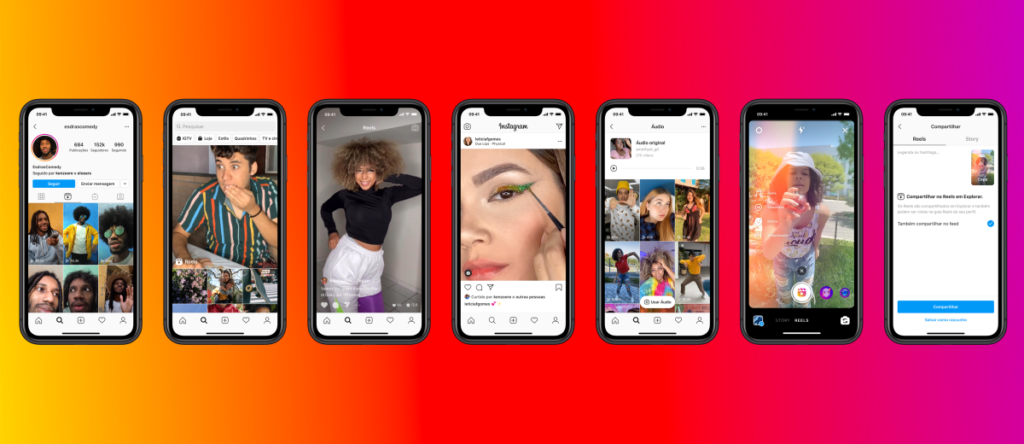
To follow through with this vision, Instagram introduced “Instagram Reels” a concept where users can watch short videos on a continuous feed much like TikTok. Reels are the newest addition to Instagram Stories and IGTV, the forms of video sharing currently on Instagram. With this change, businesses must adjust and start curating engaging videos for all social media platforms. 

What the Rise of Video Media Means for Businesses

This video takeover is a turning point for many company’s branding strategies. Companies must now start using videos to highlight their products and services to promote the personality of their brand. The sole use of high-quality photography may no longer be enough. For instance, according to Social Beat, “41% of users use social media to influence their purchase decisions. Furthermore, 83% of users want to discover a brand’s personality through social media.” 

Whether the videos are interactive or informative, this prominent form of media makes brands more attractive to new and current customers. Showing a company’s products and services in action allows customers to see how the products and services can help “get the job done” in their own lives. 

Up Your Instagram Game

Video content has taken the world by storm and forced Instagram to adjust to a new media environment. Truly, now is the time to invest in influencers, video trends, social listening, and engagement. From creating perfect loops to setting up an aesthetic frame, Instagram’s newest video features will help many companies promote their message to target audiences worldwide. 


Your brand has a voice.

As your brand’s marketer, you have control over whether that voice builds your brand or not. A strong brand voice is the structure and tone of the copy and content that is created for a brand to speak from. You can hear this voice on its website, ads, social and in collateral. With consistency, a brand can feel like a person. And over time that person can become familiar and even recognizable. That’s when you know you’re doing it right.

Why does brand voice matter?

First, a part of your initial branding exercise, your brand might have completed something similar to what we call The Brand Elaborative. This branding document outlines the personality of the brand. This helps writers write in that voice when creating copy for digital and traditional marketing and advertising. One of the most important parts of The Brand Elaborative are the three personality words that describe the brand as if it were a person. For instance: honest, kind, quirky. So why does having a distinctive brand voice matter to your brand?

Brand voice drives consistency.

Our B2B client Agile Sourcing Partners specializes in helping gas and electric utilities and utility infrastructure companies improve operational efficiencies and performance. So, they speak in an authoritative voice with above average complexity of language. Given that their audience are decision-makers in engineering and other technical industries, it makes sense for them to speak the language of their peers. Thus, using this consistent voice in content sets them apart as insiders: educated and in-the-know.

Brand voice helps you discern what copy hits the mark – and what misses.

Our restaurant client Chocolate Angel Café & Bakery is a local favorite for cross-generational high teas, exquisite baked good and charming family recipes. They believe in serving one another and understand that relationships matter. Thus, their brand voice is connective, celebratory and conjures up memories of childhood. They express gratitude often, and make every day feel like a special occasion. So it’s no wonder they’re a favorite for bridal showers and family celebrations. If it sounds like your great aunt reminiscing about a casserole, then we’ve hit the mark.

Brand voice creates fans.

Our education client Faith Family Academy, a charter school in DFW believes in pushing public education beyond just the classroom. They speak in servant leader’s voice. FFA makes students the center of attention, celebrating wins and putting every effort possible into their individual and collective success. The social media channels for Faith Family Academy are a testament to this brand voice in creating fans. In both English and Spanish their fans celebrate right along with the students, staff and parents. The FFA community adds congratulatory comments and a plethora of emojis on a daily basis. So who wouldn’t want to be part of this kind of enthusiasm, joy and experience of being lifted up by your community?

Brand voice can make your brand the authority on subject matter.

Our real estate client The Slay Diaz Group is a woman-owned residential real estate team who regularly wins “best-in-class” awards for their work. As a result, their voice is very real, straightforward, easy-to-understand and ready to give helpful advice on everything home-related, even sharing their coveted list of service providers. This is who you ask when you don’t know if remodeling your bathroom is a good idea or not. And, this is who can tell you if now is a good time to sell your house, put in a pool or move to a new neighborhood. Their consistent brand voice has grown their business, their reach and their authority on the subject of residential real estate.

Some of the brand voices from Front Porch Marketing.

Brand voice lets people know what you stand for.

Our own brand voice here at Front Porch Marketing tells you that we will go the extra mile to help. That we share what we know without reservation. And that we will be your biggest cheerleader. We stand for lifting you up, making you laugh and creating opportunities for others to do the work they love while taking care of the people they love. If your brand has a mission, shouldn’t all of your content reflect that mission? We think that your brand voice can show your potential customers that you are like them – kind, helpful, positive – and they will want to hang around with people like that.

Need to define or redefine your brand voice for better consistency and stronger connections with your audience? Then get started with a branding exercise which results in the guidance documents you need to hone your tone and define your voice. Consumers actually prefer brands with strong, defined and unique personalities. And having a unique personality definitely helps in creating spot-on social content, email storytelling and website visuals for your brand – which results in stronger brand loyalty and repeat customers.

You can visit some of our Front Porch client brands to see different types of brand voice in action.


Seamless, sharp, and sophisticated. That is the vision that Front Porch Marketing has for you and your brand as we share why you should style your Instagram highlights.

With the right color scheme, design, and icons, you can drive more views and engagement with your Instagram bio at little to no cost.

If you are looking for a push to execute this vision and wow your audience the next time, they see your page, this is the blog for you!

The Vision

When you open up your company’s Instagram page, what is the first thing you see? Most likely, your eyes go to the colorful posts or maybe a bold profile picture with a strong branding icon, but acting as an overlooked middleman is a row of highlight icons. Currently, there may be as little as 0 or as many as 100 on your page – the sky is the limit.

Truly, the only limit that is regarded is that only up to 100 pictures can be posted within a story highlight, but highlights – much like a reel – should be seamless, sharp, and sophisticated and not fragmented, sloppy, and cluttered. Most importantly, they should be an extension of your brand’s story.  

The Highlight

Many take a lot of time and effort to create the perfect “story” to post on Instagram. Whether it includes colorful gifs, a unique poll, engaging videos, or a giveaway you are extending a vision to viewers about your brand and its values. What is disheartening about all that time and effort is that it dwindles in significance alongside the 24-hour frame that stories are set on. Plus it requires the utmost strategic thinking.

Now, with story highlight reels you are able to make the stories on your Instagram stay permanently on your profile for viewers to enjoy at any given moment. By adding this extra step to your Instagram branding strategy, you are able to strategically use a prime location on your bio and create an immediate place of engagement with users.

Step 1: Be Seamless

What is great about engagement is that you can cast the vision for what viewers see and find different ways to resonate with them. For example, aesthetics are incredibly favored amongst millennials and are a growing target market for many companies. Thus, considering aesthetics on all social media platforms allows you to connect with this audience and others like it.

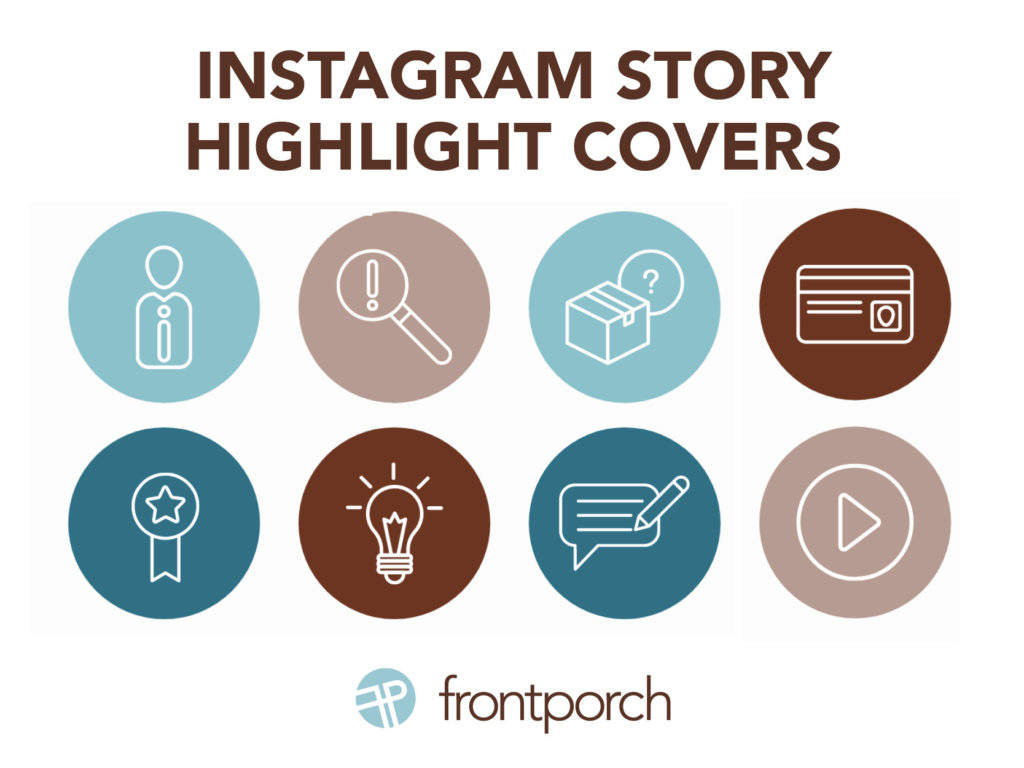
To create a seamless experience for users, use highlights to promote content that can showcase your products or services, express your brand, drive traffic and market your business. If your profile has bold colors, seamlessly transition the same color palette to your story highlights while also extending a nod to your brand as a whole. If your posts have a color scheme, extend it to your highlight to establish immediate brand recognition or go with a splash of color to draw in your audience with a double look. No matter what you choose, think about your brand as a whole and embody that within your highlight story covers – the first picture that viewers see on a highlight reel.

Step 2: Be Sharp

When it comes to your story highlight covers, always use high-definition content and think “succinct” when it comes to titles. There is a 10–11 character count rule of thumb when it comes to highlight covers. The more characters you use, the higher the chance that your highlight title will end up with an ellipsis instead of the word you were trying to promote. Whether you use CTA words like “events,” “promotions,” “sales,” or “giveaways,” be consistent and above all, do not be misleading in any way.

Step 3: Be Sophisticated

Last but not least, when it comes to Instagram story highlights create a look of sophistication. By using sites like Canva, Unsplash, and/or Pinterest, there are 100’s of highlight cover designs that are pre-made and ready to go at a moments notice for you and your company. No matter if you choose icons, HD pictures, graphic designs or a color palette, always keep your brand at the forefront.

In Conclusion

First, to bring your Instagram to the next level, revamp the look of your Instagram’s aesthetics with a seamless, sharp, and sophisticated look. Second, when it comes to highlight covers think about what story you want your viewers to plug into. Third, see your platform through the viewers eyes to see which highlights you want them to engage with first.  In summary, bring the middleman to the forefront.


The Clean Up 

Spring cleaning comes in many forms but have you extended it to your social media? Although this sounds like an odd notion, tidying up your social media ensures that your online platforms are building up daily engagement and generating leads. 

When you don’t pay attention to your social pages, your platforms become dated – something that should always be a priority to avoid. 

By focusing on these five points in your social media, you can make sure to revamp your social presence, renew your look, and refocus your brand strategy.

When it comes to spring cleaning, start out with the basics. Your logo! Are your colors dated? Should you go brighter? Bolder? Is your logo still considered modern? These are all questions you should ask yourself to make sure that your company is putting their best foot forward and aligning with today’s day and age. 

The Header 

The header is one of the first things that your viewers will see when they come to Facebook and LinkedIn! When you look at it, ask yourself if the picture is…

  1. High quality? 
  2. Modern or dated? 
  3. Reflecting the season your company is in? 
  4. Updated with the awards and certificates your company has gotten throughout the year? 
  5. Used across all platforms? 

Once these questions are answered, your social media strategy is that much closer to being polished.

The Bio

The bio for your company may be short and sweet or long and informative but is it as updated as possible? Are there new hashtags you want to include that are easily found? Are there any typos you may have missed the first time you wrote it? 

No matter how fantastic your bio may be, the smallest writing error can cast doubt about your capabilities to be detail-oriented. This is a mistake you never want to have reflected in your platforms.

The Feed

When it comes to your feed you want to make sure that it is an extension of your latest brand strategy. If your brand is bold then extend that message through bold colors, sharp photos, and succinct captions. If your brand is playful then extend your brand through bright colors, whimsical photos, and emojis. 

Now that you know what you want your feed to look like, look at it from a grander scale.

Do the last posts reflect a past brand strategy? Do you want that to be the first thing that viewers note? Or do you have a new brand strategy that you want to promote and want that to be the focal point? 

Whatever the case, you will want the most current brand strategy to be noticeable at first glance. Take the time to see your company from the eyes of your viewers.

The Website

When your customers look for your website, are they able to find it easily? If not, you may need to revamp and renew the list of keywords that is used for your SEO (Search Engine Optimization) on each page.

By using the most up-to-date keywords, you’re able to make sure that your site is found in an easy manner. Decreasing the level of friction for customers to be able to locate your website and find the information they are looking for is important because it can be the difference of gaining or losing a lead. 

You’ll also want to make sure that all the tweaks that you make on your social media platforms are extended to your site. If you made the colors brighter on your logo, extend that color palette to your site. If you modernized your feed, make sure that your photos and messaging on your site reflect that change. For every action there will always be a reaction.

The Conclusion

No matter how big or small your spring cleaning is, always keep your brand at the forefront. Taking the time to be detail-oriented, using these focal points, and putting your brand first is sure to create a springtime glow for you and your company.


There comes a time in every company’s life when their logo might need a little freshening up. Maybe it looks dated. Or it no longer reflects your company. Maybe your logo looked great on your original product, but it no longer works for what you manufacture now.

Take a page from logo makeovers past and ask yourself, “What does your logo communicate now?”

Your Logo No Longer Works with Your Products

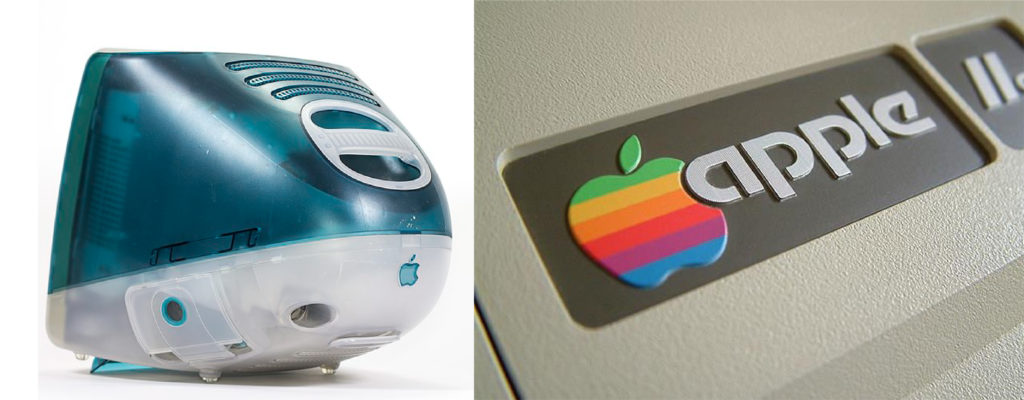
Imagine pairing Apple’s first iteration of their iconic apple-shaped logo, the rainbow-striped apple, with the first-generation iMac. The iMac debuted in 1998 and was a colorful departure from the standard boxy, beige and gray computers of the time. If Apple stuck with their rainbow-striped logo, the result would have been a product that looked more like a child’s toy than a high-tech computer.

Does your logo “play well” with your existing products? If not, it might be time to thank it for its service and toss out the elements of your logo that no longer work for you.

imac apple logo and old rainbow apple logo

Your Logo Looks Dated – Burger King Edition

All design reflects its time and if your logo reflects the last century, then perhaps it’s time to give your logo a second look.

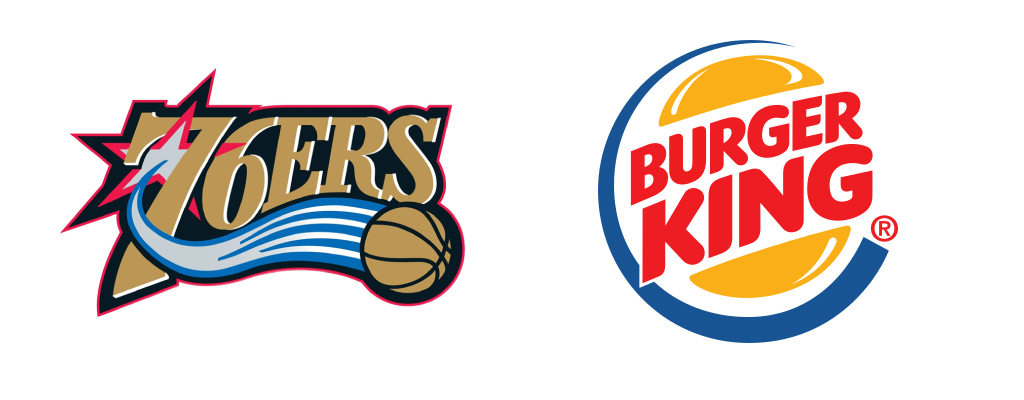
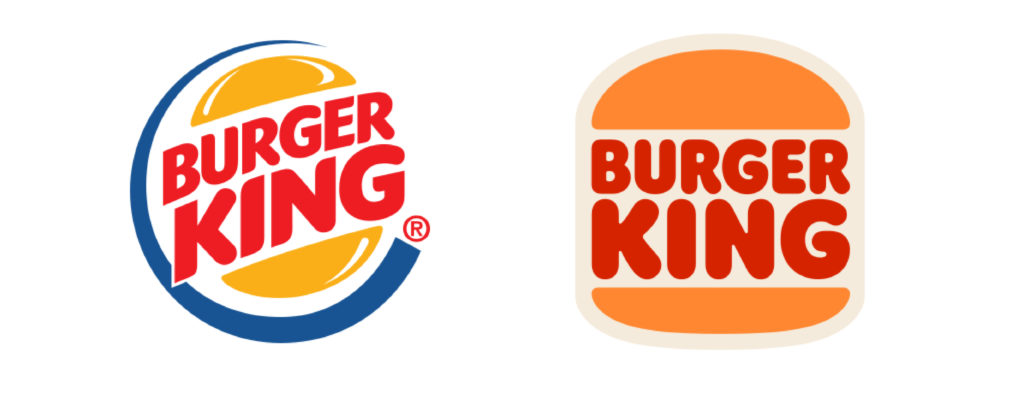
Let’s take a look at the recent Burger King rebrand. Their logo was designed in 1999 and it looks like it. Their old logo reminds me of ‘90s sports team logos – modern, lots of dynamic movement and some sharp edges. You know, everything you want in your food. 🤷‍♀️

Their new logo is simpler, puts the burger front and center and it looks friendlier. Plus, it looks great on a small screen. Brands must think about where their logo is going to live and if that logo doesn’t look good blown up on a billboard or shrunk down to the size of an app icon, then it might be time for a change.

Your Logo Looks Dated and it No Longer Works with Your Products – Instagram Edition

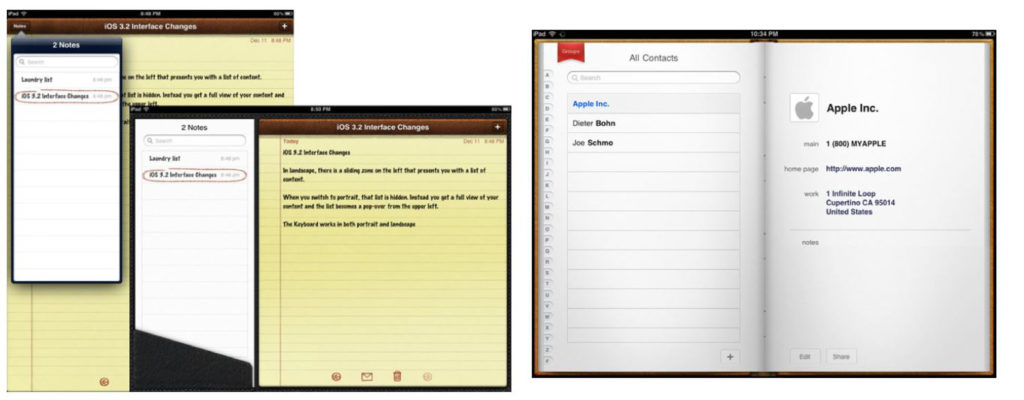
Remember when app icons used to be skeuomorphic? That is, they were designed to look like the thing they represent. i.e. The recycling bin icon on your desktop that looks like an actual recycling bin. Software designers used skeuomorphism as a shorthand way to get people acclimated to using computers and other digital devices. Picture what the old iPhone icons and interface used to look like – if you wanted to look at your contacts, you tapped on the icon that looked like an address book. When you opened your notes, the screen looked like a yellow notepad.  

But there are times when skeuomorphic design can go off the rails a little. What happens when users no longer use the things these icons are meant to represent? Exhibit A, the “Save” icon in Word – it looks like a disk that I used to tote around in high school.  How are users supposed to know to click on that icon to save their document? Answer: users just learn over time that’s what you need to click on, but I wouldn’t call that very user-friendly or intuitive.

Skeuomorphic design can also look messy and cluttered. Users could see more of their contacts if the interface did not look like a literal address book

There is a reason why app icons became more and more “flat” and minimalist over time – its easier to see them on a mobile device. Which brings me to Instagram.

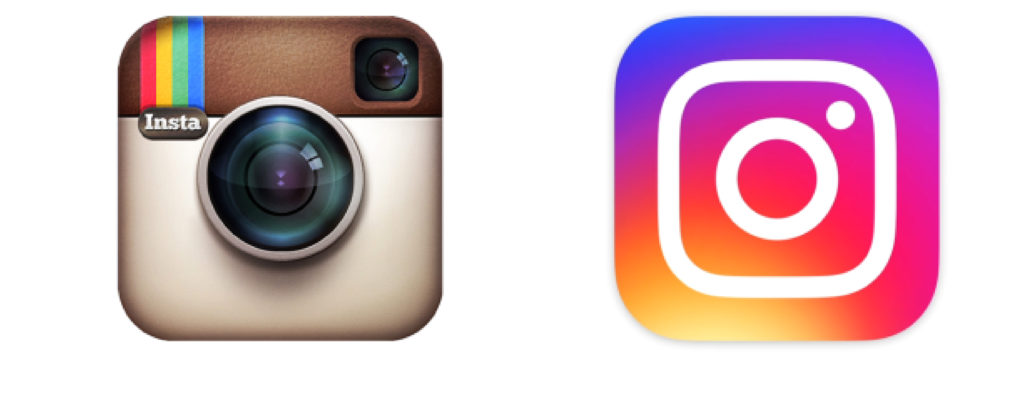
In 2016, Instagram changed their logo from an icon that looked reminiscent of an old Polaroid camera to what it is today, a minimalist representation of a camera with a colorful gradient background. And the internet, of course, had some thoughts:

“The new Instagram logo looks like a rejected starburst flavor.”

@trecoast

Okay, so the new logo was not universally loved. But, in the end, things turned out alright for Instagram. One, because its Instagram, a photo-taking juggernaut of an app that managed to tap into humanity’s need to take selfies and shill vitamin gummies. And, because their new logo:

Made them stand out from the rest of the apps on your phone.

Have you ever noticed that a lot of app icons are blue? Don’t believe me? Take a look at this:

So. Many. Blue. App Icons.

Gave them a unifying design language they could use across their app, creating a better user-experience.

Instead of making each function of the app a literal representation, i.e. a boomerang icon in the shape of a boomerang, they could now be designed to represent their use. Which is why the boomerang function in Instagram looks like an infinity symbol because it replays a short video over and over again. A good logo gives a company different ways to talk about itself visually.

A bad logo can limit a company’s design choices. For instance, if your company’s logo features a gradient, its going to be difficult to embroider that logo on a shirt. If you can’t reverse your logo i.e. it looks the same in black-on-white as it does in white-on-black, then that really limits your design options.

You might find that you can only put your logo on a light background. Which isn’t the end of the world. But if you want to put your logo on say, a photo of a manufacturing facility in motion, then that photo had better be light and bright or it will get lost in the darkness.

Plays well in all sorts of uses.

For example, if you want people to use your app, it would be best to create a simple logo that can be slapped onto a flier, a business card, a website etc, and still look good. Imagine if Instagram still used their old logo and how that little brown polaroid would look on a business card or the bottom of a flier. Which is easier to for the average person to identify, that camera or the “rejected starburst flavor?”


Most companies do not fail or succeed based on their logo. Quality design is an investment, one that you might not have the resources for right now. But a logo can communicate more to your customers than a thousand commercials ever will.

What does your logo communicate to your current and potential customers? Is that the message you want to send? Or is it time for a refresh?


Today it is Lea Ann Allen’s turn to rock the porch with her Rocker Spotlight interview!

What is the biggest misconception about marketing today?

Marketing is not something you set and forget. It’s an on-going process. Brand-building is like planting a garden and then watering, weeding, fertilizing and trimming it constantly to help it grow.

What advice would you give to someone struggling with creating a brand identity? 

Take a look at your brand’s competitors and peers. What are they doing? Now, how are you doing it different? Show that. Tell that story.

One of the biggest lessons you’ve learned throughout your career?

Who you work with is more important than everything else in your career.

What does good marketing look like?

Good marketing makes a brand look like a person you’d want to be friends with.

If you could be anywhere in the world right now where would it be?

I am where I want to be.

If you could go to dinner with one person living or dead who would it be?

I go to dinner every night in my home with my husband and I wouldn’t choose anyone else, anywhere else.

If you could describe yourself in three words what would they be?

Resourceful. Analytical. Empathetic.

What is your favorite thing about FPM?

FPM values people. Really demonstratively values them.

Tell me about a major milestone in your life?

I worked 3 jobs simultaneously to put my son thru Columbia University with zero debt.

In what ways does the team at FPM have aligned values?

FPM team members respect each other’s individual lives, in everything they do.

How would you describe the culture at FPM?

Agile. Supportive. Enthusiastic.

How does FPM differentiate itself from other marketing companies?

FPM did not have to pivot their business model because of the pandemic, they’ve been a virtual team since their inception – making them ideal partners for understanding what the future world of work looks like now.

Fun fact?

I might have the largest yacht rock record collection in Dallas?

Thanks for tuning in to another week of Rocker Spotlight questions featuring Lea Ann Allen and her rocking time on the porch!


Recently added to the Front Porch team, New Rocker Allison shares Porch insights on good marketing, life lessons, and an inside view on The Porch.

What is the biggest misconception about marketing today?

Marketing is solely focused on gaining new customers. This is a common misconception because it omits the importance of retaining current customers and misconstrues customers as only a number instead of a respected client. Although getting new customers is important, it is just as important to make sure that current customers are being equally prompted by the benefits of the product/service.

What advice would you give to someone struggling with creating a brand identity?

Believe in your brand and find a way to guide your customers to see the brand through your eyes. Whether it’s a product or a service, show customers how your idea can change their life for the better.

One of the biggest lessons you’ve learned throughout your career?

Your uniqueness is not your weakness. Be proud of what you can bring to the table and always be willing to learn from your mistakes and others.

What does good marketing look like?

Good marketing requires creativity, persistence, and patience. Therefore, by taking the time to set a solid foundation and identify your core values as a company and as a team, you will reap the rewards of gaining loyal customers and positively impacting the world with your product/service.

If you could be anywhere in the world right now where would it be?

I would be in Greece, traveling from coast to coast, with ABBA naturally playing in the background.

If you could describe yourself in three words what would they be?

Gregarious, Amiable, and Confident.

What is your favorite thing about FPM?

Working alongside a team of encouraging women who are always ready to take on a challenge.

In what ways does the team at FPM have aligned values?

We all believe in delivering the highest quality of our services and in the fruitfulness of investing in relationships with our clients and our teammates.

Your goals for FPM?

1. Pass on productive nuggets of wisdom to viewers who read my blogs.

2. Help a client’s goals become a reality.

3. Expand my professional network.

How would you describe the culture at FPM?

FPM is truly like a family. For example, no matter where I am working from or what I’m working on, I know I can always count on this team to have my back and help me achieve my goals.

How does FPM differentiate itself from other marketing companies?

The FPM team is committed to be a helping hand to all who ask. Most importantly, no matter the product or service being sold, FPM will make sure that you are well equipped with the knowledge and assistance you need. Above all, we are here to make your goals a tangible reality.

Fun fact?

I have been to the middle of the world!

Thank you for tuning in as this New Rocker shares her Porch insights!