Category Archives: Blogging

We once again find ourselves, think agility, at a new threshold as our state and country reemerge from quarantine and businesses are making decisions on their next step. The initial rush of the digital pivot is fading … the next opportunity is stamina and easing back into the new normal, whatever that may be.

Agility

However, before we start running that ball, let’s just pause and celebrate the WINS over the past five weeks.

With collaboration of the students, parents, administration and teachers, Faith Family Academy was able to continue to serve their student body food, technology and knowledge. They did not miss a beat. Faith Family Academy, you rock!

To Mister Sweeper, who continues to hire when so many are looking for employment AND keeping streets, parking lots and garages clean, an especially important job right now! Mister Sweeper, you rock!

Agility Rules!

To Corps Team Dallas, who continue to support clients in their hiring, pipeline and talent continuity plans, plus the virtual edition of “What We Love about Dallas,” was a go-to guide for entertainment this month! Corp Team Dallas, you rock!

Despite Big Al’s business being significantly hindered during shelter in place every week they have continue to give big with 100+ meal donations to first responders and the underserved community partners, like Family Gateway, Ronald McDonald House, Genesis Women’s Shelter and UTSW first responders. Big Al’s, you rock!

Essential workers that found a new way to safely do business, you rock!

Entrepreneurs who continue to forge ahead despite many unknowns with business and marketing plans, you rock!

Non-profits that are using creative means to serve their clients, you rock!

Therefore, Stay-at-home parents that are navigating new schedules and systems, you rock!

To the kids (especially seniors) that are mourning traditions missed, but are finding creative alternatives, you rock! 

Above all, all accomplishments, are worth cheering. Find reasons to celebrate and promote good news and good deeds. Recognize all the daily, tiny actions and choices that are keeping our community moving. If we did not catch you in this wrap up, know that we think you rock!


Brand identity book has pride of place on office desk.
Start with your brand

Background

If you are reading this, you are probably curious to learn more about branding! Before we dive deeper into branding, it is critical to understand how your brand represents your purpose. Brian Whipple, CEO of Accenture Interactive, says “Brands must genuinely commit to aligning their businesses with purpose to differentiate themselves.” Innovative companies such as Apple have done this, starting with the “Why?” mentality instead of “Who?” or “What?”  

When businesses focus on why they are doing things, they establish purpose and garner respect. It is important to actively take steps to support your cause, because it is the action instead of words that makes a difference, and people can see this. Customers want to see companies supporting the things they support, and when this happens, they are 63% more likely to purchase.

Why it’s important

To build equity in a customer’s mind, a brand must be: memorable, meaningful, aesthetically appealing, transferable, adaptable over time, and protected legally. It means differentiating yourself and finding ways to stand out among competitors. It matters because brands stick with people!  

How many times do you think you have asked for a Kleenex when in reality you meant a tissue? James R. Hupp states that people refer to tissues as Kleenex because of their well-known reputation and product quality. People become emotionally invested, and while some people will hunt around for the best deals others will stay loyal to the companies they trust.  

Why you should start with branding

Brands define you from the very beginning and act as a launching pad for your business. They are a “lens through which the words and actions of a company, its competitors, and the environment in general are converted to thoughts, feelings, images, beliefs, perceptions, and attitudes, etc., about a product (or family of products).” At Front Porch we place serious emphasis on branding because if you don’t define who you are/your purpose, how will you be credible? 

Is it okay to forget branding just to have something out there? 

In certain rare instances, it is okay to create something just to get it out there. This would be most acceptable for smaller projects or a company who has difficulty defining its brand. If a company is truly struggling , it may suffice to take a step back and begin generating content. Hopefully somewhere in the midst of creating content that company realizes its purpose and is able to establish its brand successfully. 

Key Takeaway:

Much of the value perceived by consumers is completely subjective. If you begin with branding, you will have a solid foundation that the rest of the company’s actions should follow, and you will always have something to circle back to should you stray from your brand image. We believe branding should be first always, and we would be delighted to show you how it’s done!  


Most marketing people I know worship at the altar of Seth Godin. He’s a larger than life marketing guru — a best-selling author several times over, an accomplished entrepreneur, an in-demand speaker and teacher, and a revolutionary thinker.

In Seth’s own words:

My favorite thing about Seth Godin, though, is his blog. It’s always an eye-opening, thought-provoking, perspective-shifting few words that arrive in my inbox every day. For the past 11 years. It’s a streak.

“Streaks are their own reward.

Streaks create internal pressure that keeps streaks going.

Streaks require commitment at first, but then the commitment turns into a practice, and the practice into a habit.

Habits are much easier to maintain than commitments.”

Frequently his blogs are just a couple of paragraphs, sometimes they’re longer and more involved. Sometimes they’re deep, and sometimes they are lighter fare. It doesn’t matter. He gets his ideas out there and he does it regularly. And people love him for it.

We preach this philosophy to our clients all the time. The important thing is to blog. Regularly. Dependably. Habitually.

It doesn’t need to be overthought. We hear it all the time – How will I find the time? What will I write? Are my ideas worthy of a blog? Do people really want to read it?

The answer is yes. Your customers (and your potential customers) want to hear from you. They want to get to know you and what you have to offer. They want to make an emotional connection with you. Blogging does that.

So just do it. Take a page from Seth Godin’s play book – start a streak and allow it to become a habit. You’ve got this.


Last week Greg Asher wrote a great blog on the importance of proofreading. Errors in punctuation and grammar make me twitch, so I completely related. But it got me thinking … what good is proofreading if the writing itself is bad?

Here on the Porch, I am frequently called upon to write, edit, and polish pieces of all sorts. I really love it — writing is my thing. It’s my clarity, my therapy, and my joy. Feeling the way that I do, I am always surprised by the large number of people I encounter that don’t like to write, are terrified to write, or are just not good at it.

Writing is important now more than ever. We communicate digitally through email, text, and social media constantly. And oftentimes what you have written will be what forms a first impression of you. Strong writing skills are critical.

The good news is, you can become a stronger writer. Writing is like a muscle – it needs exercise! The best way to become a better writer is … to write.

Here are some tips to keep in mind:

  • You can do it! Don’t overthink it – just get started. You don’t even have to start at the beginning. Get your thoughts on the page and you will quickly find your direction.
  • Know who you’re talking to. Your audience will drive your tone and style. You wouldn’t write formally to a friend and you wouldn’t communicate too personally with a client.
  • Use your own words. Your writing should sound conversational and it should sound like you. Be authentic.
  • Be clear and concise. Avoid buzzwords or filler – they are completely unnecessary. Make your point and make it clear with a strong, active voice. Don’t be passive – be impactful.
  • Before you press send, read it out loud. Make sure there are commas where you naturally pause. If a sentence is too long and rambling, figure out a way to shorten it. Not sure about something? Look it up. The Associated Press Stylebook is my compass.

Writing is not something to fear. When done well, it can showcase you in the best possible way. So fall in love with writing! (or you can always call us to do it for you!)


Unless you’re one of the Chick-fil-A cows and misspelling “chicken” is part of your advertising strategy, proofreading is an important, but often overlooked step in the creative process. This is especially true since excellent email communication is now a required piece of good customer service. Besides looking sloppy and unprofessional, even a single typo can lead to unexpected, and sometimes, horrifying results. Investing a few minutes to proofread before hitting print or send can help you make a good impression with your customers.

Here are 5 tips:

1. Go beyond spellcheck. Computer checkers are good to use as a proofreading tool, but they are not foolproof so don’t stop there. Digital spell checkers may not flag incorrect use of homophones (e.g., “to,” “two,” “too”) or other contextual errors (“then” for “than” or “he” for “the”). Worse, some of the errors missed by digital checkers may change the entire meaning of your message (“are” instead of “aren’t”).

2. See it with fresh eyes. Take a break between writing your text and proofreading it. Circling back after some distance can help you spot mistakes more easily. Review your text three times – once for spelling, once for punctuation and once for grammar.

3. Read it backwards. Reading your words independently, rather than in context, can make any misspellings jump right off the page. If it doesn’t sound right, it may not be spelled correctly, and probably deserves a second look.

4. Be consistent. Many words have alternate acceptable spellings. For example, “spellcheck,” “spell-check,” and “spell check” are all accurate. Though all three are correct, pick one spelling of a word and stick with it.

5. Read your text out loud. Insert proper punctuation where you “hear” pauses. Make a change if a sentence sounds too long, too fragmented, or too ambiguous.

As the Royal Family can attest, no one is immune to making mistakes, but proofreading your content can help you prevent embarrassing errors in grammar.

To save yourself time and worry, let us use our experience, knowledge, and professional editing tools to create and proofread your content for you.


Blogs. Social media. Video. White papers. Infographics. All these things, and more, are content and can be used in content marketing. But what is the point of generating all this content?

The point is this: in an increasingly fractured media landscape, building an audience and a community around your company is one of the few ways to directly reach consumers. By giving them something of value, they will give you some of their attention.

Content marketing is about building trust. If consumers trust your company, they will be more likely to buy from your company.

Today’s consumer is used to doing their own research before they buy. According to a 2016 Demand Gen Report, 47% of buyers view 3-5 pieces of content before engaging with a sales rep. Wouldn’t you rather have one of those pieces of content be from you?

The Marketing Funnel is Changing Shape

The marketing funnel isn’t so much a funnel anymore as a flywheel. This Forbes article excerpt explains it best:

A change in mindset and a library of high-quality content will replace this traditional funnel with something more sustainable (and effective). The funnel is becoming more of an ongoing cycle that prioritizes continuous engagement over transactional relationships. This increased focus on nurturing, especially post-sale, makes customers more likely to stay with you or buy again — and more likely to give recommendations to friends and colleagues.

With content, you can transition your brand from vendor to partner. To be honest, someone else in your space can almost always come in and undercut you on price. But when you continuously engage your clients, build lasting trust, and form genuine partnerships, you’ll have much greater staying power.

The Oldest Content Marketer on the Block

Content marketing has been around for as long as there has been, well, content. One of the earliest, and in my opinion, one of the best content marketing examples is The Furrow magazine produced by John Deere.

What started out as an advertorial-driven publication turned into a beloved resource for generations of farmers. Today, The Furrow is a story-telling vehicle, with great photography and advice on how farmers can run their businesses.

And, there’s not much actual mention of John Deere. The Furrow is happy to be a trusted source for farmers, and in exchange, farmers let John Deere into their homes.

Fun With Fireworks

You don’t have to be the flashiest company on the block to use content marketing. Case-in-point, high-end cooler company Yeti. From the beginning, Yeti forged their own marketing path.

In addition to targeting “prosumers” with sponsored programming on hunting and fishing television stations, Yeti created a series of short video clips that put their product to the test. They pitted their coolers against a professional wrestler, a slingshot, and even fireworks.

Content marketing is usually educational. But it can be fun, too.

Canva is another great example of content marketing that takes care of the customer rather than pushing them through a funnel. Canva is a graphic design app that also publishes helpful content through their Design School blog and social media. They are a resource for their customers and earn their trust.

I used Canva when I was working in a job where I did not have access to Adobe products (the industry standard when it comes to graphic design.) I also tried out different software alternatives. Truthfully, if the Canva software didn’t work as well as it does, I might have gone with one of their competitors. But, Canva works well and it’s a great resource. So, I went with them.

Yes, eventually I moved on to Adobe products. But it certainly wasn’t because of price (graphic designers often call it the “Adobe Tax”). For a long time, I relied on Canva for graphic design basics and how-to information. And now, I tell anyone and everyone who needs graphic design software cheaply to try out Canva. I am no longer their customer, but I am an advocate for them.


Content marketing is a slow roll. It’s like leaving a bread crumb trail for consumers to follow. Spread those bread crumbs around, make them irresistible. Everyone wants to be remembered, so tell your story.


I love telling a story.

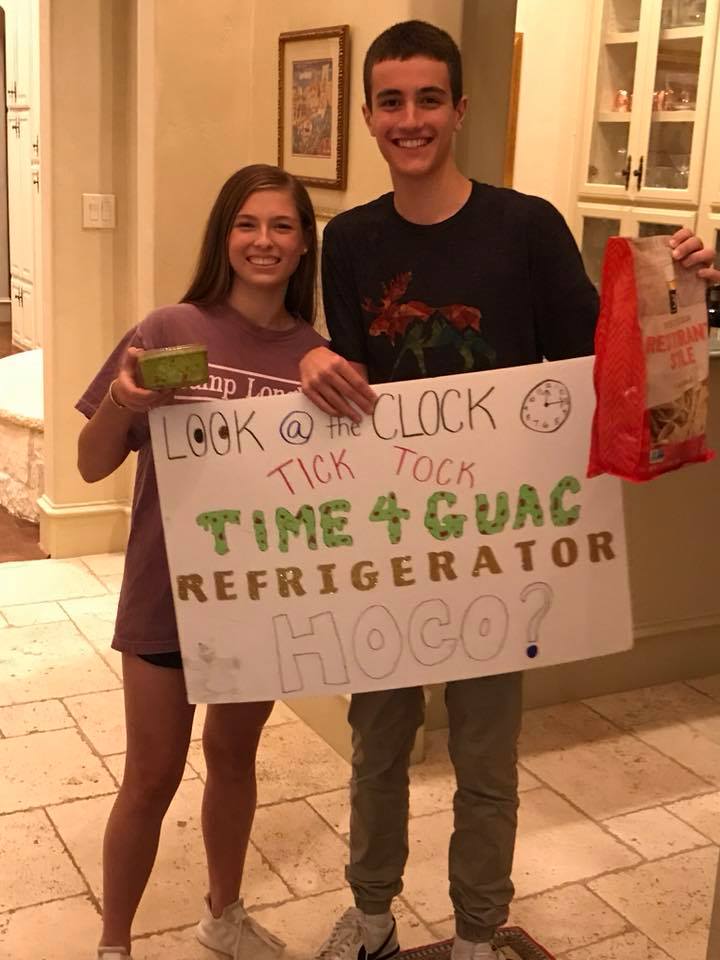
Last week, my son asked a girl to Homecoming. Naturally, I posted the obligatory photo on Facebook, but the way he asked needed explaining, because it involved a three year old conversation, a completely nonsensical batch of verbiage, and a pint of guacamole. So I told the story. It was heartwarming, it was funny, and it illustrated the completely unique bond between my oldest children.

The post received more likes and responses than usual. Why? Because I told a story, and that story resonated with people, who felt compelled to engage with me about it.

This is no surprise to us on the Porch. We have long known that effective, evocative storytelling is the cornerstone of marketing. Finding the right words and ways to tell our clients’ stories is what marketing them is all about. On social media. On their websites. In their email newsletters.

It’s no wonder, then, that the marketing world is proclaiming that storytelling is the Future of Content Marketing in 2018.

It’s no longer enough to give consumers some evocative imagery and slick typography. The visuals are important, of course. It’s what catches their eye and piques their interest. But you have to give them something to connect to emotionally, something that engages them and keeps them coming back for more.

“After nourishment, shelter and companionship, stories are the thing we need most in the world.” – writer Phillip Pullman

Your marketing should tell your story. It should tell the story of your business – what sets you apart and makes you unique. It should take information that is fairly practical – company capabilities, project descriptions, etc. – and give them life, context, and meaning.

It’s what I love most about my job. Meeting our clients. Listening to them and watching them and figuring out who they are and what makes them special. And then choosing the words that paint their picture. It’s the best.

Are you effectively painting your picture? Does your website show people exactly who you are? Do your social media accounts give people a glimpse into why you do what you do? If they don’t, then come see us. We can help you tell your story.


All year we’ve been talking Pick Six to celebrate six years of Rockin’ the Front Porch! So, for our sixth and final newsletter of 2017 we have Six Things You Must Do Before 2018 – and each of them should only take you about six minutes. pick six

Friends, can you spare 36 minutes to finish the year strong?

Pick Six

1. WRITE a quick thank you message to a special client that made a difference for you in 2017. Here’s ours:

Thank you, Faith Family Academy, for trusting us to solidify your brand and your messaging and lead you in spreading the word about your fantastic school! You inspire us daily and we love being your marketing partner.

2. SCHEDULE a breakfast or lunch with someone you consider to be an important counselor or mentor. Pick up the phone and call that person right now!

Patti Johnson, be expecting my call!

3. DOWNLOAD an app that enriches your personal or professional life. We love the concept of beginning the year with meditation as a means for focus.

Headspace is our meditation app of choice. Their tagline, “A few minutes could change your whole day” sums it all up!

4. FOLLOW a new social media site to learn something new. Resolve to use your time wisely in 2018! Here is a marketing expert we love to follow on twitter:

We love Robert Caruso’s twitter @fondalo – he is the real deal!

5. DONATE online to a worthy charity with a quick visit to their website and a final tax-deduction for you in 2017.

Catch Up & Read is a great choice in the Dallas community!

6. CALL a small business. Enlist their help in refreshing that website, learning about SEO, writing a blog, or updating your social media … and we just happen to know a really great choice for this!

Front Porch Marketing can help!

Write. Schedule. Download. Follow. Donate. Call.

Pick six.

Rock your holiday, friends! We’ll be back in January with seven ways to seriously improve your online presence in 2018.


It’s almost the 4th Quarter, and here on the Porch, it’s all about cooler weather, football, holidays and … 2018 plans. The time is NOW to schedule your 2018 winning game plan. We can help you Play. To. Win.

Front-Porch-Marketing-4th-Quarter

Here are 6 Things to Think About as we head into Q4:

  1. Volunteering.

    Folks, the need for volunteers is going into overtime to help hurricane victims. Our fellow Texans will persevere, but still need our help in Q4 and beyond. Over the last five weeks, the Front Porch Marketing team has donated some serious rocker time to help our clients whose teams were affected and to raise awareness for their fundraising and donation efforts. If you are looking to support hurricane victims in Texas and elsewhere, check out TrustedWorld.org. This fantastic organization based in North Texas helps us all keep on helping.

  2. Supporting Women.

    Does your playbook include doing business with and promoting women-owned businesses? Look for WBE certified businesses by visiting Women’s Business Council-Southwest. Consider joining this great organization, and if eligible, get certified. Front Porch is proudly certified WBE, HUB, SBE and WOSB and recently attended the WBCS Business Works Expo in Arlington, Texas. We will gladly answer your questions!

  3. Working Social Media.

    Are your fans crazy about your brand? Are they visiting your sites, watching you play and win the social media game, reading your blogs and newsletters and wanting more? It just takes one good quarter to make some great plays. Start now.

  4. Celebrations.

    4th Q wouldn’t be 4th Q without events that celebrate family, friends and don’t forget – your team. We love it when our clients such as Mister Sweeper celebrate the team and let us help them plan it. Hint: Cinemark. Star Wars. Private Screenings. Make sure you have plans in place now to thank your team for 2017.

  5. New Clients.

    Now that the Back to School huddle is over and everyone is settled into the new routine, we want to take a moment to shout out to two new clients who spend every day helping teachers do a great job of educating the children in our communities. Faith Family Academy and Catch Up & Read are North Texas organizations that demonstrate it’s all about having a passion for what you do.

  6. and lastly …

    Friends, if you have to pick one of six things to do in the 4th quarter, pick this – Find. Your. Purpose. Like this one.

Our purpose at Front Porch is to rock your world and help you play to win. See you on the field.


Well folks, it’s August! The final month of summer … how you doing? Are you surviving? Are you ready for fall? Summer is my second favorite season and fall is my first! I can’t wait for football, school, my kids sports, and routine; but also immensely enjoy summer adventures, long days, beautiful sunsets and all the water things.

August is The Time for Some Serious Marketing Talk!

Did you see or participate in any ‘Christmas in July’ sales last month?  American advertisers began using Christmas in July themes in print for summertime sales as early as 1950. It is typically used as a marketing tool and is not an actual holiday. If you are interested in a little marketing history you can learn more here. We think this tactic is fine, but we find it to be a bit of a snoozer.

Here’s our take on the term Christmas in July … we recommend planning for Christmas in July. Did you plan? No?!?! Well Christmas in August works too! With Q4 right around the corner it is time to get your marketing strategy and plan set. Especially if you are in retail!

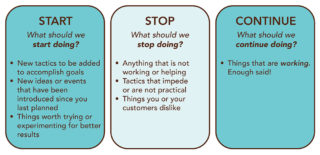
Did you start the year with an annual marketing plan? GOOD FOR YOU. Now is the time to dust it off and do an assessment. We like the start, stop, continue approach. Are your tactics accomplishing your goals? CONTINUE. Is the tactic not producing results? STOP. Need to start something new to achieve your goals? START. We are firm believers that all marketing plans are working documents. Make sure you are working your plan and your plan is working.

Don’t Have a Plan?

Now is the time! Seriously. Q4 is the busiest quarter of the year and you don’t want your messages and initiatives to be reactive. You want a proactive plan to make the most of year end. Don’t know where to start? We are rockin’ plans and plan reviews for the likes of Mister Sweeper, Faith Family Academy, The GEM, Ellen Hoffman Designs and more. We would love to ROCK around your Christmas tree (and by that we mean your marketing plan).

You have a few weeks to get the last of your summer lovin’ in and be ready for Holiday 2017. Let’s go!