Category Archives: marketing plans

How Do You START Marketing Your Small Business?

Marketing your small business can be an overwhelming task if you’re starting from scratch. Where do you start? What’s the most important thing? What are the marketing steps to take to get to success?

Over the years, Front Porch Marketing has written a ton of articles to help small businesses succeed — on everything from social media to marketing plans. Today we’ll gather those up in a helpful list that you can use to start marketing your small business. Even if you’re starting from scratch.

Start Your Marketing With a Plan

Before you start doing anything, you need to have a big, bad marketing plan. Why? This steering document will help you know who your audience is and what your goals are. It will help you develop strategies to succeed, and tactics to reach those people.

As months pass, though, don’t forget you’ll need to continue to cultivate your marketing plan to make it grow, much like weeding and feeding a garden. Weed out what’s not working, and do more of what is working. A Marketing Plan is a living document.

Make Your Business Look Like It Means Business

To present the best face of your business to the world, you’ll need a logo. This visual symbol of your business’ legitimacy will be a reminder everywhere — your email, your website, your invoices, your staff’s golf shirts. Designing a strong logo and implementing it is key to a strong brand voice.

Can Your Customers Find You as You Are Marketing Your Small Business?

Most businesses have a website, as their home-base on the internet. This is the first place customers will go to find you and learn more about your business. Is yours up-to-date? Or do you need to build your first website? Maybe you just need to expand your presence by adding a social media channel or two after a social media audit. Depending on who your customer is, you might choose Facebook or LinkedIn, Twitter or TikTok, to reach them.

You might also want to consider email marketing to reach your customers. Engage and connect with customers. Make their lives easier by helping them solve problems. Email marketing has power, and building your email marketing list can build your business.

Grow Your Audience With Advertising!

Reaching your consumers wherever they may be is important. So your marketing plan might likely include some form of advertising. Do you need digital advertising to reach new customers on the internet? Maybe text message marketing and advertising (SMS) to build loyalty with your existing customers. Would testimonials on your website convince others to try your company?

Establish Your Authority With Media Relations.

Some businesses benefit from having the news media write about them in editorials, reviews and interviews. Effective media relations can get great results for your business goals when done properly. Customizing your news to each publication can benefit both parties.

Start Your Small Business Marketing from Scratch By Taking the First Step

Read through some of our articles to help you get started on the journey of marketing your small business. Remember that it’s a marathon, and that you can continuously improve your approach to get better and better results. Need help with any part of your journey? We’re here to help.



Programmatic Advertising is Driving Results.

After Q1, clients historically shift focus based on marketing, advertising and communications results so far in the year. The Front Porch team than also ebbs and flows to make sure our efforts are successfully driving topline revenue for our clients.

One of the tactics working for our clients right now? Programmatic advertising. As we start Q2 and continue into 2023, this advertising approach is driving results.

What is Programmatic Advertising?

It is a bit different than digital advertising. Programmatic advertising utilizes automation and algorithms to achieve success. Too far in the weeds: but it is about the process of ads purchased and sold. But it is different than traditional media-buying techniques. Programmatic advertising meets the potential customer when and where they are. This approach optimizes the efforts of the advertising, hyper targeting the most interested, most matched customers with the brand.

What is the Difference Between Display Advertising and Programmatic Advertising?

Clients often ask us what the difference is between display advertising and programmatic advertising, since in many cases they can look the same. The answer is that programmatic levels up:

  • Display advertising refers to how ads are bought
  • Programmatic advertising goes beyond simply placing a digital display ad on a website, and is more about how ads appear and in what format — serving the right ad to the right person in the right place at the right time

How to Get Started with Programmatic

Before you dive in, your team or your marketing partner needs to do the due diligence to understand your target market. With more in-depth information, programmatic advertising can work harder for your client and find the customers that are looking for your client’s brand.

Then, as you implement your plan, these are the things to look for and monitor in order to continuously improve and optimize your advertising, maximize your budget and reach the best customers for you:

  • Cost per Click (CPC)
  • Click-through Rate (CTR)
  • Cost per Completed View (CPCV)

Want to Know More About Programmatic?

How can we help? The marketing and advertising landscape is evolving at the speed of light. And the Front Porch team is keeping up and leading the way to better outcomes for our clients. There are many benefits to choosing programmatic advertising such as efficiency and low-cost awareness. So please ask, as we love sharing our client successes, expertise and fodder. Sometimes the fodder isn’t relevant, but it sure creates great conversations and we’d love to have one with you.


Oh, Marketing. How Do We Love Thee?

In honor of Valentine’s Day today, we wanted to share some of the things that we absolutely LOVE about marketing. We cover many aspects of marketing in our day-to-day business with clients. We use tried-and-true marketing strategies and tactics that are the bedrock of a solid marketing plan. And there are also trends that we love, so we take advantage of those for our clients as well.

These Marketing Things Are Both Tried-and-True and Also On-Trend

Incorporating these marketing things (strategies, tactics, platforms, approaches) in your business of marketing for a client, is a win-win. First, your clients see results. Then, you look smart. And finally, you’re both successful at growing the business.

Email Marketing

Clients are reaping results from email marketing campaigns. So having the right content and creative are critical. Companies can build a relationship with their customers when email marketing is executed with the reader in mind. Be informative and helpful vs. direct selling, and see an impact on business.

Strategic Paid Traditional and Digital Media Campaigns

Linking these two strategies (traditional and digital) is more effective. First and foremost, invest to meet the target where they are. Approach them in the right mediums. Earn more quality customers by thoughtfully targeting your messaging to impact sales more effectively.

Marketing Leaders Asking the Right Questions

We love this marketing thing: smart leaders. Our clients are smart marketing leaders who are thoughtful in their approach. To start with, we see them asking the right questions. But then we’re asking them the right questions too. This collaboration pays off for both businesses. They want a plan over time, not a one-off initiative. Thus, they are in it to win it for the long haul, and so are we.

Re-evaluate the sales funnel

The sales team might be engaged in selling one-on-one. But it might not be utilizing technology, processes and other tools to continue to engage and grow the engagement. Successful customer engagement and retention includes tactics at every point in the sales funnel. And utilizing powerful tools to scale and automate in conjunction with smart, thoughtful strategies make sense.

Client Loyalty and Retention

It is easier to grow existing business than gain new business. Enter the customer loyalty program. The trend in loyalty and customer retention programs will continue, blurring the lines between physical and digital as 2023 progresses, making customer retention a seamless experience. Loyalty programs incorporate email, text messages, and even print. Clients can grow their infrequent shoppers into brand fanatics using loyalty programs.

Ready to Love Your Company’s Marketing Things?

Think deeper in 2023. Really focus your attention on your customers. Ultimately, create a marketing ecosystem that keeps them informed. Give them insider information. And make their lives easier. This approach is a sure way to see your business grow this coming year. And we would love that for you!


Put Your Marketing Must-Have Plan in Place Now.

Are you ready to tackle your company’s marketing must-have plans for next year? You’re in luck! We’ve simplified that list for you, to get you started. Your business success can be mapped out ahead of time with these five guideposts put in place to execute against.

Having a plan means you know what to do to build your business according to seasons, holidays, business cycles, trends and more. And, if you need help formulating any of these must-haves — or executing them, please ask us!

The Marketing Must-Haves:

1. Marketing Plan

What are your 2023 business and marketing goals? Define them now. Make a marketing plan. Then add in audiences, competition, SWOT, strategies and tactics. Know who you are and what you’re doing. Know what makes your company unique, and what your brand’s biggest benefit is.

2. Content Calendar

This important calendar includes social media and blogging as marketing initiatives. Know what you’re going to talk about every month and every week using this calendar. Take advantage of social media trends. Every content strategy needs a roadmap with dates, and this calendar is super helpful for engaging your consumer on a regular basis.

3. Marketing Timeline

Calendarize key events pertinent to your business, down to the day. Know what events to capitalize on for business success. Plan out when you will carry out campaigns for advertising, digital or print, as well as event pushes, PR and media relations, holiday and event marketing and more.

4. Marketing operations — including people, technology and analytics

Do you have the right team in place? Do you have enough team to get the job done next year? What tech and analytics tools do you need to execute and then evaluate the effectiveness of your strategies against your goals?

5. Marketing Budget

Once the four above have been defined, put numbers to each of them. Create a marketing budget that maximizes your impact. Plan for this budget quarterly, and then, manage to it monthly. Staying on track will pay off.

No matter the size of your business, start on your marketing must-haves now.

Take the guesswork out of what to do next week, next month, or just next with these five marketing must-haves for planning your next business year! We’ve seen our clients grow year over year when we help them set these must-have marketing goals in place. Then, we work together diligently all year to execute against them for business growth and success. It can work for you too.


Successful email marketing can be a cost-effective way to market your business. When done right, you’ll be keeping your brand top-of-mind and become a trusted resource for your customers. They’ll look forward to your emails because you’ll be sharing your knowledge and solving their challenges.

Keeping your audience engaged with email marketing, as a part of your overall marketing strategy, is an excellent way to introduce new products, solve an on-going pain-point for customers, give a tutorial, keep your customers up-to-date about the industry, and more.

How Do You Do Successful Email Marketing?

There is a lot to designing an effective and efficient email campaign to be successful. The most important question to ask yourself: Are you leading with the audience in mind? Everything you do should be from THEIR perspective. It’s for them. Help them. Guide them. Solve their problems.

Then ask yourself: Are you overselling? Your brand and your products do not always need to be the hero in email marketing. Afterall, this is an on-going dialogue you’re having with your customers. Establishing a relationship is a longer-term proposition. Don’t oversell. Again, be helpful. Put yourself in their shoes and ask yourself: What do I need? What will make my life easier or better?

Getting Started With Email Marketing: Do This Not That

Your email marketing is a fail if it doesn’t contain these four elements. Set yourself up for success by making sure these four things are included thoughtfully in each email you send:

  1. Look professional — Make sure the email platform template is set for your brand fonts and colors. Design is key to successful email marketing as well — design a nice header and footer. Link to your social channels in your footer. Stay consistent from month to month with this template and your customers will start to recognize your email and your brand, and look forward to your next email.
  2. Have a call to action — What can readers do to learn more? Use a button in your email that links back to your website where the reader will read more, download something, watch a video, contact you for more information or order a product. For instance, if you are linking to a blog post, tease them in the email, but don’t reveal the real scoop…ask them to “Read More” and click the button to go to your website for the rest of the insight.
  3. Date and time — When do users want to engage and not unsubscribe? Many email programs like Mailchimp will tell you when the best time is to send emails to be successful. Statistically, Tuesday mornings are the day most people open their emails.
  4. Don’t try too hard to sell — Engage your audience and don’t make the email be all your company. Again, be helpful: share hints, tips, tricks. Give away your knowledge and they’ll see you as the industry leader and come to you to solve their problems (with your products or your service.

Most Importantly: Be consistent.

Successful email marketing campaigns provide content to make readers’ lives better. They are informative, not sales-y. Email marketing campaigns provide value, real value, to customers’ lives consistently. Create a schedule using Google Sheets and plan each month’s topic, date, and assign responsibilities. After a while, it becomes easier and easier to stick to your schedule and create smart, thoughtful, nicely designed emails that make your brand the one that customers turn to again and again.


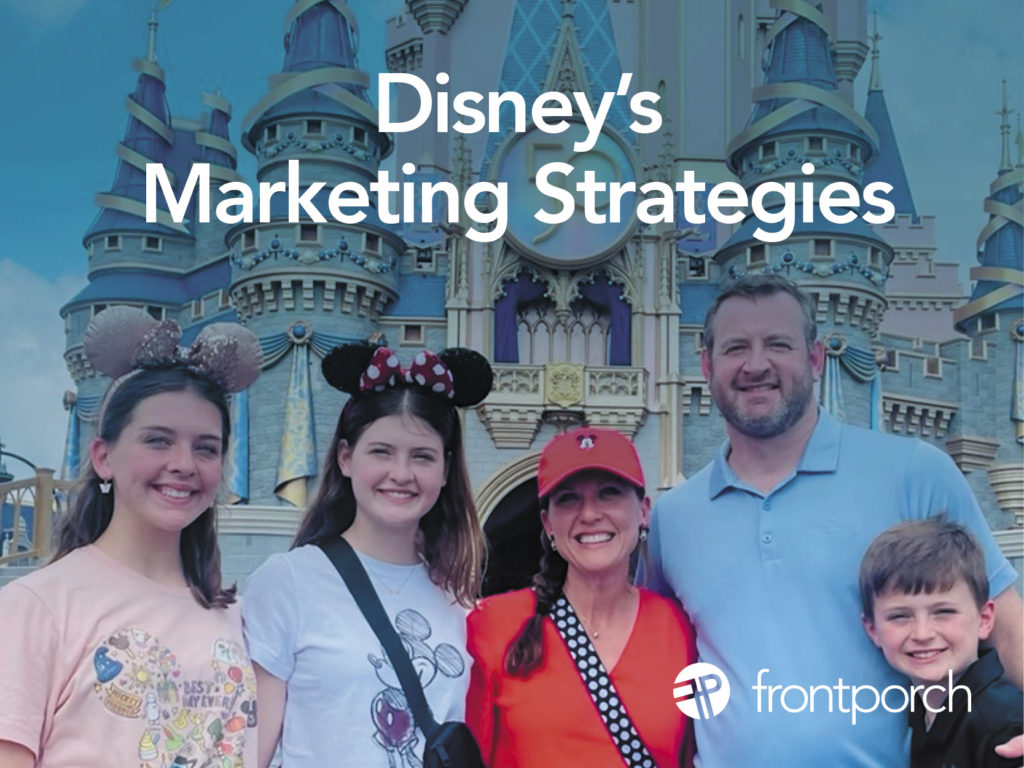
Intern Abby and her Disney family.

Disney Revolutionizes the Vacation Industry

Approximately 52 million people visit Walt Disney World each year and its annual profit comes to about $12.6 billion. How did Walt Disney transform his amusement park into a bucket list vacation destination for families from all over the world? The simple answer… marketing.

Disney has revolutionized the vacation industry as it broadens its marketing strategies to include almost any activity you can imagine. Disney has magical amusement parks, thrilling water rides, gourmet restaurants, five-star hotels, luxurious cruise lines, private islands, collectible merchandise, and so much more. Whether it is the walking foods-of-the-world tour in Epcot, opportunities to meet your favorite Disney characters, or thrilling rollercoasters that will have people shouting: “We HAVE to do that again!”, there is surely something for everyone at the parks. Most importantly, Disney gives the assurance of a trip filled with memories that are sure to last a lifetime.

Disney acknowledges that the amusement park experience might not be for everyone, so they have introduced a variety of activities that attract a more diverse customer base using a myriad of marketing strategies. Some people love all the fanciful facades and creative foods. However, others prefer a nice massage or relaxing by the hotel pools. My family is up at the crack of dawn to beat the crowd to the gates when the park opens. We are the first in line for the Seven Dwarfs Mine Train, and we stay until the park closes. We go every year and find an experience that keeps each trip interesting and unique.

Marketing Disney Plus

With the recently increased popularity of streaming services, Disney entered the game strong with Disney Plus. In addition to the plethora of nostalgic movies and shows aimed at younger audiences, they also market their platform to a variety of demographics utilizing some of the most popular movie franchises in history like Marvel, Star Wars, and Pirates of the Caribbean. Using these marketing strategies, Disney Plus has become one of the most successful streaming service as people looking to escape the stress of the pandemic can find relief in uplifting films and tv series.

Online Marketing Strategies

Disney has been at the forefront of online marketing which has enabled them to subliminally reach the 16-24-year-old crowd that, on average, spends 3+ hours a day online. Disney has over 72 million followers on Facebook, Instagram, and Twitter combined. That’s a lot of potential customers who might not regularly watch TV or read print that Disney can influence daily. Through magical commercials, Disney is able to interact with starry-eyed children without access to social media who beg their parents for the trips they see on TV.

Targeting the interests of Children

Disney’s marketing strategies were also revolutionary as they began to target the interests of children as well as adults. Children make up 22% of the US population and have an increased impact on family decisions than previously recognized. Through movies, TV shows, stuffed animals, and apparel, Disney has built brand loyalty starting with infants and continuing through adulthood.

Chief Rocker Julie and her Disney family.

“The Happiest Place on Earth”

The Happiest Place on Earth” is Disney’s well-known slogan which basically encapsulates everything that Disney is and tries to be. Who doesn’t want to go to the happiest place on earth? Disney evokes this happiness through nostalgia, happy stories with happy endings, and wholesome characters. Marketing “happiness” is what keeps visitors flooding through their gates every year. Including my family, and Julie’s family!


Blogging for Business Benefits in 2022

Is your business blogging? Blogging for business benefits is a cost-effective way to establish your thought leadership and more. One of our new clients asked us last week why they should be blogging. Working towards being the expert in your industry means sharing your expertise.  Blogging is a simple, clear, cost-effective way to do this. When done properly and consistently, blogging brings benefits to your business. And this translates into more visibility, more customers and customer loyalty.

What are the Benefits of Business Blogging?

Business blogging contributes to your marketing strategy. This particular practice of marketing is called Content Marketing. When you consistently write about topics that are important to your audience, you’ll enjoy these three business benefits:

  1. Creating new branded content to share. Are you always trying to come up with something to share on LinkedIn, Facebook, Twitter, or Instagram that supports your branding? Write a blog! This blog post can then become branded content. Share on your social channels, like our client The Slay Diaz Group does.
  2. When you offer a behind-the-scenes look into your product, your process, or your industry, you are building loyalty with your customers. Share insider information — like our client Diamond Brand Gear does — and it will help you build a relationship with your existing customers and attract new ones.
  3. You can also instruct people on how to do something specific. Help them achieve a goal or get an answer to a question, like our client Spot On Talent does. Here, you are establishing your authority and building organic SEO (search engine optimization) with Google. Putting keywords that speak to a topic in your headers and copy about that subject in your blog post makes you more likely to be the one that Google sends people to on search results when they ask Google a question.

Sharing Your Business Knowledge Makes You a Leader

If you’re a long-time reader of the Front Porch marketing newsletter and blog, you’ll see that we put these content marketing strategies into practice not only for our clients, but for ourselves. We want everyone to succeed, and we want you to be able to benefit from our business experience. So we share it openly. We want you to be able to optimize your LinkedIn profile, practice successful PR, and know what’s important in marketing if you’re a start-up business.

If you’re ready to level up your marketing and demonstrate to your industry that you’re a leader by adding Content Marketing to your mix, let us know. We can guide you through the process and help you set up an easily-executable calendar, schedule and topics. We can even ghost write your blog posts for you, share your content to your social channels, and optimize your content for better SEO.


When was the last time you took inventory of your company website?

Are you scratching your head trying to remember when you last took inventory of your company website? Chances are, this might very well be the case. We sometimes overlook the critical role our website plays in our marketing efforts. For marketing to be effective, every touch point needs to be in alignment – including our website. While you’re spring cleaning your brand, don’t forget your website!

Now that you’re thinking about your site, let’s spend a few minutes talking about some of the questions you’ll want to ask yourself to determine if your website passes the test or if it could use a refresh or maybe even a complete redesign. 

Company Website Inventory Questions:

  • Does your website reflect your brand? What words have you heard your customer’s use to describe your website? Are they in alignment with how you want them to perceive your brand?
  • How does your site stack up to current design trends? Is your design aesthetic simple and minimalistic?
  • Is your content current? If not, why? Are you just not taking the time to update your content regularly? Or does your website platform make you rely on someone else to make changes?
  • What website platform are you using? Is it using the latest technology and plugins? If not, your visitors may very well not have the best user experience on your site.
  • Is your site getting a lot of bot traffic? If so, it may be time to improve your website security.

Steps to Take in an Inventory Process

These are just a handful of the questions you might ask yourself. Others can range from SEO to responsive design to supporting a content marketing strategy. Whatever the reason, if you answered a resounding “Yes” to one or more of these questions, it might be time to dig in your heels and get started. Which leads to the question, what steps are involved to launch a refreshed or new website?

  • Audit your current site. Ask yourself. What is working? What isn’t?
  • Research your competitors for best-in-class sites
  • Develop your creative brief (define your target audience, brand guidelines, what are we communicating, goals, priorities, etc.)
  • Establish a timeline
  • Wireframe development
  • Content development
  • Design your site
  • Develop and test your site
  • Launch your new site

Why Your Site Needs to be Just Right

It may seem overwhelming at first, but when you breakdown the “Why” behind redesigning your site and the steps to implementation, you’ll realize that a new and improved site is right at your fingertips!


Marketing leaders, what are you doing to nurture relationships with your customers?

Consistency and connection nurture relationships. Sure, loyalty and points programs are tactics that bring brands and customers closer together.

But genuine allegiance is an outcome.

A recent conversation with a marketing leader provided inspiration. This marketing leader has had some challenges. But realized the value of marketing.

The company had cut the marketing budget. All the momentum that person built was put to a halt. And then the company brought in a consultant. First, he asked her what was happening on the marketing front. To which she replied, “Nothing.’ And, obviously he was shocked.

How to foster genuine relationships.

Business leaders do these four things:

  1. Conviction – Know the brand. Marketing leaders walk the talk. And they demonstrate it every touchpoint. Then, clients and their customers can see it and feel it.
  2. Consistency – Do you have a message map for your client? Share the value proposition of the brands you work on, on every platform, consistently.
  3. Communication – Know your audience. Then recognize: how do they want to communicate? It isn’t about you. It is about what works for them. Marketing leaders will recognize this and pivot messaging to solve clients’ problems in a way that is meaningful and relevant to the client.
  4. Connection – If there is consistency communicating the message, then the connection will happen. But as a marketing leader, how do you deepen the ties with your client and their customers?
    • Weekly meetings with clients
    • Weekly catch-up calls on both status of projects, and how pain points with consumers are being addressed
    • Notes on special days to recognize achievements
    • Boundaries set on both sides, so that both marketing and client are set up to succeed

Marketing leadership: Take inspiration. Deepen connections. Accelerate growth.

We love to partner with smart leaders who value marketing. And, if we can help, let’s talk about mutual partnership to grow top line sales.


Pinterest fails like these make me snort laugh.

It is terrible, I know, but they are so funny! Perhaps because they are relatable. You see something, you think you can do it, it turns out differently than you planned.

“The more the plans fail the more the planner’s plan.” Ronald Reagan

It’s time to evaluate your marketing strategy for the second half of the year. With Q1 in the rearview mirror, and Q2 well underway now is the time to plan what comes next.

We wax the marketing plan lyrical often, additional reading can be found by searching Marketing Plan right here on Off Your Rocker, because it is a topic we keep coming back to because it is that important. Running through your activities, business, leisure or really anything without a plan often leads to failure and even the best laid plans fail. When and if plans start failing it is time to dig and plan some more.

Planning 101: Be Proactive

For any project or initiative to succeed, it must be carefully thought out. One of the key qualities of any project manager is to be proactive. This comes because of good planning. Proactively address potential problems and prepare possible ways to fix them while they are still predictions. Challenges like inadequate funds and resources, low staffing, or poor time management – are likely to arise in any plan. Effective planning lets you see them and fix them before they hinder the desired outcomes. 

(L) Original plan: Pretty Flowers, except they ran all together, plan fail. (R) Plan pivot results!
Artist credit: Moontower Design | Facebook

Pinterest Fail? Evaluate and Pivot

It is easier for teams to pivot from a plan versus starting from scratch. Existing plans guide and ground activity. Even if an initiative or project is failing or failed pivot and plan some more! In the pivot remember the importance of staying positive and true to your brand.

Now is the time to look at the 2022 plan and evaluate what stays in, what stops and what needs to be added. Let’s get ready for the second half and move forward with purpose and intention to thrive the rest of the year. If you need a marketing planning partner, give us a holler!