Category Archives: Entrepreneur

As the leader of your brand, it is up to you to determine the vision for your business, you are also the business leader. You are mission-control to successfully making that vision materialize. Be responsible for recognizing – and deciding how best to overcome – the barriers to your brand’s success.

One of the most powerful (and responsible) things you can do as a business leader is to get out of your own way.

business leader get out of the way

The business leader and/or business owner holds a tremendous amount of power. You can be your brand’s greatest asset and its biggest backer. Critical to your mission, however, is not to become a barrier yourself.

During a conversation with a business owner and CEO of a $50M+ company, the CEO relayed that his largest client could not implement the programs offered to them because the necessary departments were not communicating with each other.

To overcome this hurdle, the CEO stepped in to facilitate meetings and interactions between his client’s departments. However, he was not getting paid for that time and taking on that role took him away from his own responsibilities.

When asked to provide my advice to this dilemma, my answer was simple: Don’t attend the meetings. If he did not attend the meetings, others would be forced to take on rightful ownership of their responsibilities, freeing the CEO to focus on his own responsibilities.

Here are four things to consider as a business leader in order to get (or stay!) out of your own way:

  1. Build boundaries and bridges. Don’t put yourself in situations to be the point person when it is not your role. If you consistently play a role not meant for you lines become blurry and you increase your risk of burnout. You also risk not having the time and/or resources you need to be successful. Build a good team – in-house and/or through outsourcing. Then take a step back and let them fulfill their own roles.
  2. Do it, delegate it or delete it. Does your to-do list continue to have the same thing on it week after week? Yes? Figure out why. If it is something that requires YOUR attention, do it. If it needs to get done but someone can or should complete it, delegate it. Maybe circumstances make completing a task unrealistic, undesirable or unnecessary – then, delete it. Procrastination is a barrier to productivity and to creativity.
  3. Find your joy. Focus on the good contributions. Perhaps you work with a client who is abrasive. Understanding that he or she has a difficult job can help you avoid taking things personally. Look at the good things you are doing in your own role and the positive things the company is doing. If you focus only on the negative or get upset over the same things on a weekly basis, you prevent yourself from seeing the positives of your own – and others’ – contributions.
  4. Celebrate success and forget failure. Failure is a necessary part of the process. Expect it. Embrace it. Learn from it. As a leader, failure should be empowering. Don’t let it get you down. Stop and acknowledge when you overcome it.

If you can get out of your own way, you may be your brand’s greatest asset. We have built a strong team and could be a powerful ally. Give us a call.


I’m a mother to three kids firmly in the grip of teenage angst, so I frequently find myself talking to them about the importance of authenticity. Recently my youngest child said, “You keep using that word. But what does it mean EXACTLY?”

And that got me thinking. Authenticity IS a buzzy word, used frequently in many different contexts, which makes it easy for the concept to feel trendy and hazy. So since I’m a word girl, I consulted my dictionary to give me the word’s purest form:

authentic

adjective

not false or copied; genuine; real

Not false or copied. Genuine. Real. That’s pure gold, isn’t it? Authenticity is a buzzword for good reason.

We talk to clients all the time about authenticity in their branding and marketing. As the Chief Rocker would say, “It all begins with the brand.” And she is SO right! If the brand doesn’t feel real and natural, your audience won’t:

  1. Know you.
  2. Like you.
  3. Trust you.

Authenticity is the new brand standard. The most authentic brands in the world are also the top brands, period.

So how do you build an authentic brand? Answer these questions:

Does your brand have conviction?

Your brand must stand for a specific promise, and everyone within your organization must believe that it’s important.

Does your brand have consistency?

Your brand must deliver on its promise at every touch point, every time. Your outreach efforts should be undertaken regularly and on schedule.

Does your brand have connection?

Your brand must be relevant and persuasive to your target audience, or your message is falling on deaf ears. Establishing an emotional connection with your people is key.

If the answer to these three questions isn’t a resounding YES, give us a call. We can show you how to rock your brand authentically!


Change – in time or circumstance – often sparks reflection. The match may also be our own – or another’s – experiences, a song heard, or a quote shared. Equally true is the reverse – reflection often sparks change. Growth is ignited by both. As 2018 nears its end on the Porch, we are reflecting upon this year and gleaning insights to lead us into next. We hope our reflections will serve as a guiding light to your own.

Reflection

As Chief Rocker, 2018 has been a year of growth for me professionally. In the spring, I graduated from the Goldman Sachs 10K Small Businesses program – one of the most challenging and rewarding things I have done for my career and business thus far. As wife and mom, it has also been a year of transition and growth for my family. My husband has grown his team at work and is settling into a new leadership role.

“I believe that days go slow and years go fast.” Luke Bryan

Nowhere is this more apparent than in parenting. My daughter transitioned brilliantly into a new school and turned five, which seems like a landmark year. This fall my son entered what is widely rumored to be the most difficult year of education at his high school. He has shown tremendous grit and commitment to achieving success with his grades, his varsity football team and his competitive shooting team.

It has also been a year of anticipating and preparing for big changes ahead. With college on the horizon – and a mom’s need to collect as many experiences with him as possible – I once again increased my volunteer commitments at his school. As a parent, change is bittersweet. The growth you model, encourage and watch proudly take shape in your children is the same growth making you wish desperately time would slow down.

For my other love – Front Porch Marketing –– our passion and dedication to the development and growth of our clients’ brands continues.

“Your work is going to fill a large part of your life, and the only way to be truly satisfied is to do what you believe is great work. And the only way to do great work is to love what you do. If you haven’t found it yet, keep looking. Don’t settle. As with all matters of the heart, you’ll know when you find it.” Steve Jobs

Rock Star Vanessa Hickman:

As 2018 comes to a close, I am joyful that I have the opportunity to do what I love … sharing stories and helping organizations create and share their story. For me, the most meaningful project of 2018 was partnering with Practice Ministries to tell their story and raise funds in order to expand their ministries. Two of my loves collided: my faith and my work. To have found something I love and which allows me to contribute to the prosperity of my family makes me grateful, humbled and blessed.

“Growth is never by mere chance; it is the result of forces working together.” James Cash Penney

The Porch saw some changes in 2018, too. We added two Rockers. For one of them, a personal and professional collision of another sort occurred when her homecoming this year also grew our roster of amazing clients.

Lil’ Rock Maria Gregorio:

I moved back to Texas after a brief time in Kansas and I have somehow managed to reconnect and work with some old friends: Julie and Girl Scouts. It reminds me of an old Girl Scout song “Make new friends but keep the old. One is silver and the other gold … ” While I did enjoy my time in Kansas – I did indeed make new friends and learned a lot – it’s nice to be home again.

“Change is inevitable. Growth is optional.” John C. Maxwell

Back Porch Rocker Jacqui Trujillo:

2018 will be remembered as a year of tremendous change for me. Fear and discomfort can accompany change of any sort, but in the end, what I discovered is that sometimes the change you fear the most is the change that saves you … and turns you into exactly who you were meant to be.

“I don’t have to chase extraordinary moments to find happiness – it’s right in front of me if I’m paying attention and practicing gratitude.” Brene Brown

Finding our joy and practicing gratitude each day – regardless of circumstance – have also provided opportunities for reflection and been a catalyst for change in 2018.

The Rock Tara Engelland:

This year I have tried to take time at the end of each day to make a list of the things I am grateful for, both big and small. It’s amazing what practicing gratitude can do for your overall sense of happiness and contentment – especially on bad days. Sometimes, I even find the everyday things that I consider to be such chores are the things I am most grateful for. It really helps put things into perspective.

We are immensely grateful to our clients for the changes and growth we have experienced through the opportunities to work with each of you.

Classic Rocker Greg Asher:

2018 brought about the opportunity to work with great clients and a wide array of companies. From new products and services to new growth opportunities and new customer segments, they inspire me daily with their passion and commitment, and have me looking forward to a dynamic 2019.

“The secret to change is to focus all of your energy, not on fighting the old, but on building the new.” Socrates

As you reflect upon 2018, contemplate what roads you (and your brand) should start or continue to travel and where you should change directions. Focus your energy on making those changes so the reflection you see in the rearview mirror is a year full of growth, for yourself and for your brand’s bottom line.

From all of us on the Porch, may your holidays be merry and your 2019 shine bright.


I’ve been thinking a lot lately about business leadership.  What makes a good leader today?

As luck would have it, I recently watched The Founder, starring the underrated actor Michael Keaton as Ray Kroc, the “founder” of McDonalds.  Turns out, stealing the McDonalds brothers’ intellectual property and last name aside, Ray Kroc had some pretty good ideas about leadership that ultimately led to the success of the company and can still be applied today.

Side note: yes, I know McDonalds is not doing great right now and other restaurant chains are, ahem, eating their lunch. But, at the time, Ray Kroch was able to capitalize on a few key ideas to great success.

How are you going to steer this ship?

A Good Leader Takes a Step Back

The McDonald brothers, the original founders of McDonald’s, spent years perfecting their “Speedee Service System,” the assembly-line style fast food kitchen we all know today. They cut down on costs by eliminating wait staff and paired down their menu to the top-selling items – burgers, sodas, shakes, and fries.

Their first foray into franchising was a disaster. It was difficult for the brothers to control quality standards because 1) they were in California and franchisees were far away in a different city or state and 2) they hardly ever ventured outside of their original location.

So, you can imagine their consternation when Ray Kroc, who they trusted to create and supervise their second attempt at franchising, started suggesting new menu items, sponsorship opportunities, and that the brothers should expand the franchise even more. Who was this yahoo to tell them how to tinker with their creation?

It is a difficult thing to go from working in your business to working on your business, to giving up some control and letting others take on the day-to-day details and hands-on work. It’s a risk – what if a staff person comes back with less-than-stellar work? You have spent all this time growing your business and now you’re just supposed to what, give up the reins?

In a word, yes. In three more words, a little bit. What the movie makes painfully clear is that the McDonalds brothers were never going to grow their business to the fast food behemoth it is today by themselves. They needed right leadership, and the right people, to grow and they needed to let those people take the lead.

Finding the Right People Is Worth It

Initially, Ray sold McDonald’s franchises to a few friends from his country club. This was not a great success. They changed menu items without consulting him first. Burgers were overcooked. Locations were messy. And what was worse, they did not care. Their livelihood did not depend on these restaurants and so they let standards slide.

Ray then decides to fish for the right franchisees in different waters. He found them in VFW halls, American Legions, Shriners Clubs, churches, and synagogues. He sold franchises to regular, working-class people who were willing to work hard and had some skin in the game.

The lesson in all of this: finding the right people is tough. But, hiring the wrong people can be a costly mistake. Is it time to expand your talent search?

Leaders Work on Growing Their People

Let’s be clear: Ray Kroc was not a nice guy. But, he knew good talent and ideas when he saw them.

Ray didn’t immediately squash new ideas from his staff, he tested them out first. He took chances on people who might otherwise be overlooked, because he liked their work ethic. His original Director of Operations, Fred Turner, started out on the line of one his restaurants. Ray initially took interest in him because he literally liked the way Fred flipped burgers.

Ultimately, good leaders grow people. And by growing their people, they grow their business.

A Strong Brand is Worth a Lot ($2.7 million in fact)

Ray Kroc understood the value of a strong brand. He knew that even more than burgers and fries, McDonalds was selling the chance to spend time with your family, a sense of community, a slice of Americana. He also knew he could copy the Speedee Service System all the wanted, but no one was going to go to a restaurant named after him. Kroc’s doesn’t quite have the same ring as McDonald’s.

This is the point in the movie where things take a dramatic turn and we see Ray basically bullying the McDonald brothers into selling their very name to Ray for $2.7 million.

While I don’t advocate bullying, I do suggest looking at your brand and identifying what makes you stand out from the pack. In a world of increasingly commodified goods and services, what is special about your company?


Its an old saying, but its true: what got you here won’t get you there. The things that make a business owner successful at first –a great product or service, hard work, attention-to-detail – are not enough by themselves to take a business to the next level.

To level up, business leaders must step back from the day-to-day, find and grow the right people, and cultivate their brand.  What steps are you taking to get to the next level of your business?


In April, we discussed using the start, stop, continue approach to cultivating the growth you want from your 2018 marketing plan. Good marketing begins with branding.

Branding gives you an exceptionally effective way to broadcast who you are to your target market quickly and efficiently.”– Rick Haskins, MultiChannel News.

Therefore, start by determining who you are and who you aspire to be as a company. What is your vision? “A brand’s strength is built upon its determination to promote its own distinctive values and mission,” Jean-Noel Kapferer wrote in (Re)Inventing the Brand (2001).

Who you are should be based in part by what target customers want. What / who do your customers or clients need you to be? Therein lies the power of the branding exercise. With the right guidance and strategic partnerships, in working through the branding exercise you can determine what your brand should be, what makes the brand relevant to your target, and how to best describe its personality.

Branding Exercise Defines Key Brand Pillars

Great brands have three key attributes:

Conviction
Belief by everyone within your company that the brand is important and that the brand stands for a specific and important promise to the consumer.

Consistency
Imprint the brand into the essence of the organization so it comes alive for everyone it touches. Brand consistency equals earnings consistency.

Connection
Your brand must connect (through conviction and consistency) with target consumers to be effective. After all, as Zig Ziglar said, “If people like you they will listen to you, but if they trust you, they’ll do business with you.”

Whether your company is established or new to the market, large or small, retail, direct buy, online or MLM, one of the most important things you can do to achieve growth is to create a strong brand. It is a critical component of any business.

Take the time to define your brand architecture. The exercise is valuable. We’d love to help define your company’s foundation.

SaveSave

SaveSave


We see it all the time. Businesses who bring us in and ask us to give them a marketing quick fix – a slight website facelift, some basic social media training, a piece of collateral – and think that it’s enough. And friends, I’m here to tell you, it’s not enough.

Although we are happy to collaborate with well-positioned partners on specific marketing initiatives, a marketing quick fix in lieu of a full marketing investment is ill advised. Spending time and dollars on a marketing band-aid is often a waste, when you haven’t done the work to flush out your brand or your audience.

There is no marketing quick fix. Good marketing is thoughtful, mindful, and multi-layered.

Good Marketing Begins With Branding

Everything begins and ends with the brand. Taking the time to identify your brand’s specific positioning and personality is essential. Your business must live and breathe your brand – without it you are dead in the water.

Know How You Fit in Your Market

Identifying your market and where you fit within the landscape is key. Knowing your competitors and their strengths enables you to differentiate yourself in your space.

Get to Know Your Audience

Understanding what motivates your audience is at the heart of any successful marketing program. Identifying your audience allows you to determine how and where to reach them.

Fine Tune Your Messaging

You’ve done all your homework, now you must use that knowledge to develop messaging that befits your brand, positions you well in your market, and resonates with your audience. Put that message front and center.

Track Your Results

A good marketing program should be monitored along the way to ensure you are getting the results you anticipated. If not, make mid-stream adjustments.

There are no quick fixes, friends. Marketing is important, and it’s a process. Do the work, and you will reap the rewards! If you’re not sure where to start, we can help!


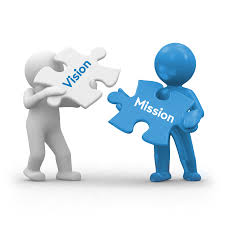
On the Porch, we are often asked about the differences between Mission statements and Vision statements. Having clearly defined Mission and Vision statements as part of your strategic plan can help your company perform better than your competitors in the short and long term as the two serve very different, yet important purposes.

Mission Statements vs. Vision Statements

Mission statements define the present purpose of a company by addressing the following three things about your company:

Vision statements define the future purpose for the company by addressing the following two things about the vision for your company’s future:

  • WHY your company exists – Identify your purpose.
  • WHAT your company wants to achieve over time – Identify your goals.

Successful Mission Statement: The Short Term

One word can be used to describe successful Mission statements – short.

  • They should be short and to the point, using only a sentence or two. Clear, succinct mission statements make it easy for employees to understand and articulate your company’s Mission, allowing them to know how they contribute to accomplishing it.
  • They should be short term, addressing a shorter timeframe (one to four years). This allows for refining your Mission statement as needed due to economic or product changes.

Perfect Vision Statements: Focus on the Future

Carefully crafted, successful Vision statements are forward looking, and should:

  • Be inspirational and aspirational, succinctly addressing the vision for your company’s future.
  • Be farsighted, focusing on a longer timeframe (upwards of five to ten years).
  • Serve as a challenge to your employees, helping them visualize how their daily tasks help your company’s quest to meet long term goals. This will help develop buy-in and support throughout the organization, even if/as leadership changes.
  • Serve as a litmus test for marketing to keep your company’s communications on message.

So, which should come first? Begin with the end in mind. Take a look at your company’s present state (Mission) and ask yourself whether you are working towards your future purpose (Vision). If not, consider creating a Vision statement to set a new course for your company and your people.


As I skim materials for my upcoming Goldman Sachs 10,000 Small Businesses Marketing and Sales class, my mind wanders (Hey, a squirrel! Or is it procrastination, perhaps?). I must blog. Now.sales

This post builds on my colleague Jacqui Chappell’s last blog on differentiating against competition. She is known as being the writer extraordinaire on the Porch, so I do not want to disappoint as I follow a post from her! So just read this blog for content and nuggets of marketing and sales knowledge. Puhleeeease!!

There is no one size fits all marketing and sales strategy. And this post does not suggest it, either. Period.

However, as I stare at a document asking me to define “current and aspirational competitors and their market share,” I realize Front Porch Marketing has a million and one competitors. I do not watch them daily, nor do I care if they are watching us.

I was asked recently by a client if they should list names of their clients on their website, collateral materials, etc. My answer: Heeeelllll, yes! If you are doing your job well, then no competitor can cold call your client list and take them away from you.

Doing your job well is obviously the first way to weed out your competitors.

Here are five more:

  1. Define your brand. Know your pillars.
  2. Communicate your brand consistently inside and out. If you look like every other company in your category, you are not doing this, nor is your brand defined.
  3. Look outside your industry. Take key learnings from strong or unique brands in other spaces and consider how you can use them to help your brand.
  4. Talk to your clients / customers. Ask them why they selected your company or product over others? What didn’t they get from their last partner or other product?
  5. Ask yourself if who you consider your main competition is really that. Speaking to two business owners independently recently, they named each other as direct / primary competition. The more we learned about said businesses, the more we found them to be great complements to each other’s concepts and thought of more than a dozen ways they could leverage each other to grow their businesses. (Maybe if they use our ideas, they will let us blog about them specifically in the future.)

Identifying and evaluating your competition is an important exercise, there is no doubt. But it’s a delicate balance. Knowing they are there keeps you on your toes, pushes you to do your best work, and provides occasional inspiration. But ultimately, what will differentiate you from your competitors is your brand, the work that you do, and the way that you do it.

So rock your brand, rock your work and rock your competitors! TTFN!


Earlier this week, I took my tennis-crazy son to the BNP Paribas Open at the Indian Wells Tennis Garden in beautiful Palm Springs, California. Over the years, we’ve attended several professional tournaments of all sizes, but this one … it’s the best.

The desert weather is temperate and ideal. The mountain ranges on all sides provide a heavenly backdrop. The venue is world-class both in quality of infrastructure and use of technology. The food and drink offerings are unparalleled (Nobu has a permanent restaurant on site and the Moet champagne garden offers a place to lounge while sipping bubbly). The world’s best tennis players in both the men’s and women’s games come to play in both doubles and singles, and they are so well cared for that they mix and mingle with fans in an intimate setting.

This tournament has differentiated itself from its peers by being the best.

It’s a fascinating case study, because it wasn’t always so. In 1990, the tournament was in the red and in danger of being sold to a city overseas. Enter Larry Ellison of Oracle, one of the richest men in the world with a love for tennis, who stepped in and bought the tournament. Every year since then, he has improved it – building new stadiums, upgrading the grounds, bringing in permanent vendors, establishing strategic partnerships, offering increased prize money, and giving the fans an enhanced experience. He has turned the tennis world on its ear by being the same, but being different.

Differentiate Yourself

This mindset is an essential one for any business or entrepreneur. In your market, you must differentiate yourself from your competitors by doing what they do, but doing it better. Then you must seize upon this differentiator by positioning your brand as an industry leader, and creating a marketing plan to leverage your efforts.

Take a page from Larry. Do you think other tournaments are happy that he has set the bar so high? They aren’t! They fear they cannot keep up. Take on this mindset and separate yourself from your competitors. Then come see us on the Porch! We can help you stand out by positioning and marketing your brand and making it rock!


Happy 2018, friends! March is underway – which marks our 7th in business! We have a rockin’ team and the most amazing, difference-making clients around. We couldn’t be happier to be where we are today. Bringing you our love and passion for marketing and branding is our mission!

So let’s get to it!

The marketing landscape is a dynamic animal, and in this competitive climate, staying on top of it is imperative. So far, this year we are seeing some definite shifts in the world of social media marketing, so without further ado, here’s the skinny:


7 Things to Know About Social Media Marketing in 2018

1. Free reach on social media is dwindling.

There is no doubt about it, organic free reach is in decline. Algorithms have shifted consumer reach and increased content competition has made break-through infinitely harder. Bottom line? Your social media efforts aren’t reaching as many people as before. Time to pivot. This shift will require you to be more thoughtful, create unique and curated content for each platform, and monitor your audience more than ever before.

2. There will be more focus on influencers.

Did you see our very own Tara Engelland’s blog about influencer marketing? If you missed it, you may not know that this word-of-mouth advertising is taking off. We know that consumers are increasingly making purchasing choices based on recommendations. Users with large followings on social media have the power to influence their online friends and followers, therefore, more and more businesses are forming strategic partnerships with these influencers to lead them in their direction.

3. Marketing is gearing towards millennials.

Most social media users are millennials (technically those born between 1980 and 2000). This generation relies heavily on social media to form and maintain relationships, get news and information, and research brands and products. Right now, this generation is coming of age – leaving home, graduating college, getting jobs, and earning their money and independence. Appealing to this demographic will be key going forward.

4. Mobile ready content is a must-have. 

Here are the numbers: more than 2½ billion people around the world are using smartphones, and 80% of social media users use them to access their platform of choice. So you do the math! The majority of online traffic now comes from mobile devices, so your social media marketing content has to be mobile ready.

5. Algorithms are making decisions. 

We. Are. Being. Watched. Online behavior is constantly being scrutinized and analyzed, and social media platforms are increasingly using algorithms to determine what content is most relevant to the end user. So how do we work alongside this technology? Study the algorithms closely and understand how they work.

6. Consumer data restrictions are getting tighter. 

Legislation such as the CAN-SPAM Act and the European Union’s General Data Protection Regulation (GDPR) leave marketers no choice but to offer transparency in their data collection. Use this opportunity to build trust in your brand: Ask consumers for relevant data with clear language addressing opting in.

7. Video marketing is here to stay.

Social media platforms are heavily focused on a video-first strategy, and it won’t be slowing down anytime soon. So jump on the video bandwagon!

Overwhelmed? Don’t be. This business is our business and we are here to help! Give us a call.