Tag Archives: Branding

And now for the second installment of our two-part series on The Great 8 of Marketing Success. Numbers 5-7 are distinctly digital in nature and deal with how you can communicate and meet your customers where they are. Our last recommendation caps off our series with a decidedly human touch.

Number 5: Website

Prospects – both clients and candidates – are going to your website to validate your company and expertise. Make sure you are communicating your point of differentiation and your brand personality.

Most service sites look the same, sound the same and make the same mistakes. Take a look at your website and see if you can take it to the next level:

  • Eliminate the word “we.” Replace it with “you”, “your”, “our clients”, or “our candidates.” It seems like a small distinction, but you might be surprised by how much more customer-centric your copy will sound once you replace one word.
  • Include links to your social networks. And if you already have links to your social networks – great! Are they up-to-date? Or do you still have a link to your Google+ account? ( Hint: you might want to delete that one.)
  • Sell results and testimonials. Third party endorsements go a long way and potential customers want to see the value you can bring to their company.
  • Use minimal stock photos. We get it – when you were getting your website off the ground, you used whatever you had on hand to get it done. But stock photos can reduce the credibility of your company and take from the authenticity of your brand. Make the investment and book a professional photographer.  
  • Optimize the site for mobile. No one likes to pinch and zoom on their phone when they are trying to view a website. And increasingly, Americans of all ages are likely to say that they mostly access the internet on their smartphone.
  • Make it easy for people to contact you with a form and make sure your phone number and email address are front and center.

Number 6: Social Media

Consumers are increasingly using social media to not only connect with friends and family, but also with brands. Social media is increasingly influencing consumers’ buying behavior:

  • When consumers follow a brand on social media, 67% of consumers are more likely to spend more with that brand.
  • Social media can drive retail foot traffic: 78% say they will visit that brand’s physical retail store.
  • These results become even more pronounced when you narrow in on millennials: 84% said they were more likely to buy from a brand they follow on social media.

But, don’t count out older folks – young people may have been early adopters of social media, but older adults using social media has increased as well.

It’s easy to be overwhelmed by social media. That’s why we recommend narrowing your focus and pick two social networks to be active on daily. Most social networks are monetizing their platforms so organic social media, i.e. free, is becoming less effective, which is why you must be active consistently.

But which platforms should you choose? It depends. We recommend meeting your customers where they are. With almost a third of the world’s population using Facebook, the 500-lb. gorilla in the room might be a given. If you have an aspirational brand whose customers skew female and under the age of 49, Pinterest or Instagram may be a good fit. If you are more of a B2B company, look at joining YouTube, LinkedIn or Twitter.

Also, make sure you are connecting with the people you meet, whether you are introduced virtually or in person. Utilize both your personal timeline and create a company account if you don’t already have one.

Number 6.5: Social Media Content

As for content, have you ever been to a party and you were cornered by that one guy who talks about himself all night? Don’t be that guy.

Instead follow the rule of thirds: 1/3 of your content should be devoted to sharing content, 1/3 to engaging with others and 1/3 promoting yourself. Share open positions at your company, business successes and company news, just don’t let all your content be about you.

Number 7: Email Marketing

Email marketing doesn’t have to be crazy complicated or expensive. Email marketing is inexpensive and effective. If done correctly, you will be surprised at the results you see after every send.

Use a simple automated platform like MailChimp and send an email to your audiences once a month, or if you are just starting out, once every other month. Make sure you are updating your databases and are not sending the same content to both your clients and candidates.

Target your content to the reader and use your email marketing to establish yourself as a thought leader. Share information and expertise. This is especially true for B2B businesses; email marketing is most effective if you are sharing news people can use. At Front Porch, this is the direction we choose to take with our email newsletter. We offer marketing advice and highlight our clients.   

Similarly to social media, do not use email marketing to talk 100% about your company or you. It will not work.

Number 8: Networking

We are very fortunate to have several places to network in North Texas – industry associations, chambers of commerce, community organizations and the list goes on.

In deciding which group is right for you, consider these things:

  • Can I learn and grow?
  • Are this group’s values aligned with mine?
  • Can I contribute my knowledge and skills?
  • Do we have common interests?

When you are at these meetings or events, remember:

  • Give to get. Focus on what you can do for others, not what they can do for you.
  • Make sure you have business cards. (I know that sounds obvious, but you’d be surprised.)
  • Ask questions and listen.
  • Follow up. Sometimes this is the hardest thing to do because we are all wearing so many hats, but it is important to connect on LinkedIn with people you met, send them an email and if the situation calls for it, send a handwritten thank you note.

As business owners, we need to network. We need to work “on” our business as much as possible, not in our business.

Networking is a process. Remember that most business owners are looking for connections. Make time to network intentionally. Be bold and step forward into their world.

I urge you to not “go big or go home,” but as we tell our small to mid-sized clients, “Fewer. Deeper.” Do a couple of things well and knock it out of the park.

If you do your marketing well, then your target audience will come to trust your brand. Trusted relationships develop into emotional bonds that are hard to break. Consequently, loyalty to your brand means greater business success and reduced competitive threat.

Remember The Great 8. Engage your clients and candidates and turn them into customers and brand ambassadors.



A two-part series where we will explore 8 great ways you can market your company.

Marketing in many people’s minds conjures up glamorous images of flashy and expensive campaigns. The reality of effective marketing couldn’t be further from the truth.

Welcome to The Great 8 of Marketing Success! This is a two-part series where we will explore 8 great ways you can market your company.

And the best part? They are all extremely effective and low-cost.

Great marketing doesn’t have to be expensive.

Number One: Differentiation

What differentiates your offering from that of your competitors? If you don’t have a strong point of differentiation, the only option is to compete on price. That isn’t where you want to be.

Your point of differentiation is not customer service. We are all in the service business. It is a given.

Define what sets your company apart from the competition. Ask yourself:

  • What is a superior performing aspect or expertise of your brand that has multiple customer benefits?
  • What do your clients really appreciate about your service?
  • Why are long term clients still with you?
  • What was one of the nicest things a client ever said about how you conduct business?

Number 2: Brand Personality

Your brand must be both differentiating and emotionally relevant. Human beings buy based on their emotions and justify their decisions with logic later. How do you connect with your customers on a more human level? By infusing your brand with its own personality.

The purpose of brand personality is to capture the human characteristics that build and enhance a relationship between brands and consumers.

These characteristics, when executed consistently, make a brand likeable. This is particularly valuable for marketing because it determines whether the look and feel of the execution is right. If a communication does not pass our “personality test,” then the consumer should never see it.

Companies who invest in their brand enjoy the following benefits, to name a few:

  • Higher price points and less pricing pressure
  • Greater market value
  • Reduced competition
  • Increased business opportunities (partnerships, licensing deals, acquisitions)

Define your brand personality. What four to five adjectives define your brand?

Number 3: Marketing Plan

Marketing plans serve as a roadmap, with measurable goals and defined tactics outlining how you will reach those goals. A marketing plan also:

  • Determines your marketing budget for the year
  • Ensures that your company will be proactive and not reactive
  • Keeps you focused on your target clients and customers. You can’t be relevant to everyone.
  • Organizes your time and priorities

Components of a marketing plan include:

  • Market research
  • Target market
  • Positioning
  • Competitive analysis
  • Metrics / Goals
  • Strategies
  • Tactics
  • Budget

You need a roadmap, a marketing plan, to maximize your resources. Remember, hope is not a strategy. Having a sound marketing roadmap is.

Number 4: Business Card

Yes, even in today’s tech-savvy world, business cards are still relevant. We have all been in a place where the Wi-Fi connection was weak, or our cell service was spotty. It’s oftentimes easier and faster to hand someone your card.

Business cards create a quick first impression of your company. If they are different and/or cleverly designed, they can also set you apart from your competition.

Great marketing includes many things.

Stay tuned for the Great 8, Part II. We’ll explore four more effective, low-cost ways you can market your company.


Most marketing people I know worship at the altar of Seth Godin. He’s a larger than life marketing guru — a best-selling author several times over, an accomplished entrepreneur, an in-demand speaker and teacher, and a revolutionary thinker.

In Seth’s own words:

My favorite thing about Seth Godin, though, is his blog. It’s always an eye-opening, thought-provoking, perspective-shifting few words that arrive in my inbox every day. For the past 11 years. It’s a streak.

“Streaks are their own reward.

Streaks create internal pressure that keeps streaks going.

Streaks require commitment at first, but then the commitment turns into a practice, and the practice into a habit.

Habits are much easier to maintain than commitments.”

Frequently his blogs are just a couple of paragraphs, sometimes they’re longer and more involved. Sometimes they’re deep, and sometimes they are lighter fare. It doesn’t matter. He gets his ideas out there and he does it regularly. And people love him for it.

We preach this philosophy to our clients all the time. The important thing is to blog. Regularly. Dependably. Habitually.

It doesn’t need to be overthought. We hear it all the time – How will I find the time? What will I write? Are my ideas worthy of a blog? Do people really want to read it?

The answer is yes. Your customers (and your potential customers) want to hear from you. They want to get to know you and what you have to offer. They want to make an emotional connection with you. Blogging does that.

So just do it. Take a page from Seth Godin’s play book – start a streak and allow it to become a habit. You’ve got this.


It is every business owner and leader’s goal to build a company that is both valuable and loved. It’s an easy goal to state; but not necessarily easy to realize.

successful company

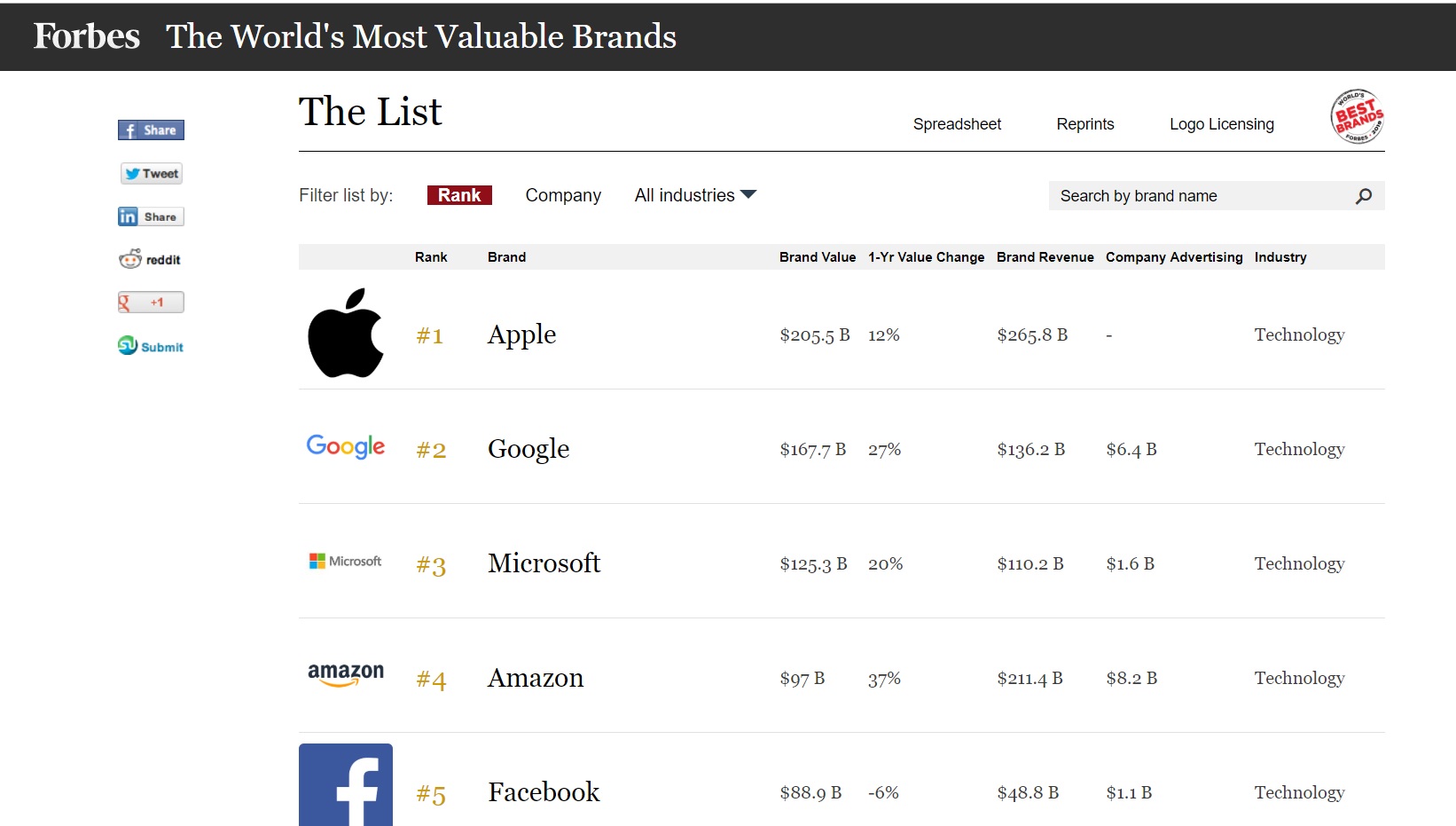
Let’s take a look at 2019’s most valuable brands according to Forbes:

  1. Apple
  2. Google
  3. Microsoft
  4. Amazon
  5. Facebook

And now here are the 2019 top five most loved brands according to Morning Consult:

  1. Amazon – 4th most valuable
  2. Google – 2nd most valuable
  3. Netflix – 38th most valuable
  4. Facebook – 5th most valuable
  5. The Home Depot – 32nd most valuable

Note the crossover with the most valuable brands and most loved? That is a result of branding. So how do you create a company that is both valuable and loved?

You create an authentic brand.

Branding can mean different things to different people, so let’s clarify this and the value it can bring to your brand. Simply put, your brand is your promise to your customer. It tells them what they can expect from your products and services, and it differentiates your offering from that of your competitors.

Your brand is derived from who you are, who you want to be and who people perceive you to be. How clearly and consistently it’s delivered at every point of contact is vital to how strong the brand can become.A strong brand creates brand equity, which is one of the factors that can increase the financial value of a company.  

If your company invests in its brand, you can achieve and enjoy the following benefits, to name a few:

  • Higher price points and less pricing pressure
  • Greater market value
  • Reduced competition
  • Increased business opportunities (partnerships, licensing deals, acquisitions)

So how do you get there?

We say it all the time, strong brands don’t happen by accident. Investing in your brand requires taking a close look at who you are and what you stand for, and then committing to delivering on that promise at every touch point.

Your brand must be both differentiating and emotionally relevant. Ask yourself, what do you do? How do you do it? What makes you different? These answers are the seed for your brand story, which becomes the litmus test for everything you say and do as an organization.

If an experience has your company associated with it, then it offers a specific and meaningful promise. It’s what your target audience (both customers and prospects) should expect, and it’s the culmination of feelings they have after an experience with you.

If your brand consistently delivers on its promise, then your target audience will come to trust it, and trusted relationships develop into emotional bonds that are hard to break. This loyalty to your brand means greater business success and reduced competitive threat.

The process we use to draw out and solidify your brand and its story is an extremely valuable effort for stakeholders and employees alike. If your brand needs some direction, we can help!


There is no shortage of scientific research indicating the importance of familiarity and brand awareness in customer decision making. Advertisements appear everywhere we turn – from window decals to television and social media. Brand management is essential to differentiate yourself from the competition. Here are seven elements to successful brand management:

1. Construct a strong foundation.

Design and build your brand. A branding exercise can help you define essential elements of your brand. Explore who you are, what your vision is for your brand, and how it is relevant to your target audience.

2. Define your USP.

Once you understand how you fit into your target market, determine how your brand is different from the competition. This is your unique selling proposition (USP).

3. Build the cornerstone.

Use your USP and create a short message defining your brand position. The message should be subtle and easily recognizable to your audience. Use that message as the cornerstone of your marketing.

4. Manage your brand from the inside out.

  • The best ambassadors for your brand are its team members. Collaborate and communicate with them. You need them to buy-in and be trained for any interaction to maintain brand consistency.
  • Create standards and policies to use internally outlining how marketing materials are to be named, stored, and utilized. These include logos, slogans, previously used concepts, etc. Guidelines can help your brand maintain consistency and stay efficient in times of employee turnover.

5. Build a community. Develop relationships.

  • Social media has become a principal source of customer service. Engage consistently and continuously with your audience to build a connection and a reputation for authenticity.
  • Influencers can be a strong ally in growing your brand. As with any relationship, you have to make sure the influencer is a good match for your brand and then work to keep the relationship healthy and growing.

6. Protect your investment.

Your brand’s reputation is hard-earned. Once you’ve developed it, protect it.

  • Set up Google Alerts so you may be instantly informed if there is news impacting your brand. Be vigilant on social media.
  • Crises will happen. Take ownership. Be honest and transparent with the information you have and how you are working to mitigate any damages.

7. Update and polish regularly.

Track the results of any marketing campaign. If needed, polish existing fixtures and upgrade as needed.

We would love to help you design, build and manage all aspects of your brand!


Everyone has not-so-fun aspects of their job, even if they love it overall. For me, playing the part of “brand police” is up there with entering my time as one of those things that are the least fun parts of my job.

Who are the “brand police?” They are usually folks from the marketing department who visit your desk, pointer finger wagging, reminding you to use the proper brand colors for your company or to use the most up-to-date version of your corporate logo, and not the one you saved to your desktop three years ago. Playing brand police is a necessary evil.

I always feel like a nag when I play that role. Brand consistency is just one of those things that is not high on people’s priority list, especially if they need to get a flier out. Right. Now. It’s not fun to rain on someone’s parade and explain to them that using five different fonts and lots of exclamation marks in the same collateral piece is not a good idea.

In the hustle and bustle of everyday life, it’s hard to find time to explain why. Why staffers should stick to the company’s color palette. Why you shouldn’t stretch out a logo to make it bigger. Why your company’s words should match its deeds. Why using so many exclamation marks is not a good idea!!!


So, here is a semi-official edict from the Brand Police, on why brand consistency is important.

Establishes Trust and Authenticity

When a company delivers a brand experience consistently, the public learns what to expect from that company. Over time, this builds trust. If a company is flinging from one tactic to the next, with no clear unifying purpose, that company takes the risk of looking unfocused and unprofessional.

Sticking to a cohesive brand says something about who you are, that your brand is your corporate identity and not something that you created just for marketing purposes or because its trendy.

Builds Brand Equity

Over time, customers will get to know your company through your brand. Your brand will become synonymous with certain values and expectations. This brand equity will come in handy when you launch a new product or venture, or in some unlucky cases, when your company goes through a rough patch. Your brand is your reputation and at some point, you will need to trade on your reputation. Make sure you’ve built it up over time.

Provides Measurement Opportunities

This is true for any business initiative but especially for branding. How do you know if your efforts are working or not unless you implement your branding consistently over time? You can’t measure something that isn’t thoroughly implemented or implemented for a short period of time.


Brand consistency is important. It helps to establish trust with your customers. It builds equity, which will come in handy one day when you need it. And it gives you the opportunity to measure its effectiveness.

I think that’s worth sticking with the right brand colors and a few less exclamation marks, don’t you?


Nonprofits work hard for little money and recognition. With few resources, you’re doing the best you can. But don’t think for a second that just because your organization is a nonprofit that you can’t have great marketing.

Remember, nonprofit is a tax status, not a case for support. Being a nonprofit alone is not a reason for anyone to give. Nonprofits must tell the public about the good they are doing and how people can help.

Here are 5 common nonprofit marketing mistakes and how to fix them:

Mistake #1: Not Participating in Social Media

The point of social media is to be social. Too many nonprofits post only about themselves, follow only a few accounts, do not respond to comments, and ask without giving in return.

This is the equivalent of meeting someone at a party who only talks about themselves, talks your ear off for 20 minutes, and then asks for $50.

Don’t be that guy.

Here is a good rule of thumb to remember when it comes to social content:

  • A third of your social content should promote your organization, converts readers and generates donations.
  • Devote a third of your social content to sharing ideas and stories from thought leaders in your industry or like-minded organizations.
  • A third of your social content should be fun stuff to show that there are human beings behind your social media handles.

Mistake #2: Forgetting Who Your Audience Is

Too often, organizations market to themselves. They only consider what appeals to them and not their supporters. Step outside of your perspective and think long and hard about your audience.

Are your supporters older, younger, parents, young professionals? Are they more likely to respond to digital appeals or direct mail? What do they care about the most – saving time, professional development, kids, the environment, education, social issues? Put yourself in your supporters’ shoes.

Mistake #3: Brand Inconsistency

A consistent brand is a strong brand. Brand consistency builds trust and increases loyalty.

Stretched logos, incorrect brand colors, spelling errors, pixelated photos – if they happen once or twice, it’s a simple mistake. If they happen all the time, it makes your organization look homespun at best, or unprofessional worst. And that can erode trust.

Mistake #4: Too Much Text

As they say, a picture is worth a thousand words. And a thousand words alone is, well, not something anyone wants to read.

Your supporters lead busy lives. Take a closer look at your content and figure out where you can tighten your copy.

Mistake #5: Boring Photography

Scott Kirkwood, former editor-in-chief at the National Parks Conservation Association magazine, put it best in a HOW Magazine article:

“…if you helped the nearest national park receive money for a new building, don’t show a photo of that building – it’s a building. Think about how that building will change the life of a visitor. Will the park be able to offer more bird-watching programs as a result? Great. Show a photo of a bird.”

Don’t think that just because your organization is a nonprofit that you can’t afford great photography. The latest smart phones can take great pictures and with a few tutorials, you could be well on your way to taking great photos.

Show photos of the people, animals, environments, etc. helped by your programs.

Show, don’t tell.


You’re trying to do good on a shoestring budget and a skeleton staff. We get it. Its understandable if this seems overwhelming. Great marketing is a constantly moving target that poses a challenge for many organizations.

If you want to talk about your organization’s marketing challenges, give us a call.

We love a challenge.


If I were to google you right now, what would I find? What impressions would I form after viewing your professional history, your social media presence (or lack thereof), and your photos? Would I want to do business with you? Hire you? Befriend you?

Wakeup call, people … you’re being watched. It’s time to take control of your personal brand.

Say what?

Whether or not you identify it as such, you have a personal brand. Branding used to be reserved for businesses, but with the mushrooming social media landscape and the growing gig economy, the time has come to embrace personal branding.

A personal brand is how you present yourself to the world. It’s what you want people to know — who you are, what you think, what you stand for, and what makes you unique. Oftentimes, it’s the first impression someone will make of you.

So … yeah, it’s important. A strong personal brand establishes you as a thought leader in your industry, promotes your company (and your career), differentiates you from those who share your space, and allows you to build trust with those who seek you out.

Know thyself

Developing your personal brand starts with taking an objective look in the mirror. How would you describe yourself personally? Professionally? How would others describe you? Identify a handful of adjectives that feel like spirit words and make them your litmus test for everything you publish, post, share, comment on, and participate in. 

Find your niche. Solidify what sets you apart. And then run with it. It won’t happen overnight. It requires communicating your mission to your audience, in a genuine way, consistently and for the long-term.

Speaking practically

  • Focus your branding. Share only what rings true. Posting just for the sake of posting is just noise.
  • Deliver value to your audience. Make sure what you’re sharing is relevant to those you are talking to.
  • Put the “social” in social media. Interact on the platforms where you live. Comment when you have something to say. Like when something rings true to you. Start a conversation.
  • Share yourself with your audience. Give them a glimpse into your life and your soul. People want to know what makes you tick.
  • Don’t live and die by your numbers. Having a gaggle of followers is fantastic, but are they your people? Are they engaging with you and furthering your brand?
  • Lastly, and most importantly, make sure the on-line version of you matches the in-person version of you. Nobody likes a stepford wife. Don’t get caught up in what you think you should be – be authentic. 

If you’re not sure how to get there, give us a ring. We can help you hone your personal brand and show you how to rock it!


As the leader of your brand, it is up to you to determine the vision for your business, you are also the business leader. You are mission-control to successfully making that vision materialize. Be responsible for recognizing – and deciding how best to overcome – the barriers to your brand’s success.

One of the most powerful (and responsible) things you can do as a business leader is to get out of your own way.

business leader get out of the way

The business leader and/or business owner holds a tremendous amount of power. You can be your brand’s greatest asset and its biggest backer. Critical to your mission, however, is not to become a barrier yourself.

During a conversation with a business owner and CEO of a $50M+ company, the CEO relayed that his largest client could not implement the programs offered to them because the necessary departments were not communicating with each other.

To overcome this hurdle, the CEO stepped in to facilitate meetings and interactions between his client’s departments. However, he was not getting paid for that time and taking on that role took him away from his own responsibilities.

When asked to provide my advice to this dilemma, my answer was simple: Don’t attend the meetings. If he did not attend the meetings, others would be forced to take on rightful ownership of their responsibilities, freeing the CEO to focus on his own responsibilities.

Here are four things to consider as a business leader in order to get (or stay!) out of your own way:

  1. Build boundaries and bridges. Don’t put yourself in situations to be the point person when it is not your role. If you consistently play a role not meant for you lines become blurry and you increase your risk of burnout. You also risk not having the time and/or resources you need to be successful. Build a good team – in-house and/or through outsourcing. Then take a step back and let them fulfill their own roles.
  2. Do it, delegate it or delete it. Does your to-do list continue to have the same thing on it week after week? Yes? Figure out why. If it is something that requires YOUR attention, do it. If it needs to get done but someone can or should complete it, delegate it. Maybe circumstances make completing a task unrealistic, undesirable or unnecessary – then, delete it. Procrastination is a barrier to productivity and to creativity.
  3. Find your joy. Focus on the good contributions. Perhaps you work with a client who is abrasive. Understanding that he or she has a difficult job can help you avoid taking things personally. Look at the good things you are doing in your own role and the positive things the company is doing. If you focus only on the negative or get upset over the same things on a weekly basis, you prevent yourself from seeing the positives of your own – and others’ – contributions.
  4. Celebrate success and forget failure. Failure is a necessary part of the process. Expect it. Embrace it. Learn from it. As a leader, failure should be empowering. Don’t let it get you down. Stop and acknowledge when you overcome it.

If you can get out of your own way, you may be your brand’s greatest asset. We have built a strong team and could be a powerful ally. Give us a call.


In 2019, social media marketing is an essential tool for developing a connection with your audience. In some ways, social media marketing is similar to online dating. You are courting your audience with social media, and a connection won’t develop by being overly promotional with your posts.social media marketing

Successful social media marketing requires an investment of significant time (and resources). Your investment can pay dividends, but it requires planning. Developing strategies with clearly-identified goals and target audiences is key. But avoiding common faux pas is equally as important.

Seven of the (many!) dos and don’ts for social media marketing

  1. Be social. You have to put yourself out there, so don’t be nonexistent on social media. You can’t influence anyone if you have no profile.
  2. Be interesting. Know Your Audience. You want to pique and maintain viewers’ interest, so post varied content they will find interesting and valuable. Don’t make it all about you by only posting promotional content.
  3. Be genuine. If your brand is all about fun, your audience expects a certain playfulness to your social media. Don’t send mixed messages by being inconsistent in your marketing.
  4. Be available. Social media marketing is a 24/7 customer service opportunity, so engage often and consistently. Don’t ignore posted questions or concerns.
  5. Be a good listener. Always pay attention -and respond gratefully- to consumer feedback. Don’t ignore the negative feedback, because you can’t develop relationships by ignoring (or deleting) criticisms.
  6. Be Aware. Use hashtags and handles to attract interest, but don’t appear desperate by using too many. Keep it effective and efficient.

Be smart. Check your content for spelling, grammar and phrasing, and correct mistakes as soon as they’re caught. Don’t be insensitive in your phrasing or messaging.

We cannot say it enough – strategy is critical.

Content is key. Consistency is key.

Social media management is customer service and poor customer service will hurt your brand’s reputation.

Unlike in dating, it is a good idea to outsource social media duties. Those of us with the experience and knowledge can create and implement social media marketing strategies that follow all the rules.

Give us a call to help influence your audience to swipe right on your brand’s social media marketing!