Most marketing people I know worship at the altar of Seth Godin. He’s a larger than life marketing guru — a best-selling author several times over, an accomplished entrepreneur, an in-demand speaker and teacher, and a revolutionary thinker.
In Seth’s own words:
My favorite thing about Seth Godin, though, is his blog. It’s always an eye-opening, thought-provoking, perspective-shifting few words that arrive in my inbox every day. For the past 11 years. It’s a streak.
“Streaks are their own reward.
Streaks create internal pressure that keeps streaks going.
Streaks require commitment at first, but then the commitment turns into a practice, and the practice into a habit.
Habits are much easier to maintain than commitments.”
Frequently his blogs are just a couple of paragraphs, sometimes they’re longer and more involved. Sometimes they’re deep, and sometimes they are lighter fare. It doesn’t matter. He gets his ideas out there and he does it regularly. And people love him for it.
We preach this philosophy to our clients all the time. The important thing is to blog. Regularly. Dependably. Habitually.
It doesn’t need to be overthought. We hear it all the time – How will I find the time? What will I write? Are my ideas worthy of a blog? Do people really want to read it?
The answer is yes. Your customers (and your potential customers) want to hear from you. They want to get to know you and what you have to offer. They want to make an emotional connection with you. Blogging does that.
So just do it. Take a page from Seth Godin’s play book – start a streak and allow it to become a habit. You’ve got this.
September 11 is one of those days … a day that you can still feel in your bones. You remember where you were. What you were doing. How you felt before you heard. And how you felt after you learned that hijackers had flown airplanes into the World Trade Center, killing over 2,900 people and injuring almost 6,000 more.
Shock. Terror. Fear. Disbelief. Despondency. Anger. That’s what I felt. But mostly sadness.
On September 11, 2001, I was a brand new mother. My daughter, Lauren, was two months old and slept in the bassinet beside me as I turned on the television and watched the horror unfold. I cried a lot that day. And I’m crying now, just writing this. Because I remember. Viscerally. The sadness I felt for every person who lost their lives and the families they left behind was utterly unbearable.
We grew as a nation in the aftermath of that tragedy. We huddled tight and helped where and how we could. But as the years passed, 9/11 grew further and further from our consciousness as other tragedies filled our news feeds and our lives moved on.
But September 11 remains a very real, ever-present tragedy for those who were affected by it. We need not to forget that. People still need help. And there are organizations that are helping them that still need our support.
Here are some worthy organizations:
Tuesday’s Children provides healing for those whose lives have been forever changed by terrorism or traumatic loss. The organization has reportedly worked with at least three quarters of 9/11 victims’ families. Their programs include youth mentoring and career guidance and mental health services for first responders and victims’ children and spouses.
The Families of Freedom Scholarship Fund, has provided more than $150 million in scholarships to dependents of those killed or otherwise affected in the 9/11 attacks and subsequent rescue efforts.
In honor of the tens of thousands of first responders who bravely worked to rescue and treat 9/11 victims, giving to the New York City Police Foundation or the FDNY Foundation is a worthy exercise. Both non-profit charities serve to support the men and women who serve and protect New York City.
And so, on the 18th anniversary of the September 11 tragedies, perhaps you will consider helping. They still need us. And we need not to forget.
“Play the long game” and “It’s a marathon, not a sprint” are common phrases we have all heard. In the marketing world, traditional marketing focuses on acquiring new clients and sales. But the “long game” is relationship marketing, which cultivates existing customer relationships to create a loyal, long-term base. The focus is on building repeat business through brand loyalty. Think retention vs. acquisition.
Why is relationship marketing critical to your brand?
Research has shown that revenue may be increased by as much as 25-95% with as little as a five percent increase in customer retention,
When you cultivate your existing relationships and develop a loyal following, those customers will refer their friends and family. This saves you time and money. Word-of-mouth is free marketing, making your loyal customers great brand ambassadors.
While the focus of relationship marketing is retaining customers, “Good relationship marketing should appeal to the random viewer as powerfully as it appeals to your long-term customers.” writes Caroline Forsey in this Hubspot blog. Ensure your customers can grow with you over time.
Here are five tips she offers for a successful relationship marketing strategy:
Focus on personalized customer-service.
Meet your customers where they are.
Offer incentive and rewards for customer loyalty.
Create valuable content that tells a compelling story.
Collect feedback regularly.
The brand-customer relationship takes time to build and work to maintain. Market to your customer by getting to know your customer. Keep things fresh. Offer new content and diversify both your content and your platforms.
Customer loyalty is hard-earned. Play the long game to score the most points.
Sometimes, staging an intervention is the only way to get someone to confront their unhealthy behavior and make necessary change. So I’ve decided it’s time to stage an intervention … with myself. I am spending a ridiculous amount of time each day on my smart phone.
Today I caught a notification out of the corner of my eye that horrified me – tonight, at 7:30, I had already spent 8 hours and 52 minutes on my phone. 8 hours and 52 minutes. On. My. Phone.
My initial reaction was to reason it away with common excuses:
But I use it for work. Legitimate point … but 8 hours and 52 minutes of work on my phone? No.
I have 3 kids that I need to stay connected to. Again, legitimate. But 8 hours and 52 minutes worth? No.
It’s time to face facts. I am wasting extremely precious time doing extremely mindless things. 8 hours and 52 minutes worth.
I know what you’re thinking. “I don’t spend that much time on my phone.” Um, think again. You’re online more than you think you are. According to CNN, Americans spend at least eight hours a day staring at a screen. And more than one-third of smartphone users get online before they get out of bed.
We’re in the same boat. So read on.
Why It’s Bad
Why is it bad? The reasons are many. Too much screen time damages your eyes, damages your sleep, is bad for your neck, makes driving more dangerous, makes walking more dangerous (yes, we are all guilty of walking and texting). It causes more stress, it increases anxiousness, it decreases focus…I mean, need I go on?
Any one of those reasons is enough to make a change. But the more damaging, very real problem that smartphone addictions create is that we are hurting our relationships. We aren’t really connecting with the people in our life. Ironic, yes?
Our glut of connectivity is making us less connected. We aren’t connecting because we aren’t talking. It’s hurting our interpersonal skills. As one very astute high school student said, “We’re the most connected generation in history, “but we suck at intimacy.”
And don’t get me started on what it does to kids. Children’s excessive technology use has the potential to cause attention, brain and behavioral problems that last.
It’s time to cut it back. Way back.
How Do We Cut Back?
I’m doing it so I did some reading. Here are some of the things that I found that can help:
Turn off your notifications. Nobody needs to look at the phone everytime someone likes our instagram post.
Instead of constantly checking your texts or emails, put your phone down and set an alarm (5 minutes, an hour, whatever works). When the alarm goes off, check and respond to them all at once. And repeat.
Instead of having a full blown text conversation, pick up the phone and actually talk.
Turn it off during meals. Turn it off during family time. And definitely turn it off while you’re sleeping.
Hold yourself accountable. Set a goal and at the end of every day, take a look at the numbers. They don’t lie.
Listen, I love my smartphone as much as anyone. But I can tell you first hand, putting it down feels good. Not just to you, but to those around you. Your people deserve your full attention.
It is every business owner and leader’s goal to build a company that is both valuable and loved. It’s an easy goal to state; but not necessarily easy to realize.
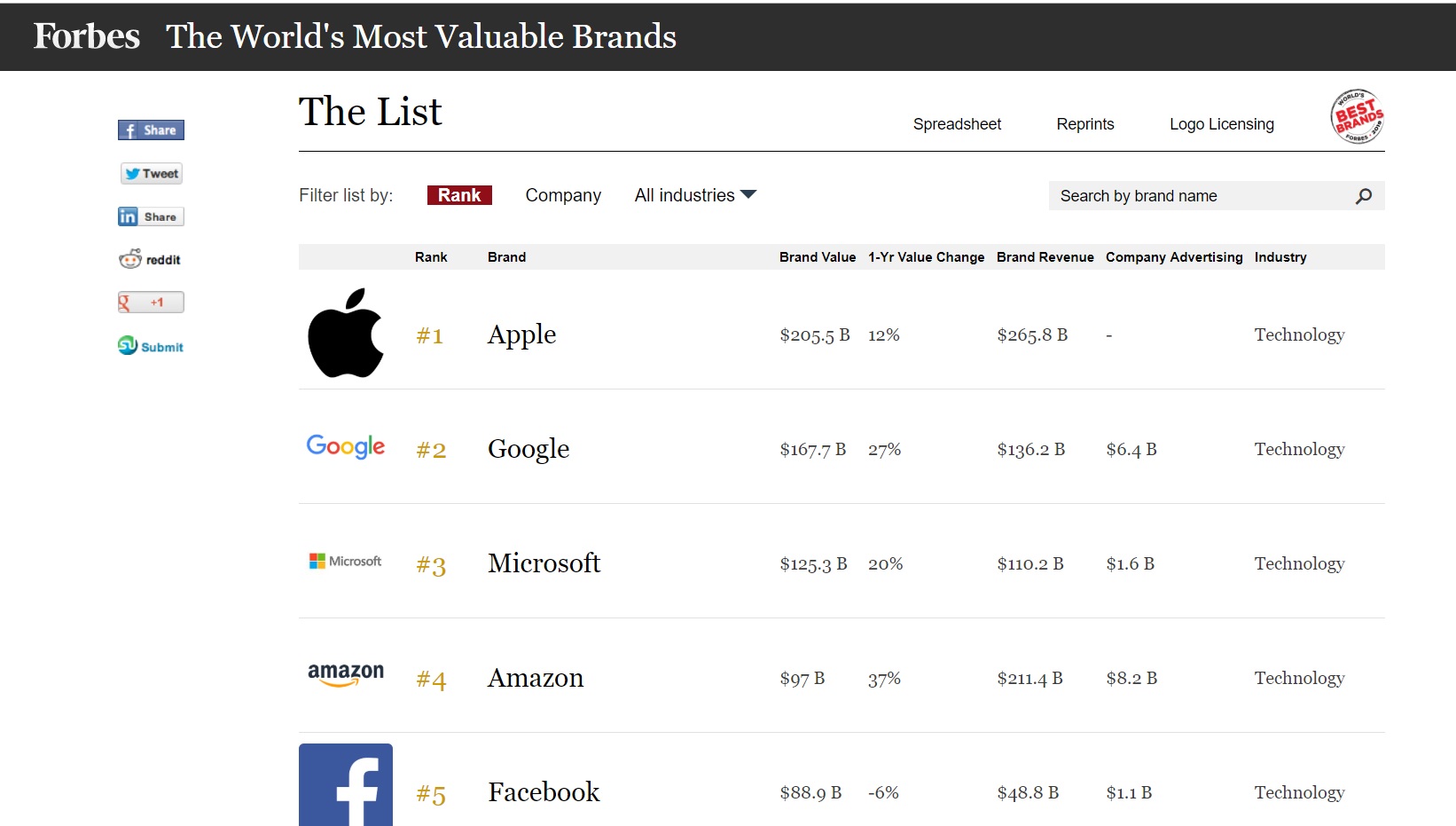
And now here are the 2019 top five most loved brands according to Morning Consult:
Amazon – 4th most valuable
Google – 2nd most valuable
Netflix – 38th most valuable
Facebook – 5th most valuable
The Home Depot – 32nd most valuable
Note the crossover with the most valuable brands and most loved? That is a result of branding. So how do you create a company that is both valuable and loved?
You create an authentic brand.
Branding can mean different things to different people, so let’s clarify this and the value it can bring to your brand. Simply put, your brand is your promise to your customer. It tells them what they can expect from your products and services, and it differentiates your offering from that of your competitors.
Your brand is derived from who you are, who you want to be and who people perceive you to be. How clearly and consistently it’s delivered at every point of contact is vital to how strong the brand can become.A strong brand creates brand equity, which is one of the factors that can increase the financial value of a company.
If your company invests in its brand, you can achieve and enjoy the following benefits, to name a few:
Higher price points and less pricing pressure
Greater market value
Reduced competition
Increased business opportunities (partnerships, licensing deals, acquisitions)
So how do you get there?
We say it all the time, strong brands don’t happen by accident. Investing in your brand requires taking a close look at who you are and what you stand for, and then committing to delivering on that promise at every touch point.
Your brand must be both differentiating and emotionally relevant. Ask yourself, what do you do? How do you do it? What makes you different? These answers are the seed for your brand story, which becomes the litmus test for everything you say and do as an organization.
If an experience has your company associated with it, then it offers a specific and meaningful promise. It’s what your target audience (both customers and prospects) should expect, and it’s the culmination of feelings they have after an experience with you.
If your brand consistently delivers on its promise, then your target audience will come to trust it, and trusted relationships develop into emotional bonds that are hard to break. This loyalty to your brand means greater business success and reduced competitive threat.
The process we use to draw out and solidify your brand and its story is an extremely valuable effort for stakeholders and employees alike. If your brand needs some direction, we can help!
Without a defined marketing strategy, a company runs the risk of chasing marketing tactics that might not work. It’s tempting to chase every trend or try to do #allthethings. But it’s far better to focus on executing a few things right than to try to do everything and accomplishing nothing.
Take a step back and give some serious thought towards your marketing strategy.
Strategy First
The terms strategy and tactics are frequently used interchangeably but they are not the same thing. A company’s strategy will define the marketing tactics they should use, not the other way around.
At the core of every marketing strategy are five things: goals, a value proposition, target audience, competition and your marketing messages.
Goals Choose goals that are SMART, or Specific, Measurable, Attainable, Relevant and Timely. Having SMART goals keeps you and your team accountable.
Here are some examples of SMART goals:
Grow e-newsletter list to 50,000 subscribers by the end of the year.
Increase website traffic by 50% with SEO and content efforts.
Convert and capture at least 1,000 leads over the next three months.
Value Proposition What value does your product or service bring to your customers? How is your company different from your competitors?
Target Markets “Everyone” is not a target. Think about the annual income of your target customer, where they hang out online, age or stage of life, what industries they work in, education level, and their motivations for buying your product.
For B2B customers, this may look slightly different. What is the annual revenue of your target client? Who makes the purchasing decisions for the product or service that you sell?
Competition Identify and know the competition. Run a competitive analysis and/or create a competitive profile matrix. Know what your company is doing that is both different and better than the competition. Define your competitive advantage.
Marketing Messages Your marketing messages should be tailored to all your target markets. A message directed at a CTO of a Fortune 500 company will look different than a message for the CMO of a tech startup. Adjust your messaging accordingly.
Tactics Second
Now we get to play in my sandbox, marketing tactics. Here are a few tactics to consider:
Social Media I’m surprised by how many businesses are still wary of using social media to promote their organizations. If you don’t think that your target customer is on social media, check out these stats from the Pew Research Center:
69% of U.S. adults use Facebook. And its not just for kids anymore – among Americans 65 and older, almost half use Facebook.
73% of U.S. adults use YouTube. YouTube is the second largest search engine in the world behind Google.
A quarter of U.S. adults use LinkedIn. The growing network is a great place for B2B marketing leads, growing thought leadership, and finding your next employee.
So, basically, if your ideal customer or employee is breathing, it’s time to pick a social media channel or two and start getting social.
Influencers If you can’t build a huge audience, then buy it: this is the thinking behind influencer marketing. But, the right influencer for your company doesn’t have to necessarily have the biggest following to be effective.
Influencer marketing isn’t just for lifestyle products like makeup or the latest diet fad. Check out how this welding products company created their own influencer program.
Video More than 50% of consumers want to see videos from brands – more than any other type of content. There are many different types of videos a company could create: demo videos, expert interviews, explainer videos, and list goes on.
It’s easy to get caught up in the day-to-day demands of your company. Most entrepreneurs are too busy working “in” their business to work “on” their business. But, don’t you think its time to work on your business?
Tomorrow marks the 4th of July, the day that our country dons the red, white and blue and celebrates its independence from Great Britain.
Every year, we gather with our friends and family to celebrate the anniversary of our freedom and enjoy our togetherness and our traditions. Regardless of whether you celebrate the 4th with a small group of family, a large group fireworks event, or a beautiful beach-town parade, it’s an exciting and spirited time in the United States. The sights, sounds and smells are familiar and comforting.
Here are a few of my favorites of July 4th:
Parades! Kids on bikes, dogs in wagons, marching bands, dancing girls, music, floats, crazy patriotic outfits … I love it all!
Popsicles. On a hot day, there’s nothing better.
Barbeques – the smell of grilled hamburgers and hot dogs is everything.
4th of July themed desserts – who doesn’t love some creatively spun sugar?
Lee Greenwood’s Version of “God Bless the USA.” It makes my cry. Every. Single. Time.
Watermelon cut in slices. Quintessential summer. And so delicious.
Sparklers to kick off the firework lineup. So many childhood memories center upon waiving sparklers through the air.
Fireworks. Duh. The more, the better.
Togetherness. Family togetherness. Friend togetherness. Community togetherness. The 4th of July brings us all together, doesn’t it?
The reminder of how lucky we are to live in America. Like seriously, seriously lucky.
From everyone here on the Porch to you, may your 4th of July be filled with joy and celebration. Happy Independence Day, everyone!
We preach the importance of being authentic – personally and in branding.
Part of being truly authentic means not pretending that life is sunshine and roses when it isn’t. Last week on the blog, Jacqui (aka The Back Porch Rocker) offered her thoughts on recovering from life’s unexpected storms.
One of her suggestions is another familiar refrain on the Porch – to have and give grace.
In the spirit of authenticity, her post hit me hard. We often encourage our followers to have grace, but I realized that in my forty-something years, I have never, not once, asked for grace – personally or professionally.
That doesn’t mean I haven’t experienced it. There have been times I received grace without having to ask for it. And there have been times I extended it to others. But I can see that there have been times I probably should have asked for grace. There are times I should have extended it to others without them having to ask.
Admittedly, I was born with the “suck it up, buttercup” mentality. I have always considered my ability to keep things together, for myself and for others, one of my great strengths.
That all changed for me a little more than four and a half weeks ago when a personal tragedy shook me to the core.
A “suck it up, buttercup” mentality would not have shown grace – which was desperately needed – to my family, my friends or myself.
Something had to give professionally. I had to take a step back. I had to ask for grace at work.
The entire Front Porch Marketing team responded without hesitation. Our clients and business partners who knew what had happened did the same.
I was extended grace in many, many ways. And I am thankful for it.
So the next time grace is called for, try doing these thing to show grace to a team member, client, partner, or even a boss:
Anticipate and delegate needs. If you are aware of a project or deadline, consider how you or others may be helpful to get it completed or postponed. Communicate and/or delegate those needs accordingly.
Forgive mistakes. Forgiveness is always important. Mistakes during this time are understandable.
Don’t take things personally. During a time of crises, jovial people may become short-tempered or normally talkative people may go radio silent. It is not about you or their feelings toward you. Don’t take it personally. See number two, above – it applies!
Provide a “free” zone. Offer a listening ear. Make it known you are a judgment-free. When a team member needs grace, give it freely without questions, expectations, or conditions.
Life has a way of rocking us unexpectedly.
Strive to build work environments that allow every member of your professional tribe to feel safe in asking for grace at work when they need it.
Like most people in the Dallas area, I have spent the past few days reeling from the destructive, unexpected storm that hit us over the weekend. The loud, powerful downburst morphed a sunny, beautiful sky into a threatening, frightening tempest that wreaked havoc on our landscapes and our lives.
It seems a particularly pertinent analogy for life’s tenuous nature. Occasionally, we are hit by an unexpected storm that knocks us down, be it personal, professional, or physical. Whatever the cause, the resulting derailment can cause us to feel simultaneously overwhelmed and paralyzed.
So what can we do to stay afloat?
Gut Check: What’s Important
When you’re moving through life unencumbered, it’s easy to try to be all things to all people and spread yourself too thin. When things get real, you no longer have the luxury or the responsibility. Check in with yourself and identify what your priorities are. I’ve said it before and I’ll say it again … let everything else fall away.
Live Where You Are
Are you sad? Be sad. Angry? Relieved? Frustrated? Whatever it is you are feeling, let yourself feel it. When we try to fight against our feelings, it often leads to a longer, more drawn out suffering/healing cycle. You have to live where you are. You just do.
Just Start
Get going. You have things to do and a life to be lived. If it feels like you’re spinning, take 15 minutes and Brain Dump. Write down everything that comes to mind. No structure. No numbered lists or categories. Just write everything that comes to mind in a free flow fashion – you can make sense of it later.
Life can be a beast so be kind to yourself and to others. It’s an instant mood-changer. Smile. Breathe. Look for the positive and the good. Gratitude improves every situation – there is always something to be thankful for.
Strength is the Silver Lining
Whatever has challenged you, knocked you down, or thrown you under will be the seed for tremendous growth. It may be hard to see, but one of life’s greatest gifts is the fact that life is difficult, because in dealing with life’s unexpected storm, we build invaluable strength.
Design and build your brand. A branding exercise can help you define essential elements of your brand. Explore who you are, what your vision is for your brand, and how it is relevant to your target audience.
2. Define your USP.
Once you understand how you fit into your target market, determine how your brand is different from the competition. This is your unique selling proposition (USP).
3. Build the cornerstone.
Use your USP and create a short message defining your brand position. The message should be subtle and easily recognizable to your audience. Use that message as the cornerstone of your marketing.
The best ambassadors for your brand are its team members. Collaborate and communicate with them. You need them to buy-in and be trained for any interaction to maintain brand consistency.
Create standards and policies to use internally outlining how marketing materials are to be named, stored, and utilized. These include logos, slogans, previously used concepts, etc. Guidelines can help your brand maintain consistency and stay efficient in times of employee turnover.
5. Build a community. Develop relationships.
Social media has become a principal source of customer service. Engage consistently and continuously with your audience to build a connection and a reputation for authenticity.
Influencers can be a strong ally in growing your brand. As with any relationship, you have to make sure the influencer is a good match for your brand and then work to keep the relationship healthy and growing.
6. Protect your investment.
Your brand’s reputation is hard-earned. Once you’ve developed it, protect it.
Set up Google Alerts so you may be instantly informed if there is news impacting your brand. Be vigilant on social media.
Crises will happen. Take ownership. Be honest and transparent with the information you have and how you are working to mitigate any damages.
7. Update and polish regularly.
Track the results of any marketing campaign. If needed, polish existing fixtures and upgrade as needed.
We would love to help you design, build and manage all aspects of your brand!